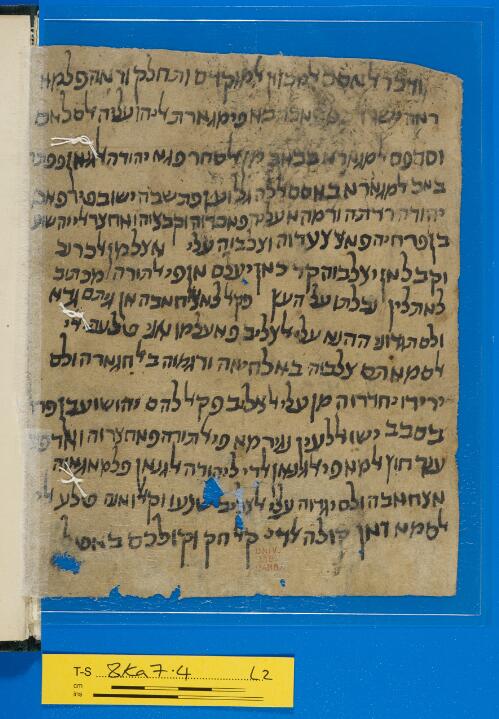
טקסט ספרותי: T-S NS 298.55 + T-S 8Ka7.4 + BL Or. 6197.7–8
טקסט ספרותי T-S NS 298.55 + T-S 8Ka7.4 + BL Or. 6197.7–8What's in the PGP
- תמונה
- 1 Transcription
- 1 Translation
תיאור
Gzar-dina de-Yeshu (Toledot Yeshu, JA1 in Bohak's edition, Judaeo–Arabic translation, "Pilate" recension), opening of the text (from passage 1.1); read consecutively with T-S 8 Ka 7.4 (PGPID 41698) and London, BL Or. 6197.7–8 (PGPID 41699) as a single irregular quire. (Information from Gideon Bohak, The Sentencing of Jesus (Gzar-dina de-Yeshu), 15–19.)
Editor: Bohak, Gideon
Translator: Bohak, Gideon (in English)
T-S NS 298.55 1r
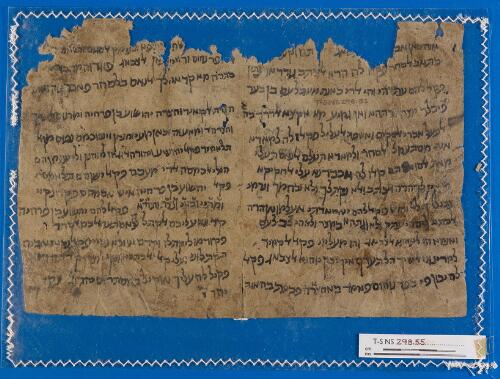
Folio 1r, right side (second section)
- אנה כאן אבן֯[... אל]צ֯ב֯אג תם וקע[ו אמאמה?]
- כתאב אלסחר פקאלו לה הדא אלכתב גודד או עתק.
- פקאל להם עתק֯ הי, והי אלדי כאנת מע בלעם בן בער.
- פי בלד מצר [ו]גדתהא. ואן גמיע מא אקצא אלדרך בה<א>
- אלפעל אברי אלסקים ואשפי אלעליל. פקאלו לה למאדא
- אנת מסתעמל אלסחר, ולמאדא תעלם אלנאס תעלי
- מאת אלסו. {ת=} תם קאלו לה אכברנא עלי אלחקיקא
- מן֯ אין לך הדה אלכתב ואלא נקתלך ולא נר֯חמך ונרמי
- נבילתך לאלוחוש. פקאל להם יא סאדתי אעלמו אן הדה
- אלכתב ליס הי עתק ולא וגתהא במצר ולא הי לבלעם
- ואנמא הי ליוחנא אלצבאג והו מעלמי. פקאל אלקאיד
- למרינוס אלשיך הל תערף אין יכון יוחנא אלצבאג. פקאל
- לה יכון פי כפר נ{ו}חום. פאמר באחצ<א>רה. פבעת בחאגב
Folio 1r, left side (third section)
- [ ] שמ[עון] כ֯פ֯א ובנימין אלט֯ג֯וס ו֯ת֯ל֯אה
- א֯[לי כ]פר נחום ורא יו[ח]נ֯אן אלצבאג, פוגדוה מח֯בו֯ס֯ מ֯ן֯
- כתרה מא קד אהלך אלנאס בלסחר. פאכרגוה וגא א֯ל֯י֯
- חצ֯רת אלקאיד וחצרה יהושוע בן פרחיה ומרנוס אלשיך
- וחצרה אלגמאעיה. וכאן מע יוחנאן וישו כמס נפוס מן אל
- תלאמיד. פקאל יהושע ויהודה אלגנאן ליוחנן ולישו מן הם
- הולי אלכמסה אלדי מעכם. פקאל ישו הם תלאמידי.
- פקאל יהשוע בן פרחיה איש אסמהם. פקאלו נקיי
- ומתיי ובוני ונצר ותודא. פקאל להם יהשוע בן פרחיה
- קד וגב עליכם אלקתל ללאסתעמאלכם אלסחר.
- פקודמו ליקתלו. וקדם אוולא נקיי. פקאל נקיי ו֯א֯כיף
- תקתלוני ועלי קאל אלכת ֯ב אן ונקי וצדיק אל תהרו[ג].
- פקיל לה עליך אוקיל במסתרים יהרוג נקי. {יהר}
Folio 1r, right side (second section)
-
that he was the son of [Yoḥanan? the] Dyer (?). Then [they] placed [in front of him?]
-
the book of magic, and said to him: “These books—are they new or old?”
-
And he said to them: “They are old, and they are the ones that Balaam son of Beor had.
-
I found them in the land of Egypt, and anything that is of the utmost attainment (?)—
-
it is with them that it is done. I cure the sick and heal the crippled.” They said to him: “Why
-
do you use magic and why do you teach people
-
teachings of evil?” Then they said to him: “Tell us in truth—
-
where did you get these books, or else we will kill you and not show you mercy and will throw
-
your body to the wild beasts.” He said to them: “My masters, know that these
-
books are not ancient and I did not find them in Egypt, and they are not by Balaam.
-
In fact, they are by Yoḥanan the Dyer and he is my teacher.” (Pilatus) the governor said
-
to Marinus the elder: “Do you know where Yoḥanan the Dyer is?” He said
-
to him: “He is in Kephar Naḥum.” And he (Pilatus) ordered to bring him over. He sent a guard (or, a courtier)
Folio 1r, left side (third section)
-
[ ] Shim[eʿon] Kepha and Binyamin Altagus and three
-
[ to K]ephar Naḥum after Yoḥanan the Dyer, and they found him imprisoned for
-
often misleading the people with magic. And they took him out (of jail) and he came
-
before the governor and Yehoshuʿa ben Peraḥiah and Marinus the elder
- and the crowd. And there were with Yoḥanan and Yeshu five people from
-
among the disciples. And Yehoshuʿa and Yehudah the gardener said to Yoḥanan and to Yeshu: “Who are these
-
five who are with you?” And Yeshu said: “They are my disciples.”
-
And Yehoshuʿa ben Peraḥiah said: “What are their names?” And they said: “Naqai,
-
and Matai, and Buni, and Netzer and Todah.” And Yehoshuʿa ben Peraḥiah said to them:
-
“Indeed it is necessary for you to be executed, because you use magic.”
-
And they were brought forward to be executed. And Naqai was brought forward first. And Naqai said: “How
-
can you execute me, when Scripture says about me, ‘and do not kill a naqi (=an innocent person) and a righteous person’?”
-
“About you it was said, ‘in hiding places he (i.e., the wicked man) kills a naqi (=an innocent person)’.”
T-S NS 298.55 1v
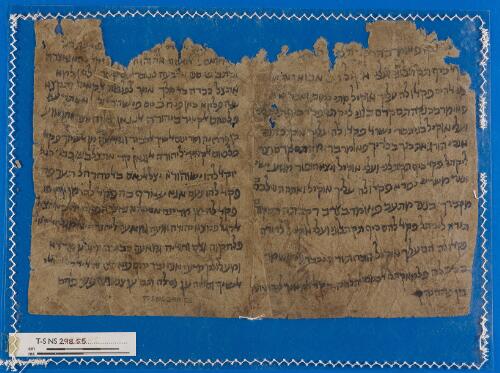
Folio 1v, left side (first section)
- הדא? כת]אב יש֯[ו] אלמ֯[ארק אלדי נכת ב]ט֯א֯ע֯ת֯ ר֯ב֯
- [אל]ס֯מא ואסל אלנאס וראה והו מן֯ [מדינ]ה יקאל להא נאצרה.
- וכתב פי סנה ארבעה לטברי֯נוס קיסר לאן למא
- אתצל כברה באלמלך אמר לפלטוס אלקאיד יתקצא
- ענה. פלמא כאן פי ח' כ' יום פי שהר א֯ל֯ול אסתדעא
- פלטוס אלקאיד ביהודה אלגנאן וכאן חאצר יהושוע
- בן פרחיה ומרינוס אלשיך אלכביר וגמאעה מן אלשיוך. פקאל
- פלטוס אלקאיד ליהודה אלגנאן קד אתצל בנא כבר רגל
- יוקאל לה ישו הודא יצל אלנאס באלסחר הל תערפה.
- פקאל לה נעם אנא עארף בה פקאל להו מן אי֯ן ה֯ו֯
- פקאל להו מן מדינה אסמהא נאצרה פאמרה באחצא<ר>
- אלרגל. פמצא יהודה ומעה גמאעה ליחצרו ישו מגלס אלקאי <ד֯>
- פלחקוה גאלס וחואליה גמאעה כבירה ו פ֯י֯הא מרצא
- ומעלולין ידעי אנה יבריהם פאחצרוה אלי אלקא֯[יד] ואלי
- אלשיך. וסאלוה ען נסלה תם ען צנעתה. פערפהם
Folio 1v, right side (fourth section)
- נקי. פאומר בחרקה. תם [קד]ם מ֯ת֯י֯ [ליקתל].
- פ֯ק֯אל כיף תקתלוני ועלי אוקיל מ֯ת֯[י] אבוא ואר[אה]
- פ֯ני אלהים. פקאלו לה עליך אוקיל מתי ימות ואבד שמ֯ו֯.
- פאומר בכנקה. תם קדם בוני ליקתל פקאל כיף תקתלני
- ועלי אוקיל בני בכורי ישראל. פקאלו לה עליך אוקיל הנה
- אנכי הורג את בנך בכ<ו>ריך. פאומר ברגמה. תם קדם נצר
- ליקתל. פקאל כיף תקתלני ועלי אוקיל ויצא חוטר מגזע ישי
- ונצר משרש יפרא. פקאלו לה עליך אוקיל ואתה השלכת<ה>
- מקברך כנצר מתעב. פאומר בצרב רקבתה. תם קוד<ם>
- תודה ליקתל פקאל להם כיף תקתלוני ועלי אוקיל לת֯ודה.
- פקאלו לה הם עליך אוקיל זובח תודה יכבדננ֯י. פא֯ו֯מר
- בקתלה. פלמא קתלו אלכמס אלתלאמיד קאל אלקאיד ליהושוע
- בן פרחיה
Folio 1v, left side (first section)
- [This is the Bo]ok of Yes[hu] the Her[etic who violated] the will of the Master
-
of Heaven and misled the people after him; and he was from [a town] called Nazareth.
-
It was written in the year four of Tiberinus Caesar that when
-
the king heard about him (i.e., Yeshu), he ordered Pelatus the governor to investigate
- about him. When it was in the twenty-eighth of Elul,
-
Pelatus the governor summoned Yehudah the gardener. And Yehoshuʿa
-
ben Peraḥiah and Marinus the great elder and a crowd of elders were present.
-
And Pelatus the governor said to Yehudah the gardener: “We received word of a man
-
called Yeshu. He is misleading the people with magic. Do you know him?”
-
And he (Yehudah) said to him: “Yes, I know him.” And he (Pilatus) said to him: “Where is he from?”.
-
And he (Yehudah) said to him: “From a town called Nazareth.” And he (Pilatus) ordered him to bring
- the man. Yehudah went with a crowd to bring Yeshu to the governor’s court.
-
And they found him sitting with a great crowd around him including sick persons
-
and cripples, whom he was claiming to heal. And they brought him to the governor and to (Marinus)
- the elder. They asked him about his ancestry and about his profession,
-
and he informed them
Folio 1r, right side (fourth section)
-
naqi (=an innocent person)’.” And it was ordered that he should be burned. Then Matai was [brought forw]ard [to be executed]
-
he said: “How can you execute me when it is said about me ‘Matai will I come and be s[een]
-
before God?’” And they said to him: “About you it was said ‘Matai will he die, and his name perish’.”
-
And it was ordered that he should be strangled. Then Buni was brought forward to be executed, and he said: “How can you execute me
-
when about me it was said, ‘Israel is beni, the firstborn’?” And they said to him: “About you it was said, ‘Behold
-
I will kill binkha, the firstborn’.” And it was ordered that he should be stoned. Then Netzer was brought forward
-
to be executed, and he said: “How can you execute me when it was said about me ‘And a shoot shall come out from the stump of Jesse,
- and a netzer will grow from its roots’?” And they said to him: “About you it was said ‘And you were cast out
-
of your tomb, like a detested netzer’.” And it was ordered that his neck should be cut off. Then
-
Todah was brought forward to be executed, and he said to them: “How can you execute me when about me it was said, ‘(A psalm) for todah’?”
-
And they said to him: “However, about you it was said, ‘He who sacrifices todah honors me’.” And it was ordered
-
that he should be executed. When the five disciples were executed, the governor said to Yehoshuʿa
-
ben Peraḥiah:
T-S 8Ka7.4 1r
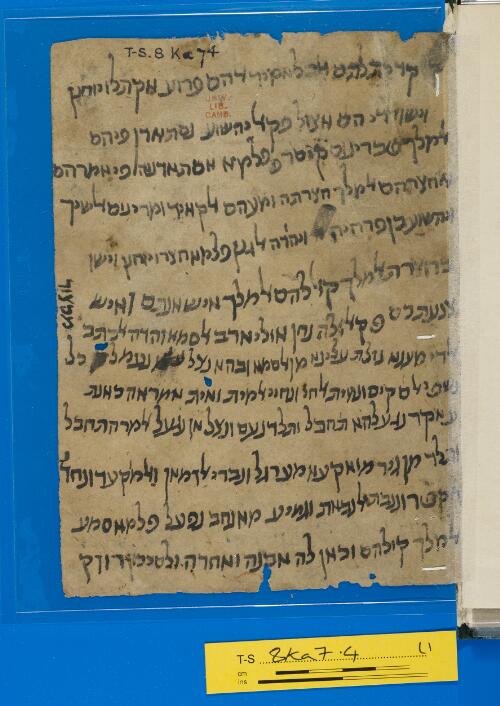
T-S 8Ka7.4 1v
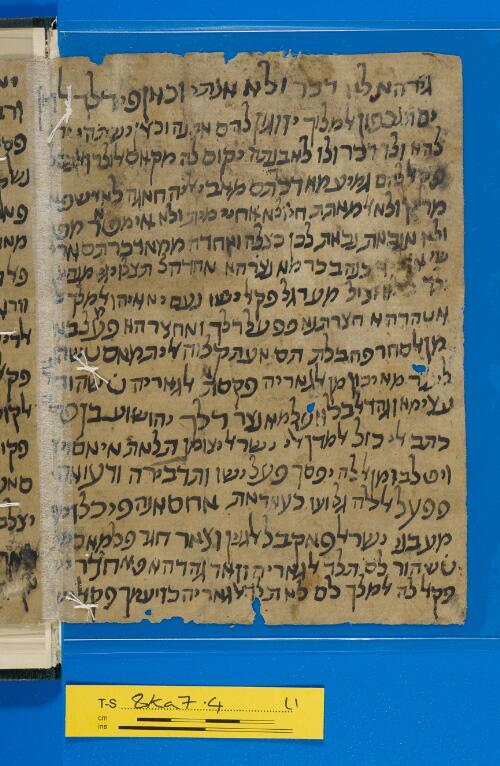
T-S 8Ka7.4 2r
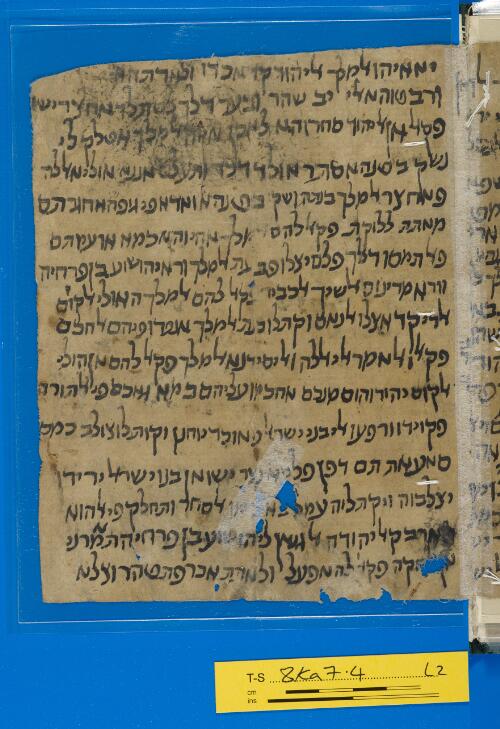
T-S 8Ka7.4 2v