מסמך משפטי: T-S 18J1.11
מסמך משפטי T-S 18J1.11What's in the PGP
- תמונה
- 1 Transcription
- 1 Translation
תיאור
Legal testimony. Location: Fustat. Dating: one of the last days of Ṭevet 1393 Seleucid, corresponding to one of the first days of January 1082 CE. The witnesses state that they were present in the Babylonian synagogue along with Yehuda b. Ḥayyim and that some of them spoke with Yosef b. Elʿazar, asking him to declare a ban of excommunication against the convert known as Abū l-Khayr and his brother-in-law Zikrī. However, they emphasize that Yehuda b. Ḥayyim was not involved with this request. When the synagogue was mostly empty, this Abū l-Khayr came in and took out the Torah scroll and declared a ban of excommunication against everyone who wrongfully excommunicated him. The witnesses state that Yehuda spoke with a certain Abū l-Faḍl b. Sukkar(?) but did not assault him. They state that Yehuda also rebuked Abū l-Khayr for the ban of excommunication that he declared, but did not lay hands on him. Nevertheless, on Saturday night, the raqqāṣīn came from Cairo and arrested Yehuda and others, jailing them in the 'shurṭa' in Fustat. On Sunday, the men were brought up to Cairo and were beaten and tortured for several days. 52 dinars were extorted from Yehuda, including a sealed purse of 50 dinars and 2 dinars for the police (the rajjāla and the shurṭa). Yehuda b. Ḥayyim requested that this testimony be drawn up for him, presumably after his release. (Information in part from Mediterranean Society, II, pp. 306, 592, from CUDL, and from Goitein's detailed summary which is attached.)
תגים
Editor: Goitein, S. D.
Translator: Golb, Norman (in English)
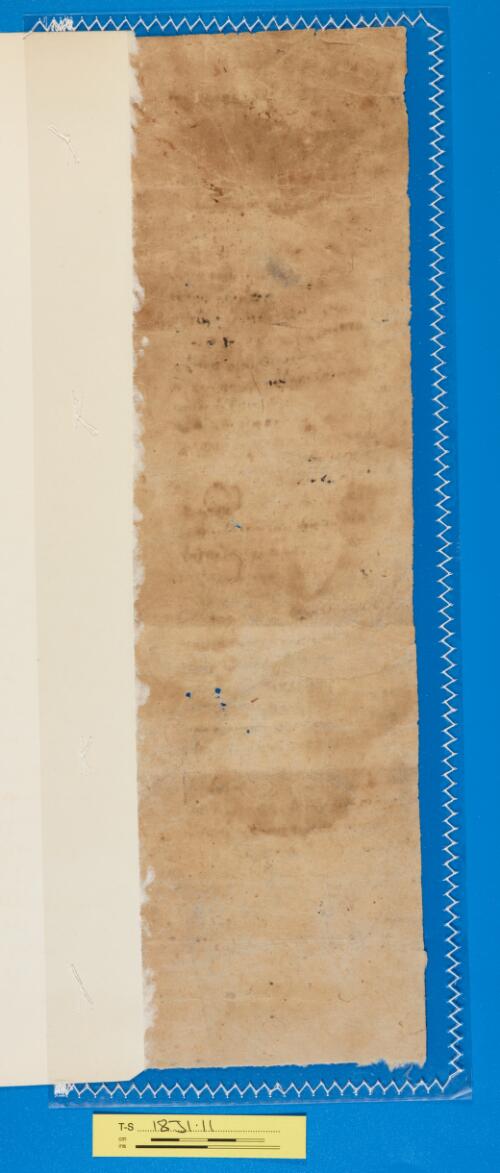
T-S 18J1.11 1r
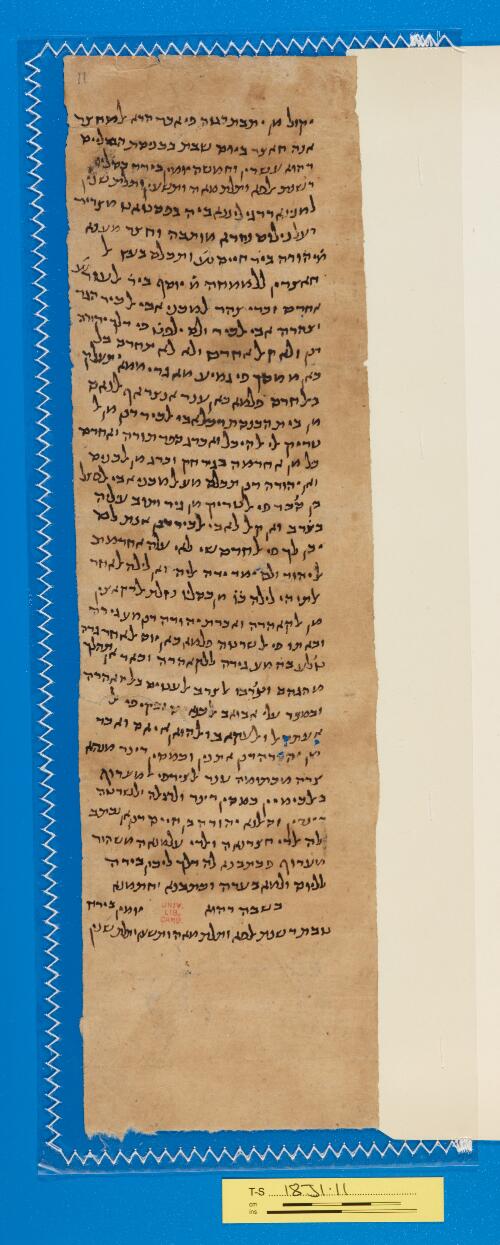
- יקול מן יתבת כטה פי אכר הדא אלמחצר
- אנה חאצר ביום שבת בכניסת הבבליים
- דהוא עשרין וחמשה יומין בירח כסלו
- דשנת אלפא ותלת מאה ותשעין ותלת שנין
- למנינא דרגיליננא ביה בפסטאט מצרים
- דעל נילוס נהרא מותבה וחצר מענא
- מ יהודה ביר חיים נע ותכלם בעץ אל
- חאצרין ללממחה מ יוסף ביר אלעזר נע
- אחרם זכרי צהר אלמכני אבי אלכיר הגר
- וצהרה אבי אלכיר ולם ילפט פי דלך יהודה
- דנן ולא קאל אחרם ולא לא תחרם בל
- כאן ממסך פי גמיע מא גרי ממא יתעלק
- באלחרם פלמא כאן ענד אנצראף אלנאס
- מן בית הכנסת דכל אבי אלכיר דנן מן אל
- טריק אלי אלהיכל ואכרג ספר תורה ואחרם
- כל מן אחרמה בגיר חק וכרג מן אלכניס
- ואן יהודה דנן תכלם מע אלמכני אבי אלפצל
- בן מכר פי אלטריק מן גיר ותוב עליה
- בצרב ואן קאל לאבי אלכיר דנן אנת לם
- יכן לך פי אלחרם שי לאי עלה אחרמת
- אליהוד ולם ימד ידה אליה ואן לילה אלאחד
- אלתי הי לילה כו מן כסליו נזלה אלרקאצין
- מן אלקאהרה ואכדת יהודה דנן מע גירה
- באתו פי אלשרטה פלמא כאן יום אלאחד גדה
- טלע בה מע גירה ללקאהרה וכאד אן תהלך
- מהגהם וצרבו אלצרב אלעטים באלקאהרה
- ובמצר עלי אבואב אלכנאיס ובקי פי אל
- אעתקאל ואלעקאב ואלהואן איאם ואכד
- מן יהודה דנן אתנין וכמסין דינר מנהא
- צרה מכתומה ענד אלצירפי אלמערוף
- באלכימיין כמסין דינר ולרגאלה ולשרטה
- דינרין וסאלנא יהודה בן חיים דנן אן נכתב
- לה אלדי חצרנאה ואלדי עלמנאה משהור
- מערוף פכתבנא לה דלך ליכון בידה
- לליום ולמא בעדה וכתבנא וחתמנא
- בשבה דהוא יומין בירח
- טבת דשנת אלפא ותלת מאה ותשעין ותלת שנין
He who has signed at the end of this writ of testimony states that he present on the Sabbath day in the synagogue of the Babylonians—namely, [on] the 25th day of the month of Kislev of the year one thousand three hundred and ninety-three of the era to which we are accustomed in Fusṭāṭ-Miṣr, which is situated on the Nile River; and there was present with us Judah b. Ḥayyim. One of those present said to mumḥeh Joseph b. El‘azar: “Ban Zikrī, the brother-in-law of him who is surnamed Abū’l-Khair the Proselyte, and his brother-in-law Abū’l-Khair!” The afore-mentioned Judah said naught concerning this, he said neither “ban” nor “ban not,” but kept silent during everything which transpired concerning the ban. When the people were leaving the synagogue, the afore-mentioned Abū’l-Khair entered from the road to the ark of the Law, took out a Torah-scroll and banned everyone who had banned him, unlawfully. He then left the synagogue, and here was the afore-mentioned Judah talking with him surnamed Abū’l-Faḍl b. Sukkar in the road, without attacking him [Abū’l-Khair] with any blow. Verily, he said to the afore-mentioned Abū’l-Khair: “You—you have nothing to do with the ban: for what reason did you ban the Jews?” He did not strike out at him. Then, on the night preceding Sunday, which is the night of the 26th of Kislev, the police-guards came down from Al-Ḳāhirah and took prisoner the afore-mentioned Judah and others. They spent the night in the guard-house, and when Sunday morning came he was brought up with the others to Al-Ḳāhirah. Their souls almost departed from them; they were stricken with great blows in Al-Ḳāhirah and in Miṣr by the gates of the synagogues, and were detained in shackles, punished and in an abject state, for days. Taken from the afore-mentioned Judah was [a sum of] fifty-two dinars, part of which was a purse sealed by the money-changer known as Al-Khīmiyyīn [?], fifty dinars; and for his men and imprisonment two dinars. The afore-mentioned Judah b. Ḥayyim asked us to write for him that which we have witnessed and that which we know, as a public, well-known matter; and we have written it down for him that it may be in his possession on this day and hereafter, we have written and signed on the [blank] day of the week, which is the [blank] day in the month of Tebeth of the year one thousand three hundred and ninety-three.
T-S 18J1.11 1v