מכתב: T-S 8J22.25
מכתב T-S 8J22.25What's in the PGP
- תמונה
- 1 Transcription
- 2 Translations
תיאור
Letter from Ḥasan b. Muʾammal, Ramla, to Abū Naṣr the cockeyed (al-aḥwal), Fustat. Dating: September 1052 (Gil). Describes an incident in a synagogue on Yom Kippur when "a man from [Tyre] and a man from Tiberias became involved in love, and the Tiberian began embracing the Tyrian in the sight of [the people]." See Melonie Schmierer-Lee, "What happens on pilgrimage…: T-S 8J22.25," Fragment of the Month, February 2018 (https://www.lib.cam.ac.uk/collections/departments/taylor-schechter-genizah-research-unit/fragment-month/fotm-2018/fragment-3?utm_source=chatgpt.com).
תגים
Editor: גיל, משה
Translator: Yagur, Moshe (in English)
T-S 8J22.25 1r
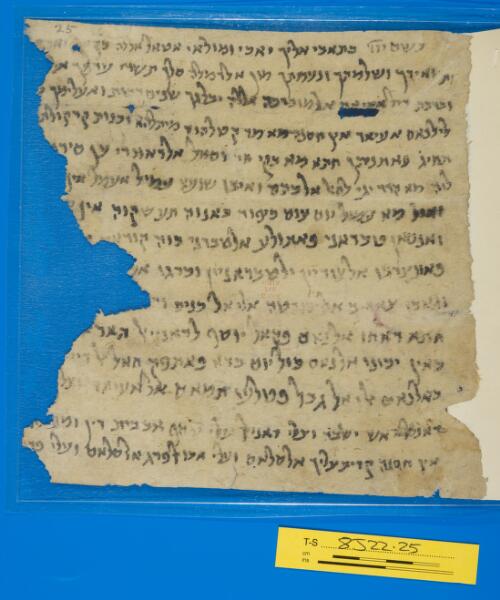
- בשם ייי כתאבי אליך יאכי ומולאי אטאל אללה בקאך ואדאם [עזך]
- ותאאידך ושלמתך ונעמתך מין אלרמלה סלך תשרי ערפך אל[לה ברכתה]
- וברכת אילאעיאד אלמוברכה אללה יבלגך שנים רבות ואעלימך [אן כאן]
- לילנאס אעיאד אין חסנה מא מר קט להום מתלהא וכנות (!) קד קולת [אין]
- תחיג פאתניתך חתא מא בקי חד וסאל אלדאוודי ען סידי [וקולת]
- לוה מא קדר יגי לחאל אלכצם ואיבן שועא עמיל אעמל אין [ ]
- ואול מא עמיל יום צום כיפור כאנוה תעשקוה אין ס[אן צורי]
- ואנסאן טבראני פאתולע אלטבראני פיה קודאם [אלנאס]
- פאינצרבו אלצוריין ואלטבראניין וכרגו אל[י ]
- וגאבו צאחב אלשורטה אלי אלכניס וב[קי פיה ]
- חתא ראחו אלנאס פקאל יוסף לדאנייאל האד[א ]
- לאין יכונו אלנאס כול יום כדא פאתפק חאל אלריס [ואין יטלע]
- באלנאס אלי אלגבל פטלעו תמאם אלאעיאד וצל[י יוסף עלי]
- דאניאל ראש ישיבה וצלי דאניאל עלי יוסף אב בית דין ומת[יב]ה [צלאת]
- אין חסנה קרית עליך אלסלאם ועלי אבו אלפרג אלסלאם ועלי פר[ ]
Translated by Moshe Yagur.
In the name of the Lord.
My letter to you, my brother and master, may the Lord prolong your life and preserve your strength, your succor, your peace, and your benefaction—from Ramla, the end of Tishri. May God reveal to you His blessing and the blessing of the blessed holidays. May God give you many years.
This is to let you know that the people enjoyed beautiful holidays, the likes of which they had never had. I have already said, if you would come on a pilgrimage, I would praise you to each and every person.
The dā’ūdī had asked about my master, and I said to him: he could not come, because of the dispute. And Ibn Shū‘ā was involved in some activities . . . and the first thing he did . . .
During the fast of Yom Kippur, two men expressed their love in the synagogue, [one from Tyre] and one from Tiberias. The Tiberian was passionate for the Tyrian in front of [the community], and the people from Tyre and Tiberias hit each other and went out to . . ., and they brought the chief of police into the synagogue, and he re[mained there] until everyone left. And Joseph said to Daniel: “This . . . , for people behave like this every day.”
And they reached an agreement concerning the ra’īs [head] [that they would ascend] all together to the mountain, and they ascended to the mountain throughout the holidays, and Jos[eph prayed over] Daniel as head of the academy, and Daniel prayed over Joseph as av bet din [head of the court] and [. . . a prayer] which was beautiful.
I wish you peace, and I wish Abū ’l-Faraj peace, and the . . .
recto
In the name of God [this is] my letter to you, my brother and master, may God lengthen your life and establish your glory, protection, peace, and sweetness. From Ramla, the end of Tishrei, may God teach you blessing, and the blessing of the blessed holidays, and may God grant long life.
I inform you that we had such lovely holidays, more than has ever been. I've already said that you should come on the pilgrimage, and [if you did] I would praise you to no end. Al-Daʾudi asked about my lord and I [told] him: he could not come because of the circumstance of the altercation, and Ibn Shuaʿ had done things [...] and the first thing that happened was that on the day of the Fast of Kippur, a man from [Tyre] and a man from Tiberias became involved in love, and the Tiberian began embracing the Tyrian in the sight of [the people] and those from Tiberias and those from Tyre began to fight with one another and went out to [...] and they brought the chief of the police to the synagogue and [...] until the people calmed down.Then Yosef [HaKohen ben Shlomo, the Palestinian gaon] said to Daniel [ ben ʿAzaryah, the Babylonian gaon], "this is [...], for such is the behavior of these people every day." So they reached an agreement regarding their leadership and went with the people to the [Temple] Mount, and they spent all the rest of the festivals [together] and [Yosef pr]ayed for Daniel to be rosh yeshiva and Daniel prayed from Yosef to be the head of the best din of the yeshiva--a beautiful prayer. I send you greetings, and to Abu al-Faraj greetings, and to Far[...].
T-S 8J22.25 1v
(verso)
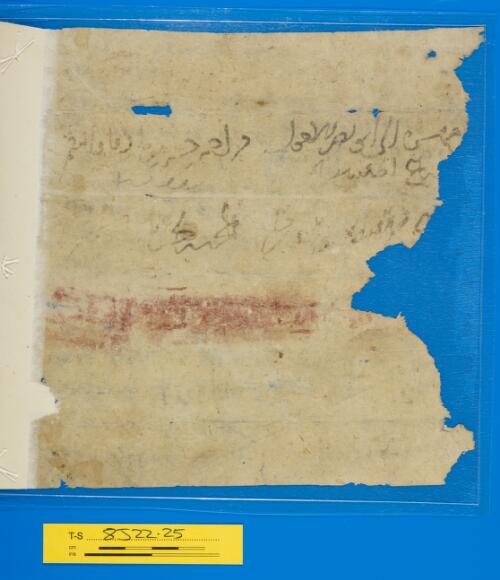
- ]כמיס אלי אבו נצר אלאחול מן אכיה חסן בן מאמל זקאק אלפקע
- סבא]ע אטאל אללה בקאה
- אלחסין בן נגא
Verso, address
To Abū Naṣr the cross-eyed, may God prolong his life.
From his brother, Ḥasan ibn Mu’ammal, Alley of al-Faqa‘.
verso
To Abu Naṣr the cockeyed Ibn Sibaʿ from his brother Ḥassan ben Muʾammal, at the Red Street, may God lengthen his life. Ḥusayn ben Naja[...]
