מכתב: T-S 13J9.4
מכתב T-S 13J9.4What's in the PGP
- תמונה
- 1 Transcription
- 2 Translations
תיאור
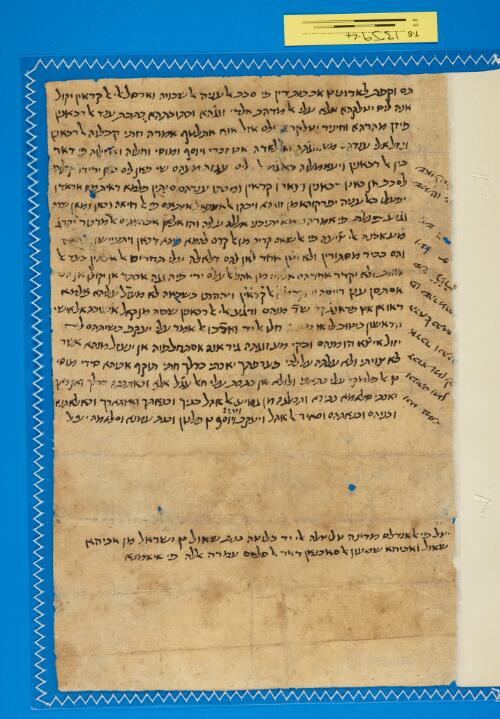
Letter from Shimʿon b. Shaʾul b. Yisraʾel ha-Ṭulayṭulī, in Jerusalem, to his sister Ballūṭa in Toledo. Dated at the last line: the month of Marḥeshvan 4818 AM, October-November 1056 CE. The writer (a Rabbanite) relays two years of news about Qaraites and fellow Andalusians in Jerusalem, as well as family news. He conveys the distress he felt upon hearing of the epidemic (wabā') and unrest (tashwīsh) in the environs of Toledo. One theme of the letter is their father's health. "Our father is in a state that one would wish only for one's enemies. He has become paralyzed (mabṭūl), blind (aʿmā), and feeble-minded (madkhūl al-dhihn), and suffers much (mumtaḥin). The bearers of this letter will tell you about him and about my care for him. He does not lack a thing, for he is well served (makhdūm) and cared for (maḥfūẓ). I do not rely on anyone else to concern themselves with him. My bed adjoins his; I get up several times every night to cover him and to turn him, since he is not able to do any of these things alone (idh lā yamlik min nafsihi shay'). May God, the exalted, reward him for his sufferings." Med Soc III, p. 241. Later in the letter, Shimʿon tells Ballūṭa that she need not concern herself with sending the turban that had been requested, "for, woe is me, he no longer has the wherewithal to leave the door of the house. He used to devote himself (wādhāb should be read as wāẓāb) to the Mount of Olives and to God's Temple for as long as he was able and [the strength] was in him, may God reward him." (Gil's translation diverges significantly from this.) A second theme of the letter is the story of a fellow Toledan, Ibrāhīm b. Fadānj, and his wife, who arrived two years earlier after having been taken captive in Byzantium and redeemed in Ramle. For a detailed analysis of their case—involving multiple changes of allegiance between the Qaraite and Rabbanite communities, and the writer's role in aiding them—see Rustow, "Karaites Real and Imagined" (2007), 43–47.
תגים
Editor: גיל, משה
Translators: Delgado, José Martínez; אשור, אמיר (in English)
T-S 13J9.4 1r
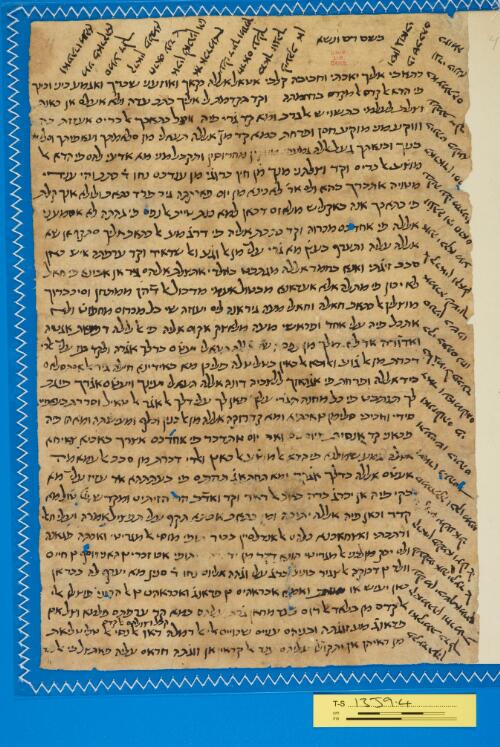
- בשם רם ונשא
- כתאבי אליך יאכתי וחביבה קלבי אטאל אללה בקאך ואוזעני שכרך ואגמע ביני ובינך
- פי הדא אלקדס אלמקדס ברחמתה וקד תקדמת לי אליך כתב עדה ולא אעלם אן כנאת
- וצלת לעלמי בתשויש אלגרב ומא קד גרי פיה ווצל כתאבך אלכרים אעזזת בה
- וווקע מני מוקע חסן ופרחת במא קד מן אללה תעאלי מן סלאמתך ועאפיתך וסלאמה
- בניך ובנאתך געל אללה גמעהם מווקין מחרוסין ותקבל מני מא אדעי להם פי הדא אל
- מוצע אלכרים וקד וצלתני מנך מן חין כרוגי מן ענדכם נחו ד כתב והי ענדי
- מטויה אתברך בהא ולם אר לאכינא מן יום פארקתה גיר פרד כתאב ולולא אנך קלת
- פי כתאבך אנה באקליש מלאזם דכאן למא כנת טייב אלנפס פי גהתה לא אסמעני
- אללה פי אחדהם מכרוה וקד כתבת אליה פי דרג מע אלכתאב אליך סתקף אן שא
- אללה עליה ותערף בעץ מא גרא עלי מן אלוגע ואלשדאיד וקד ערפתה איש כאן
- סבב זיגתי ואנא בחמד אללה מגתבט באלדי אתצלת אליהם גיר אן אבינא פי חאל
- לא יכון פי מתלה אלא אעדאנא מבטול אעמי מדכול אלדהן ממתחן וסיכברוך
- מוצלין אלכתאב חאלה וחאלי מעה גיר אנה ליס יעוזה שי בל מכרום מחפוט ולא
- אתכל פיה עלי אחד ופראשי מעה מלאצק אקום אליה פי אללילה דפעאת אגטיה
- ואדורה אד לא ימלך מן נפסה שי אללה תעאלי יעטם בדלך אגרה ולקד עז עלי אלדי
- דכרת מן אלגוע ואלובא אלכאין בטליטלה פליכן מא באידינא חילה גיר אלאסתסלם
- ביד אללה ופרחת פי אגהאזך ללצביה דונה אללה תעאלי יעינך ויעטם אגרך פיגב
- לך תגתבט פי כל מחנה תגרי עליך פאן לך עלי דלך אלאגר אלטאיל וסררת בעאפיה
- סידי וחביבי סלימן בן אכתנא ומא קד רזקה אללה מן אלבנין וכלף ומעישתה ומא הו פיה
- פכאני קד אנסית ציותכם ואי יום אתדכר פי אחדכם אצרך באכיא צאיחא
- אטלב לגמע שמלנא פי הדא אלמוצע אלכאץ ואלדי דכרת מן סבב אלעמאמה
- אעטם אללה בדלך אגרך ומא תחתאג תהתם פי בעתתהא אד עזיז עלי מא
- יבקי פיה אן יכרג ברה באב אלדאר וקד ואדב הר הזיתים ומקדש יי טולמא
- קדר וכאן פיה אללה יתיבה ומן כתאב אכינא תקף עלי תפציל אמרה ועלי חאלי
- ורתבתי ואצחאבנא כלהם אלאנדלסיין בכיר תופי מוסי אלמגריטי ואכתה פגאנה
- ולם יבק [[מן]] לבני אלמגריטי הונא דכר מן ידכרה ותופי אבו זכרי בן האני ויוסף בן חיים
- וולד בן דבוקה אלצגיר בוניאל כרג עלי וגהה אליום נחו ד סנין מא יערף לה כבר אן
- כאן יעיש או מאת ואמא אבראהים בן פדאנג ואבראהים בן אלהרוני פוצלו אלי
- אלקדס מן בלאד אלרום בעד מחאן גרת עליהם כמא קד ערפתם פלמא וצל אבן
- פדאנג מע זוגתה ובניהם עניים שכויים אלי אלרמלה //קבל וצולהם אלקדס// ראו אלנסי אלטליטליאת
- מן ראיהן אן יתקולו עליהם ענד אלקראין אן זוגתה חראם עליה פאתצל בי אלכבר
Right Margin:
- פקצדתהן
- > ואקימת בדלך
- קיאמתהן וחרמת
- עלי מן יכשף אמרהם
- לעלמי אנה יקצד אל
- קראין פלמא וצלו אלי
- אלקדס טלעו אלי
- סמרתקה ובקו מעהם
- וצארו מנהם
- ותעיישו בינהם
- ואנזלוהם פי
- דאר ועאמלוהם
- באלגמיל פבעד
- בקי בינהם נחו
- סנתין כשפו
- אמרה לשיוך
- אלקראין וקאלו
- אנה יבקא מע
- זוגתה והי חראם
- עליה עלי מדהבהם
- פאראדו יפר[קו]
- בינהם פלמא
- עלמת דלך
- כאצמתהם
- וגרי ביננא
- כצומה
Upper Margin:
- פי סבבהם
- וכאן גואבי
- ליעקב אן
- כדאק זוגתך
- חראם עליך
- עלי דינך ומדהבך
- אד אכדמא
- אכין לאכתין והו
- חראם ענד אל
- קראין פלמא
- סמע דלך
- מני פארקהא
- ואפתרז מנהא
Recto
- Regarding Ibrāhīm b. Fadānj and Ibrāhīm b. al-Harūnī, they arrived in
- Jerusalem from the Christian lands (bilād al-rūm: Byzantium) after the suffering they endured, as you know. When Ibn
- Fadānj arrived in Ramla with his wife and children, poor captives, before reaching Jerusalem the people of Toledo had
- the bright idea of reporting them to the Karaites because his wife was forbidden to him. As soon as I received news of this
Right Margin
- I contacted them
- which caused
- a stir amongst them and I curse
- whoever had spread word of this affair
- because I knew that it would reach the
- Karaites. When they got to
- Jerusalem they went up to
- Samareitike and stayed with them,
- they became one of them,
- they lived amongst them,
- they were taken into
- a home and treated
- well. After
- they had stayed with them for
- about two years they spread
- word of the affair to the Karaite
- authorities, asserting
- that he was staying with
- his wife which was forbidden
- according to their doctrines.
- They intended to separate
- the two of them and as soon as
- I found out about it
- I lodged a complaint
- and, amongst us, this created
- a controversy
Translated by Renée Levine Melammed.
In the name of the High and Exalted
I write to you, my beloved sister—may God prolong your life and give me cause to be thankful for you and reunite us in this holy [city] of Jerusalem through his mercy.
I wrote several letters to you previously, but I do not know if they arrived, for I realize that the West is in turbulence and am aware of what has been happening there. Your precious letter did arrive. It did me great honor, and I appreciated it very much. I was delighted to learn that God, the exalted, gave you and your sons and daughters well-being and health—may God always protect them—and may He accept my prayers at this noble place.
I have received about four letters from you since the time I left you. They are with me, folded up. I derive blessing from them. From our brother, however, I have not seen more than one letter since the day of his departure. And were it not for your telling in your letter that he is in Uclés [in al-Andalus], supervising a store, I would have remained worried about him. May God not let me hear anything unfavorable about any of you! I wrote a message to him in an enclosure within this letter to you. You may read it, God willing, and then you will know some of the ailments and adversities that I have endured. I also recounted the reason for my marriage, and that I, thank God, am pleased with my new relatives.
Our father, however, is in a state that we wish only upon our enemies. He is paralyzed, blind, demented, and in great torment. The deliverers of this letter will inform you about his condition and what I do for him. He lacks nothing and is treated with respect and looked after. I do not rely upon anyone else to take care of him. My bed adjoins his. I get up several times at night to cover him and turn him over, as he is incapable of doing anything by himself—may God, the exalted, increase his reward for his suffering.
I was very distressed to hear your report about the famine and plague taking place in Toledo. Alas, we have no recourse but submission to God. I was happy to hear that you are preparing the dowry for the [marriage of the] young girl Dona. May God, the exalted, assist you and increase your reward. You should be resigned to every tribulation that befalls you and thus be amply rewarded.
I was delighted to hear about the well-being of my master and friend Sulaymān, our sister’s son, about the children God has provided him, and about Khalaf and his livelihood and prosperity.
I have, as it were, forgotten your voices, and whenever I remember one of you, I sob profusely. I only wish that we could be united in this special place.
You wrote concerning the turban—may God increase your reward—you need not concern yourself with sending it, for it is hard for me to accept that what has remained behind should be sent away from the house.
[Our father] devoted himself to praying on the Mount of Olives and the Temple of the Lord as long as he was able—may God reward him for this. From my letter to our brother, you will learn details about his condition and my situation and status.
Our Andalusi friends are all fine. Mūsā al-Majrīṭī and his sister Pagana died, and there is no longer a vestige of the al-Majrīṭī family here. Abū Zikrī ben Hani and Joseph ben Ḥayim died. Bonil, the young son of Ben Dabuqa, went on a journey about four years ago, and there has been no word about whether he is dead or alive. Ibrahīm ibn Fadānj and Ibrahīm ibn al-Harūnī arrived in Jerusalem from Byzantine territory after tribulations that befell them, as you already know.
When ibn Fadānj arrived in Ramla with his wife and their children, poor and destitute, before they arrived in Jerusalem, the Toledan women decided to spread rumors about them among the Karaites, saying that his wife was legally prohibited to him, and I found out about it.
I went to [the women], and they made quite an uproar, and so I pronounced a ban on anyone who circulated gossip about them, knowing that he intended to go live with the Karaites. When they arrived in Jerusalem, they went to the Samartaka quarter [i.e., the Karaite quarter of Jerusalem] and stayed with [the Karaites]. [He and his wife] joined them and lived among them. [The Karaites] settled them in a house and treated them well. But after remaining with them for about two years, people informed on him to the Karaite elders. They claimed that he was living with his wife although she was forbidden to him according to their rite. They intended to have them separated. But when I discovered this, I argued with [the elders], and a dispute erupted between us on account of them. My answer to Jacob was that your wife is really forbidden to you according to your religion and rite, as two brothers married to two sisters, and this is forbidden to the Karaites. When he heard me say this, he left her and separated himself from her.
T-S 13J9.4 1v
Verso:
- תם וקפת לאדונינו אב בית דין פי סבב אלעניה אלשכויה וארסל אלי אלקראין יקול
- אנה ליס יטלקהא אלא עלי אלמדהב אלדי זוגהא וכתובתהא כתבת ענד אלרבאנין
- פיזן מהרהא וחיניד יטלקהא ולם אזל אנא אתלטף אמרה חתי קבלוה אלרבאנין
- ונזל אלי ענדהם מע זוגתה ואולאדה אבו זכרי ויוסף ומוסי וחלוה ואנזלוה פי דאר
- בין אלרבאנין ויעאמלוה באלגמיל ליס עגזה מעהם שי פאן ליס כאן ירידו יקבלוהם
- לסבב אן כאנו רבאנין וצארו קראין ומכתו ענדהם סנתין פלמא ראית מא אראדו
- יפעלו באלעניה יפרקוהא מן זוגהא ויבקו אלאטפאל איתאם פי אלחיאה וכאן זמאן שדה
- וגוע פעלת פי אמרהם מא יתיבני אללה עליה והו אלאן אבראהים אלמדכור יכרג
- מע אבנה אלי ציעה פי אלשאם קריב מן אלקדס להמא פיהא דכאן ויתעיישו [פי]הא
- והם בכיר מסתורין ולא יטן אחד לאן להם דלאלה עלי תחרים אלאכתין בעד אל
- מות ולא יקדר אחדהם אליום מן אהל אלעלם ירי פיה וגה אכתר אן יקולו אן הכדי
- אסתסן ענן רייסהם וקדמון אלקראין ויבהתו בשבאה לא מעול עליהא פלמא
- ראו אן אבן פדאנג קד שד מנהם ורגע אלי אלרבאנין שביה מן קאל אשובה אל אישי
- הראשון כי טוב לי אז מ[עתה] חלו אליד ואדכו אלאמר עלי יעקב כשיתהם אלא
- יזול איצא הו מנהם ובקי מע זוגתה גיר אנה אסתחלפוה אן ינעזל מנהא אשר
- לא ציויתי ולא עלתה על לבי פערפתך יאכתי בדלך חתי תוקף אכוהא סידי מוסי
- בן אלפלמקי עלי כתאבי ולולא אן כתבת עלי חאל עגל אלא וכאתבתה בדלך ואקראך
- יאכתי סלאמא כבירא ותבאלגה מן גמיע אלאהל בניך ובנאתך ואצהארך וכאלאתנא
- ובניהם ובנאתהם וסאיר אלאהל ויעקב //ו....// ויוסף בן פלכון ובנת עמנא וסלאמה יעל
(right margin)
- ובנו עמנא
- ובניהם ומן
- דכרת ומן לם
- אדכר וכתבת
- הדא אלכתאב
- פי שהר מרחשון
- סנה תתיח
- ושלום
- ויש[ע] ר[ב]
- שמעון ביר
- שאול סט
(down)
- יצל פי אלאנדלס מדינה טליטלה אלי יד בלוטה בנת שאול בן ישראל מן אביהא
- שאול ואכיהא שמעון אלסאכנאן דאר אלסאלם עמרה אללה פי איאמנא
Verso
- I then updated our lord, the president of the court, about the poor captive woman and he sent a message to the Karaites that said
- that he could only divorce her according to the doctrine by which he had entered into marriage with her and that his marriage certificate had been issued by the rabbis.
- He would pay her dowry and then he would divorce her. I continued to follow the matter until the rabbis received him
- and he stayed with them along with his wife and children, Abū Zikrī, Yosef, Mūsā and Ḥalwa. They lodged in a house
- amongst the Rabbinites and they treated him well, they lacked for nothing and although they did not want to take them in
- because, as Rabbinites, they had become Karaites and had stayed with them for two years. When I saw what they wanted
- to do with the poor woman, to separate her from her husband, making the children orphans in the world, at a time of hardship
- and famine, I did for them what God will reward me for. Now he, the aforementioned Ibrāhīm, has gone
- with his son to a village in the Levant, near Jerusalem where they have a shop that provides them with sustenance.
- They are well, respected and nobody is of the opinion that there is evidence by which the two sisters are prohibited to him after
- death. To this day, none of their specialists can offer proof that there is another possibility in his case except to affirm that this
- was customary with Anan, their leader, and the ancient Karaites, without getting tangled up in thorn bushes that should not be torn up. When
- they saw that Ibn Fadānj fled from them and returned to the Rabbinites, similar to he who said: I return to my first
- husband because I was better then than now (Hosea 2:9), they slackened the rope and excused the matter of Jacob, fearing that
- he would leave them as well. He stayed with his wife, although they took testimony from him that he would separate from her, which
- I did not command nor did it enter my mind (Jeremiah 7:31). I am updating you about this, my sister, so that you show his brother, my lord Mūsā
- al-Falmiqī, my letter. If I were not writing in such an improvised manner, I would have written to tell him so.
Verso
Then I presented myself to our lord, the head of the court, on account of this poor, destitute woman, and he sent word to the Karaites to announce that he may not divorce her save according to the rite by which he married her, and her marriage contract had been drawn up by the Rabbanites. If so, he should pay her dowry and only then divorce her. I continued to deal gently with her case until the Rabbanites accepted him. He went to settle among them with his wife and children, Abū Zikrī, Joseph, Mūsā, and Ḥalwa. They settled him among the Rabbanites and treated him well. He lacked nothing when he was with them, although they were reluctant to receive [the couple], as they had formerly been Rabbanites and thereafter went over to Karaism. They abided with them for two years.
When I saw what they wished to do to the poor woman—to separate her from her husband, with the result that the children would become orphans while [their parents were] alive—and considering that it was a time of adversity and famine, I acted on their behalf, may God reward me for it.
And now the aforementioned Ibrahīm is going out with his son to a village in Palestine near Jerusalem, where they have a store that will provide them a livelihood. They are well and protected, and no one will suspect, for they have directives forbidding [marriage to] two sisters after the death [of one of them]. And no one of the jurisprudents today can find a reason for this aside from [the Karaites’] claim that this is laid down as custom by ‘Anan their leader and the first of the Karaites, and they invent misleading things that are completely unfounded.
When they saw that ibn Fadānj left them and returned to the Rabbanites, like the one who said: I will go and return to my first husband, for then was it better with me than now (Hosea 2:9), they acquiesced and smoothed over the matter concerning Jacob, apprehending that he may not stay among them and remain with his wife. But they made him take an oath that he would abstain from her, which I did not command, nor did it dawn on me (Jeremiah 7:31).
I tell you all this, my sister, so that you inform her brother, my master Mūsā ben al-Falmiqī, about [the contents of] my letter. If I were not writing in a hurry, I would have written to him directly about this.
I send you, my sister, many greetings; convey [greetings] also to the entire family—your sons, daughters, sons-in-law; our maternal aunts, their sons and daughters; and the rest of the family, and Jacob and . . . Joseph ben Palkhon, the daughter of our paternal uncle and Salāma Yael.
Verso, margin
And the sons of our maternal uncle and their sons and those I have mentioned and those I have not. I wrote this letter during the month of Marheshvan of the year [4]818. Peace and abundant salvation. Simeon ben R. Saul, may his end be prosperous.
Verso, address
To be delivered to al-Andalus, to the town of Toledo, to Balluta daughter of Saul, son of Israel, from her father Saul and her brother Simeon, who live in the City of Peace [Jerusalem], may God rebuild it in our days
