Letter: T-S NS J7
Letter T-S NS J7What's in the PGP
- Image
- 1 Transcription
- 2 Translations
Description
India Book (IB) IV,60 (ח70). Letter from Yeḥezqel, probably in Qalyūb, to his brother Ḥalfon in Alexandria. Dated/dating: Iyar 1140. Yeḥezqel complains rather winningly and at great length about his various business problems: "I'm oppressed, but being painted an oppressor" (anā maẓlūm fī ṣūrat ẓālim), i.e., I’m being blamed for things that aren’t my fault. The problems in question: their cheese venture (see IB ח69, ח68, ח64) and the legal proceedings related to it, on which the judges were unable to reach a decision; goods delayed in the bayt al-wakīl, about which the judges wanted the parties to reach a compromise; and a legal action related to the sale of a house, with judges unable to reach a decision: should the decision be according to the approach of Hayye Gaʾon or Yiṣḥaq al-Fāsī? One of the judges suggests to Yeḥezqel that Ḥalfon should have solicited a responsum (fatwā) from Ibn Mīgash, which would have strengthened their hand. Also discusses trade in donkeys (sold without tack because otherwise the price would have been higher) and a long story about transporting silk from the village of Banhā in the delta together with a tax-farmer named Abū Saʿd (perhaps the same one who appears as a former tax-farmer 25 years later in T-S 13J2.24 = PGPID 1008). This Abū Saʿd the tax-farmer (ḍāmin) worked as a pair with a ḍāmin from Cairo, and so couldn't just show up in Banhā at the drop of a hat to help Yeḥezqel transport Abū Zikrī Kohen's silk back to Qalyūb (an eight-hour walk according to Google Maps). Moreover, two tax officials — a fellow tax-farmer in the dār al-ṣināʿa, the main customs point entering Fustat (see Med. Soc. .2:360, 606n34) and the tax-collector (mushidd, an Ayyubid term for the tax-collector at ports, on which Friedman cites Cahen, ’Le régime des impôts dans le Fayyūm ayyūbide,’ Arabica 3 [1956], 19), meaning the one working at the dār al-ṣināʿa? — "don't let him take (even) one raṭl (of silk) as a fee (or bribe?), or it's said to him, 'That's not yours!' The injustice is rampant." Unclear whether here we have the striking picture of a tax-farmer deeming it an injustice that his superiors forbid him from taking bribes; he uses the Hebrew word ḥamas, which in this period, according to Friedman, is a technical term for government-imposed injustice, so perhaps this is by comparison to some earlier period, when it was understood that tax-collectors could enrich themselves in kind. Mentions the death of Abū Naṣr b. al-Minqār, who was Ibn Yijū’s cousin, the son of his maternal aunt. Mentions the India trader Abū ʿAlī b. al-Kirnīb, who also appears in Maimonides' responsa. Although the names of the writer and addressee aren't stated explicitly because the letter has no address (it was probably hand-delivered), Goitein and Friedman identified them based on content and paleography. (Information from Goitein and Friedman, India Book IV.)
מכתב מאת יחזקאל אל אחיו חלפון על משפטים וסכסוכים כנראה קַלְיוּבּ, אייר, שהוא מאי 1140 יחזקאל כתב מכתב זה לאחיו חלפון השוהה באלכסנדריה. המכתב שלם, אבל אין בו כתובת. מן הסתם ידע הכותב שהשליח יביא באופן אישי את המכתב אל הנמען. חסרים אפוא שמותיהם של הכותב ושל הנמען, שהוא פונה אליו בתור אחיו. אף על פי כן קביעתו של גויטיין שיחזקאל הוא שכתב מכתב זה לחלפון ודאית על פי הכתב והתוכן. כמה מן הדברים שיחזקאל כתב עליהם כאן קשורים בבירור לתוכנם של מכתביו האחרים, במיוחד תעודה ח64, ח68, ח69. בשלוש פסקאות עסק הכותב בַּמשפטים שהוא או הוא וחלפון היו בעלי דין בהם. המשפט הראשון סבב על עסקי הגבינה, והוא נזכר כבר בתעודה ח64, ח68, ח69. יחזקאל נתן אמון בנוכל, והלה נשבע לשקר. הדיינים לא הצליחו להכריע בדין, כי ה'ראש', אולי שמואל הנגיד, לא ישב עמהם. במשפט על סחורות שעוכבו ב'בית הפקידות' רצו הדיינים שיגיעו בעלי הדין לידי פשרה. בתוספת שבסוף המכתב דיווח יחזקאל על 'המשפט שלי', הקשור למכירת בית. ישבו בדין ארבעה דיינים, שנרמזו בשמותיהם או בתואריהם, והם נחלקו בדעותיהם אם יש לפסוק את ההלכה לפי שיטת רב האיי גאון או לפי שיטת הרי"ף. אחד מן הדיינים הציע ליחזקאל שחלפון ימציא תשובה שכתב הר"י אבן מיגש. במכתב גם ידיעות מעניינות על סוחרים ומסחר, ובהן על הסחר בחמורים ובמשי בכפר בַּנְהַא, לרבות ידיעות על גביית המסים בידי ̇צַאמִן ומֻשִׁדّ (ראה ע"ב, שורה 8). לדברי יחזקאל, הוא נפל בפח בגלל מתן אמון יתר אף בסוחר המקורב למשפחה, אבו אלחַסַן אבן ̇כֻלַיְף, שכפר במקצת החוב שהיה לו. מסתבר, שהמכתב נכתב בחודש אייר. יחזקאל הזכיר מסע לכפר בַּנְהַא בתחילת החודש ההוא וציין שיקבל כספים בחודש סיוון, שכפי הנראה טרם החל.1
Tags
Editors: Goitein, S. D.; Friedman, Mordechai Akiva; Ashur, Amir
Translator: Rustow, Marina (in English)
T-S NS J7 1r
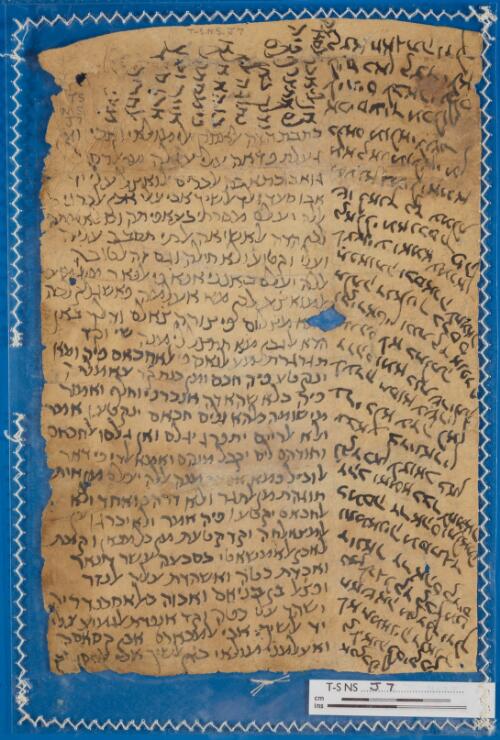
Recto
- כתבת הדה אלאחרף אלי מולאי ואכי ומן
- געלת פדאה עלי עגלה מן אלרסול
- גואב כתאבה אלכרים אלואצל עלי יד
- אבו סעד ולד אלשיך אבו עלי אבן אלכרניב
- אללה יעלם מסרתי בעאפיתה וסלאמתה
- לכן הדה אלאשיאה (!) אלתי תסבב עליה
- ועלי וקטועי לא חילה וגם זה לטובה
- אללה יעלם באנני אנא פי אלנאר מן גמיע
- אלמואצ'ע לכן מא אעלמה פאשגל קלבה
- [וא]נִא מצ'לום פי צורה צ'אלם ודלך באן
- הדא אלגבן מא תחצל לי מנה שי וקד
- תגרגרת מע אלנאס פי אלאחכאם פיה ומא
- ינקטע פיה חכם ומן כנת קד עאמלתה
- פיה בלא שהאדה אנכרני וחלף ואמור
- מישומה כלהא וליס חכאם ינקטעו אמר
- ולא אלרייס יתפרג יגלס ואן גלסו אלחכאם
- וחודהם ליס יקבל מנהם ואמא אלדי פי דאר
- אלוכיל פמא אגִבִרִ מנה אללה יעלם מן חית
- תוגהת מן אלתגר ולא דרהם ואחד ולא
- אלחכאם יקטעו פיה אמר ולא יכרגו ען
- אלמצאלחה וקד קטעת מן כל מכאן וקמת
- לאבן אלאמשאטי בסבעה עשר דינאר
- ואכדת כטה ואשהדת עליה אלנזר
- ופצ'ל בן בניאם ואכוה באלאסכנדריה
- ישהד עלי כטה וקד אנפדת אלגמיע עלי
- יד אלשיך אבי אלמכארם אבן קסאסה
- ואעלמני מולאי באן אלשיך אבי אלחסן אבן
Recto - right margin
- אבן (!) כליף
- קאל אנה לם יקבץ'
- אלא תמאניה דנאניר
- חאשאה מן דלך ודלך
- באן אלרגל קד קבץ' מני
- דינאר דראהם קדים
- ותמאניה מסתגד
- כמסה דראהם ותלאתה
- דהב ואמא כבר אלחמאר
- לקד כאן אלצואב באן
- ינבאע בדינארין
- ערי בלא עדה לאן
- אלעדה תסוא עשרין
- דרהם ומא כנת שריתה
- מנהם אלא בתלתה
- וקיראטין וכנת קד אנפדת
- תלתה דנאניר ברסם
- תפאותה וכסארת אלחמאר
- אלצ'איע ואמא עמראן
- קאל לי מא נכסרך פיה
- שי לאנך קד עמלת
- מענא גמיל ואמא
- מא קאל מולאי מן
- כלאם מולאי אלשיך
- אבי סעיד מכלוף
- אליתים אלבארי עלם
- ליס כאן קצדי אלא
- קצ'א חאגתה ודלך
Recto - top margin
- אן אלי אכר אלסאעה
- לם אתצרף פיה
- ודלך באן לם
- נתוגה אלי
- בנהא אלא
- פי מסתהל
- אייר וכִאִן
- אבו סעִד
- אלחריריִ
- מעי
recto
- כתבתי את המילים הללו אל אדוני אחי ומי
- שאיעשה כפרתו, בחיפזון בגלל השליח
- – בתשובה למכתבו היקר שהגיע על ידי
- אבו סעד בן השיך אבו עלי אבן אלכרניב.
- ה' יודע את שמחתי בבריאותו ושלומו.
- אולם הדברים הללו שמעוררים אותם נגדו
- ונגדי והמשבר שלי – אין שום דבר לעשות! וגם זה לטובה.
- ה' יודע שאני במצוקה קשה מכל
- העניינים. אבל לא אודיע לו (= לך) ואטריד את לבו.
- [וא]ני עשוק במעמד עושק, וזאת לאור העובדה
- שלא הרווחתי מן הגבינה הזאת כלום, וכבר
- היטלטלתי עם הבריות למשפטים בעניינה. ואין
- הדין נפסק בעניינה. ומי שנשאתי ונתתי עמו
- (14–15) בה, שלא בעדות, הכחיש אותי ונשבע (לשקר), וכל (ה)דברים (ה)אומללים/(ה)ארורים. ואין דיינים שיפסקו בדבר.
- ואין הראש מתפנה לשבת בדין. ואם הדיינים ישבו בדין
- לבדם, לא יצייתו להם. ואשר למה שבבית
- הפקיד. לא השלמתי את החסרון – שהרי במרומים! – מאז
- שיצאתי לדרך מן אלכסנדריה – ולו דרהם אחד. ואין
- הדיינים פוסקים את הדין בעניינו ואינם יוצאים מגדר
- הפשרה. ואני כבר אובד מכל צד. ושילמתי
- לאבן אלאמשאטי שבעה עשר דינר,
- ולקחתי ממנו קבלה והעידותי עליה את ה'נזר'
- ופצל בן בניאם. ואחיו שבאלכסנדריה
- (25–26) יעיד על חתימתו. וכבר שלחתי את הכול על ידי השיך אבו אלמכארם אבן קסאסה.
- ואדוני הודיע לי שהשיך אבו אלחסן אבן
recto, right margin
- אבן (!) כליף
- אמר, שהוא לא קיבל
- אלא שמונה דינרים.
- חלילה לו מלומר כך,
- כי האיש כבר קיבל ממני
- דינר בדרהמים קודם,
- ושמונה זה מקרוב,
- חמישה בדרהמים ושלושה
- במטבעות זהב. אשר לעניין החמור,
- הרי בוודאי הנכון הוא
- שיימכר בשני דינרים,
- כמות שהוא ללא ציוד, כי
- הציוד שווה עשרים
- דרהם. ולא קניתי אותו
- מהם אלא בשלושה (דינרים)
- ושני קיראטים. וכבר שלחתי (לך)
- שלושה דינרים בשביל
- העודף ממנו וחסרון החמור
- האובד. ואשר לעמראן,
- (20–21) הוא אמר לי: 'אין אנו גורמים לך בו שום הפסד, כי אתה עשית
- עמנו טובה'. ואשר
- לדברי אדוני על
- אודות מה שאמר אדוני השיך
- אבו סעיד מכלוף
- אליתים. הבורא יודע
- שכוונתי לא הייתה אלא
- למלא את צורכו.
recto, top margin
- כי עד רגע זה
- לא נשאתי ונתתי בו.
- כי לא
- יצאתי לדרך אל
- בנהא אלא
- בראשית חודש
- אייר. והיה
- אבו מעד
- אלחרירי
- אתי.
Recto
- I am writing this lines to my lord and brother and the one for whom
- I would sacrifice myself in haste because of the messenger,
- in response to his kind letter, which arrived in the hands of
- Abū Saʿd, son of the elder Abū ʿAlī b. al-Kirnīb.
- God knows my happiness at his health and wellbeing.
- But these things that have been set in motion against him
- and me, and my break — there is nothing to be done. "This, too, is for the best" (b.Taʿanit 21a and parallels).
- God knows that I myself am in hell because of all
- these issues. But I won't tell you and worry you.
- I'm oppressed, but being painted as an oppressor because
- of this cheese — nothing has arrived from him. I've
- already dragged people through legal proceedings because of it. A decision
- hasn't been reached about it. The person I was negotiating with
- over it without involving witnesses has refused me and sworn (Goitein: falsely), and all manner of
- sinister things. The judges aren't deciding the matter,
- the rayyis isn't free to sit in session, and if the judges sit
- on their own, (the decision) they (make) won't be accepted. As for what's in the dār
- al-wakīl, God knows that since I left the port,
- I haven't paid a single dirham of what I owe on it.
- The judges haven't come to a decision and they haven't set out
- a settlement. I'm being cut off from every place. I repaid
- Ibn al-Amshāṭī the seventeen dīnārs
- and took his signature (on a quittance) and had the Nezer witness it,
- and Faḍl b. Binyām and his brother in Alexandria
- signed their attestations on his signature. I sent everything with
- the elder Abū l-Makārim b. Qassāsa.
- Let me know, my lord, whether the elder Abū l-Ḥasan b.
Recto, right margin
- {Ibn} Khulayf
- said that he's collected
- only eight dīnārs.
- God forbid this is the case,
- since the man had already collected from me
- a dinar's worth of dirhams earlier,
- whereas the eight happened recently,
- five in dirhams and three
- in gold coins. As for the news about the donkey,
- the right thing to do would have been
- for it to be sold for two dīnārs
- bare, with no tack, since
- the tack would have cost twenty
- dirhams and I would only have bought it
- from them for three
- and two qīrāṭs. I already sent
- three dīnārs in
- change and the difference due to the lost donkey.
- As for ʿImrān,
- he told me, "We won't cause you any losses,
- since you're already doing
- a favor for us. But as to
- what my lord reported about
- what my lord the elder
- Abū Saʿīd Makhlūf
- al-Yatīm said: the Creator knows
- that my intention was only
- to meet his need. Because
Recto, top margin
- up until this moment,
- I haven't done business with him,
- because I
- traveled to
- Banhā only
- at the beginning of
- Iyyar, and
- Abū Saʿd
- the silker was
- with me.
T-S NS J7 1v
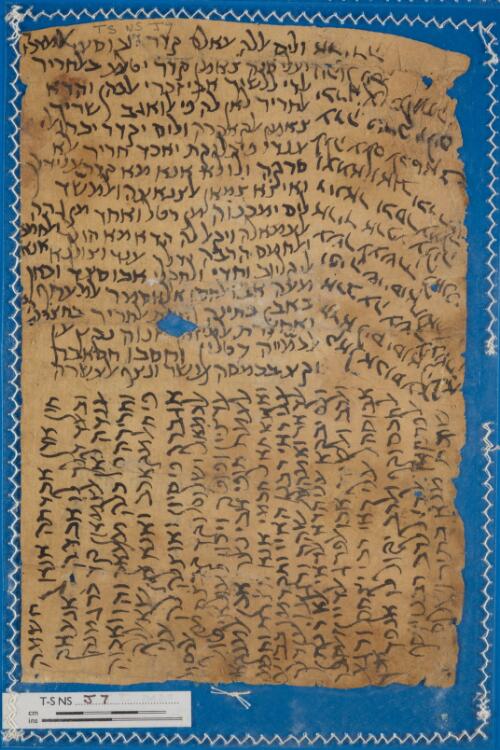
Verso
- וליס אללה עאלם קדר אבו סעד אלמדכור
- ועלי אנה צ'אמן קדר יטלע באלחריר
- אלדי ללשיך אבי זכרי אלכהן והדא
- אלחריר לאן לה פי אלואגב שריך
- צ'אמן אלקאהרה וליס יקדר יכרג אלי
- ענדי פי כל וקת יאכד חריר אלא
- סרקה ולולא אנא מא קדר עלי דלך
- ואיצ'א צ'מאן אלצנאעה ואלמשד
- ליס ימכנוה מן רטל ואחד מן גהה
- אלעמאלה ויקאל לה הדא מא הו לך ואלחמס
- ואלחמס (!) הרבה ודלך ענד וצולנא אנא
- אלי קליוב וחדי ולחקני אבו סעד וכאן
- מעה אבו אלחסן אלאסמר אלמערוף
- באבן בתינה ונִזִלת אלחריר בחצ'רתהם
- ואחצ'רת אלמיזאן [ו]וזנוה נקץ ען
- אלכמייה' רטלין וחסבו חסאבה
- וקע בכמסה עשר ונצף אלעשרה
Verso - right margin
- קאל אבו סעד
- הדא ליס יסוא לי אלא
- ארבעה עשר אלעשרה
- ופיה שי יסוא תלאת
- עשר אלעשרה לאנני
- אריד ארפע עליה
- דינאר וכסר עמאלה
- וצ'מאן ואגב וכררת
- אללה עאלם אלכטאב
- עדה טרק וליס
- יכרג' ען כלמתה
- ויקול ליס
- ארידה
Verso - bottom
- חין אדן אכדתה אנא חשמה
- ובעד דלך לו אכדה אנעאק
- ענדה לאן אלצ'מאן קד כרג מנה
- וחרירהם כלה מעאק והו ואכוה
- פי חאל מקארב ואנא אן שא אללה
- אגברה פי סיון ואוצלה לה עלי
- אלכמאל ושלום וקד קבצ'ת מן אלרסול
- ערצ'יין ופוטה ויכון למולאי טול
- אלעמר תופי אבי נצר אבן אלמנקאר
- ואמא חאל חכמי אנא חצ'רת וחכמו
- עלי ראי רבנו האיי ותקדמו בביע
- אלדאר ואמהלת שהר ורגעו ען דלך
- ולם יבקא עלי הדא אלראי אלא ר' נתן
- ואלרב ואלשיך אבו אלפרג אלדיין ואלחבר
- אבו סהל עלי ראי רבי יצחק ורגע
- אלחכם וקף ואלרב יקול לו אנפד אכוך
- אלפתוא אלדי ללרב רבנו יוסף
- שדִת מנא כתיר ושלום
verso
- וה' יודע, לא יכול אבו סעד הנזכר –
- אף על פי שהוא חוכר מס – יכול (!) להביא (לפסטאט) את המשי
- של השיך אבו זכרי הכהן והמשי
- הזה, כי יש לו במס שותף,
- חוכר מס קהיר, ואין הוא יכול לצאת את העיר ולבוא
- אליי בכל עת לקחת משי אלא
- יריעה (אחת) של אריג משי (?). ולולי אני, הוא לא היה יכול להשיג זאת.
- וגם חוכרי ה'צנועה' וה'משד'
- אינם מניחים לו לקחת רוטל אחד בתור
- עמלה. ואומרים לו: זה אינו שלך. והחמס
- (11–12) והחמס (!) הרבה. כי בשעה שהגענו אל קליוב, אני לבדי, הדביקני אבו סעד והיה
- עמו אבו אלחסן אלאסמר הידוע
- בשם אבן בתינה, ופרקתי את המשי בנוכחותם.
- (15–16) והבאתי את המאזניים. שקלו אותו, בפחיתת שני/פחת המשקל בשני רוטלים. ועשו חשבון,
- שהסתכם בחמישה עשר וחצי לעשרה.
verso, right margin
- אמר אבו סעד:
- 'איני מוכן לשלם בעד זה אלא
- ארבעה עשר לעשרה,
- (4–5) ויש בו סחורה שאני מוכן לשלם בעדה (רק) שלושה עשר לעשרה, כי אני
- רוצה להוסיף על מחירו
- קצת יותר מדינר/דינר ושבר דינר עמלה
- והתשלום לחוכר המס'. וחזרתי –
- ה' יודע – על הפנייה
- הרבה פעמים. אבל הוא לא
- סטה מדבריו,
- והיה אומר: 'אין
- אני רוצה אותו'.
verso, bottom margin
- אותה שעה אני לקחתי (= קניתי) אותו מתוך בושה.
- ולאחר מכן (התברר) שאילו הוא היה רוכש אותו, היה מעוכב
- אצלו, כי החכירה כבר אבדה לו,
- והמשי שלהם כולו מעוקל. והוא ואחיו
- במצב גרוע. ואני, אם ירצה ה',
- אשלים את חסרונו בסיוון ואביא אותו אליו (= אליך)
- בשלמות. ושלום. ולקחתי מן השליח
- שני רדידים ופוטה. ולאדוני תהיה אריכות
- ימים – נפטר אבו נצר אבן אלמנקאר. ואשר למצב המשפט שלי. הופעתי ודנו
- על פי שיטת רבנו האיי. והורו למכור
- את הבית, וניתנה לי ארכה של חודש. וחזרו בהם מזה.
- ולא דבק(ו) בשיטה זו אלא ר' נתן
- והרב, והשיך אבו אלפרג' הדיין והחבר
- אבו סהל הם בשיטת רבי יצחק. ואז
- המשפט היה תלוי ועומד. והרב אומר: 'לו שלח אחיך
- את התשובה של הרב רבנו יוסף,
- היא הייתה מחזקת את ידנו מאוד'. ושלום.
Verso
- God knows that the aforementioned Abū Saʿd isn't able
- — even though he's a tax-farmer — {able} to bring
- Abū Zikrī al-Kohen's silk back (to Fustat). This
- silk(er?) — since he has a partner in the obligation,
- the tax-farmer of Cairo, he can't come to
- me any time to take silk unless
- he's stealing it. If it weren't for me, he couldn't have done it.
- Also, the tax-farm of the (dār) al-ṣināʿa and the tax-collector (mushidd)
- don't let him take one raṭl as
- a fee, or it's said to him, That's not yours! The injustice
- {the injustice} is rampant. So from the moment I
- arrived in Qalyūb, I've been by myself, and Abū Saʿd has caught up with me
- accompanied by Abū l-Ḥasan al-Asmar ("the swarthy"), known
- as Ibn Buthayna. I brought the silk down when they were with me,
- and I brought the scales and they weighed it, minus
- a quantity of two raṭls, and added up the total,
- which came to 15½ (dīnārs) per 10 (raṭls).
Verso, right margin
- So Abū Saʿd said:
- "To me this is only worth
- 14 (dīnārs) per 10 (raṭls),
- and there is something in it (that makes it) worth
- 13 (dīnārs) per 10 (raṭls), because I
- want to raise (the price) by
- a dīnār and subtract the commission (?)
- and the tax obligation." I came back,
- God knows, to this speech
- from a number of angles, but he
- didn't deviate from his words.
- He said: I don't
- want it.
Verso, bottom
- So then I took it myself out of shame.
- Then it turned out, if had he taken it, it would have been detained
- witih him (coming back to Fustat), since he's lost his tax-farm
- and all their silk has been detained. He and his brother
- are in a bad situation, and if God wills, I
- will pay them in Sivan and bring him (you)
- the entirety of it, and it will be over. I collected from the messenger
- two wraps (ʿarḍī) and a fūṭa. May my lord have a long
- life — Abū Naṣr b. al-Minqār died.
- As for the situation of my legal judgment — I showed up and they rendered a decision
- on me according to the opinion of Rabbenu Hayye, and ordered the sale
- of the house, granting me a month's delay, but then they retracted it
- and didn't stand by this opinion, but rather Rabbi Natan (ha-Kohen bar Shelomo)
- and the Rav (Elʿazar b. al-Qaṣabī) and the elder Abū l-Faraj the dayyan and the ḥaver
- Abū Sahl followed the opinion of Rabbi Yiṣḥaq (al-Fāsī), and (then) the decision
- was pending and (then) stood. The Rav was saying, If only you had sent your brother
- the fatwā of the rav Rabbenu Yosef (Ibn Mīgash) —
- it would have strengthened our (position) a lot. Peace.
