רשומה קשורה ל-מכתב: T-S 18J2.3
מכתב T-S 18J2.3- ציטוט
- S. D. Goitein, unpublished index cards (1950–85), #10916. Princeton Geniza Lab, Princeton University.
- Relation to document
- דיון
- ציטוט
- Mark R. Cohen, Jewish Self-Government in Medieval Egypt: The Origins of the Office of the Head of the Jews, ca. 1065-1126 (Princeton University Press, 2014).
- Relation to document
- Digital Translation
- ציטוט
- Mark R. Cohen, "Letter to Eli ben Ḥayim ha-Kohen," in Posen Library of Jewish Culture and Civilization (Yale University Press, 2026).
- Location in source
- Relation to document
- תרגום
- ציטוט
- Mark R. Cohen, "Letter to Eli ben Ḥayim ha-Kohen," in Posen Library of Jewish Culture and Civilization (Yale University Press, 2026), vol. 3.
- Relation to document
- תרגום
- ציטוט
- משה גיל, (634–1099) ארץ-ישראל בתקופה המוסלמית הראשונה (in Hebrew) (Tel Aviv University, 1983), vol. 3.
- Location in source
- #584
- Relation to document
- מהדורה
- ציטוט
- Mark R. Cohen, "קהילת אשקלון בין גאונות ארץ–ישראל לבין ראשות היהודים במצרים" (in Hebrew), Shalem 3 (Yad Izhak Ben Zvi / יד יצחק בן-צבי, 1981), 93-118.
- Location in source
- pp. 96-98
- Relation to document
- Digital Edition
- מהדורה
- ציטוט
- S. D. Goitein's מהדורה (1950–85).
- Location in source
- Relation to document
- מהדורה
Editor: Cohen, Mark R.
Translator: Cohen, Mark R. (in English)
T-S 18J2.3 1r
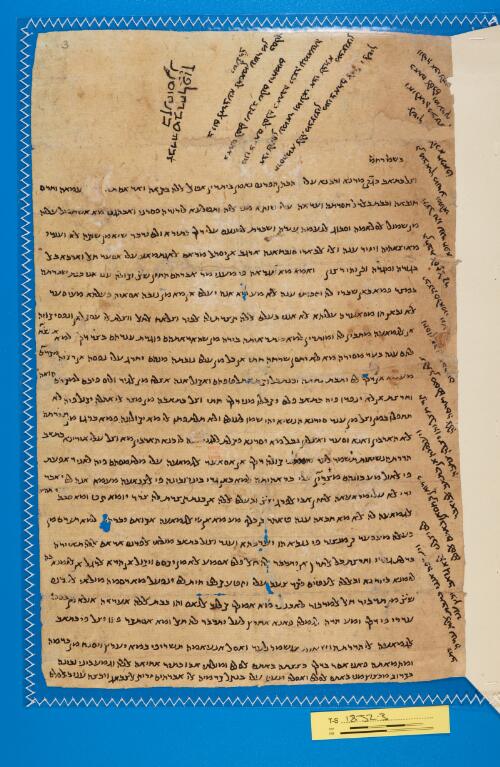
- בשמ רחמ
- וצל כתאב כגק מרנא ורבנא עלי הכהן הפרנס נאמן בית דין אטאל אללה בקאה ואדאם ת[איידה ונ]עמאה וחרס
- חובאה וכבת באלדל חסדתה ועדאה עלי שוקא מני אליה ותטלעא לודודה פסרני ואבהגני מא אשתמל עליה
- מן שמול אלסלאמה וסבוג אלנעמה ענדה ושכרת אלמנעם עלי דלך כתירא ולם ידכר שיא מן שוקה אלא וענדי
- מא יצאהיה ויזיד ענה ואלי אלבארי סובחאנה ארגב אן יסהל מראם אלאגתמאע עלי אסעד חאל וארכא באל
- בגודה ומגדה וכן יהי רצון ואמא מא אגראה פי מעני מר אברהם החזן שצ וקולה עני אני כנת שכרתה
- במצר פמא כאן שכרי לה וסכותי ענה אלא מע מא אנה יעלם אן מא מן נובה אסאיה פעלהא מעי סעד
- אלא וכאן הו מסאעדה עליהא אלא אנני בעלם אללה קצדת לה אלכיר וצלאח אלחאל ווצלת אלי עסקלאן ונפסי קויה
- אן אלגמאעה מחבין לה ומותרין למא כ[נ]ת ראיתה בידה מן שהאדאתהם פוגדת ענדהם בצד דלך למא א[ת]צח
- להם ענה בעד מסירה מא לא יחסן שרחה חתי אן כל מן עלם נובתה מנהם יחרג עלי נפסה אן רציה מקדם
- מעמא אן דלך לם יתבת בחגה וכנת כל וקת אתלטפהם ואקול אנה אצלח מן אלגיר וליס פיכם למקדם סואה
- וחרצת אן לא ינפדו פיה כתאב פלם יקבלו מני דלך חתי וצל כתאבה מן מצר אלי אהלה יקול פיה לא
- תחפלו במן וצל מן ענד סידנא הנשיא יהי שמו לעולם ולא תלתפתו אלי מא יקולונה פמא כרגו מן חצרתה
- אלא הארבין ואנא וסעד ואצלין בכל מא יסרנא פקלת ללגמ[אע]ה לו כנא הארבין מא וצל עלי אידינא כתאב
- הדרת הנשיאות תשמר לעד וחמל[נ]י קולה דלך אן אסאעד אלגמאעה עלי מלתמסהם פיה לאני דאפעת
- פי אלאול מע כונהם מצרין עלי כראהיתה למא כאן גרי ביני ובינה פי אלצנאעה מעמא אנה לם יאכד
- ידי אלא עלי מראעה אלחזן אבי אלפרג שצ ובעלם אללה אן כנת קצדת לה צרר יומא קט ומא סבב דאהיה
- אלגמאעה לה אלא מא חכאה ענה טאהר בן כלף מע מא אן פי אלגמאעה אקואם יכרהו למא תקדם מן
- פעאלה מע סעד בן מנצור פי נובא הו יערפהא וענד וצול כתאב מולאי אלפרנס אדאם אללה תאיידה
- בדלת גהדי וחרצת כל אלחרץ אן יתדבר לה חאל פלם אסמע אלא מן יקסם ויקול אן הדא אלרגל אן אלזמנא בה
- לזמנא ביותנא ובאללה אלעטים פקד צעב עלי וקטע קלבי חית לם ינפעל מא רסמה מולאי אל[פ]רנס
- שצ מן תדביר חאל אלמדכור לאכנני מא אמלך קלוב אלנאס והו כבת אללה אעדאה אולא מן בסט
- עדרי פי דלך ומע הדה [א]לגמלה פאנא אחרץ לעל יתדבר לה חאל ומא אסתקר פ[ה]ו יצל פי כתאב
- אלגמאעה אלי הדרת הנשיאות תושמר לעד ואסל אנעאמה תשריפי במא יערץ ויסנח מן כדמה
- ומהמאתה פאני אסר בדלך כצצתה באתם אלסלם ומולאי אבו כתיר אחיאה אללה וגמע ביני ובינה
- בקרוב מכצוץ מני באתם אלסלם ואסלה ינעם עלי בנקל קדמיה אלי אברהים זריק אלצבאג ויכצה עני באלסלם
Margins
- ויערפה אנני כתבת אליה עדה כתב
- לם יצלני להא גואב יכץ עני
- מרואן בן חסאן באתם אלסלם
- ויעלמה אן כתאב אלכיאבר
- קד חצל והו יצלה צחבה
- צ[א]לח בן מסלם חרסה אללה
- וחסון אב[ן א]בר[ה]ים
- יכצה סלאמי ויע[למה]
- אן תכת אלסקאל קד
- חצל והו ענד חפא[ט]
- בן מבארך מודע ומולאי
- אלשיך [אבו] אלופא חפאט
- ואולאדה מכצוצ[ין]
- באתם אלסלם ומערוף
- וולדה אבי אלמנ[א]
- חרסהמא אללה מכצוצין מני באתם אל]סלם[ ואלשיך
- אבי אלחסן עמאר ומולאי אבי אלבהא מכצוצין
- מני ב]א[תם אלסלם כאתבה יכצה וגמאעתה
- באתם ]א[לסלם ועקב שלום ורחמים
- ביום אלארבעא אלתאמן עשר מן כסליו
- ישע רב
- אברהם בר חלפון
- בן נחום נג
In [your] name, O Merci[ful].
I received the letter of [his] h[onor], g[reatness, and] h[oliness], our master and teacher Eli ha-Kohen the parnas and trustee of the court—may God lengthen your life and perpetuate [His] s[upport of you and b]enefactions to you, and may He protect those who love you and crush in humiliation those who bear envy and enmity towards you. I long for you and strive to earn your love. I was extremely delighted to learn that you are in good health and are prosperous, and I offered up abundant thanks to the Divine Benefactor for that. Whatever you say about your longing [for me] is matched, indeed surpassed, by my own [for you]. I ask the Creator, praise Him, to grant my wish to get together with you under the most auspicious circumstances and in the most relaxed mood, through His generosity and glory. And thus may it be His will.
With regard to what you mentioned about [our] ma[ster] Abraham the cantor—[may his] R[ock] k[eep him]—and his statement that I praised him in Fustat: I both praised him and kept my silence regarding him—in spite of the fact that, as he well knows, I have not suffered a single misdeed from Sa‘d in which he [Abraham] did not assist him—because, as God knows, I had only his welfare and the improvement of his standing in mind. I arrived in Ascalon firmly expecting to find the community friendly and well-disposed toward him, since I had seen in his possession their testimonials about him. However, I found them feeling quite the opposite. This was because something had come out about him after his departure, a matter too improper to describe. Now all who know of his misconduct regret having accepted him as muqaddam, even though the allegation has not been confirmed by testimony.
I tried continually to pacify them by saying: “He is better than others. Moreover, there really is no one else besides him among you who can be muqaddam.” I also encouraged them not to send a letter about him, but they rejected my suggestion.
Then his letter to his family arrived from Fustat, in which he stated: “Do not pay attention to the ones who came on behalf of our lord the nasi1—may his name live forever—and do not heed what they say. They departed from His Excellency in flight, whereas I and Sa‘d are on our way well equipped.”2 I, however, said to the co[mmunit]y: “If we were really running away, would we have brought in our hands a letter from His Excellency the nasi—may he be preserved forever?” This remark of his [Abraham’s] is what induced me to abet the community in their designs against him. To be sure, at first, I put them off when they persisted in deploring him. That was because of what had happened between me and him at the “Arsenal,”3 even though he had only helped me in deference to the cantor Abu ’l-Faraj—[may his] R[ock] k[eep him]. God knows that I never intended to do him any harm.
The real reason for his crisis with the community is what Ṭāhir b. Khalaf disclosed about him. At the same time, there are some people in the community who still deplore what he had previously done along with Sa‘d b. Manṣūr in misdeeds about which you know.
When the letter of my master the parnas—may God perpetuate His support of you—arrived, I made strenuous efforts and attempted with all my power to see that his [Abraham’s] situation be set right. However, the only response I got from people was an oath: “If we are to be stuck with this person, then we will stick to our houses.” By God Almighty, I was saddened by this and disheartened because the order of my master the p[a]rnas—[may your] R[ock] k[eep you]—to restore the standing of this person was not carried out. However, since I do not control the hearts of the people, you—may God crush your enemies—will certainly forgive me on that account.
In spite of all this, I am still endeavoring to have his standing restored. A report on what is decided will arrive in the letter of the community to His Excellency the nasi—may he be preserved forever.
I ask the favor of your honoring me with any business or service or other important matter that might come about. I will be pleased to carry it out.
Most special regards to you. To my master Abū Kathīr4—may God grant him long life and unite me with him soon—kindest personal regards. I ask you to do me a favor by walking over to Ibrahīm Zurayq the dyer to convey him my regards. Also tell him that I wrote him a number of letters but have received no reply. Convey on my behalf kindest regards to Marwān b. Ḥasān and tell him that the letter of the Khaybārīs is here and that it will arrive with Ṣ[ā]liḥ b. Musallam—may God protect him. Convey to Ḥassūn ib[n I]bra[h]īm my regards and te[ll him] that the polisher’s chest is here, deposited with Ḥifā[ẓ] b. Mubārak. My master the elder [Abu] ’l-Wafā’ Ḥifāẓ and his children are se[nt] kindest regards. Ma‘rūf and his son, Abu ’l-Munā—may God protect them both—are sent kindest personal [regards]. The elder Abu ’l-Ḥasan ‘Ammār and my master Abu ’l-Bahā’ are sent kindest personal regards. The copyist who wrote these lines sends you and your community kindest regards. May you be rewarded with peace and mercy. Wednesday the eighteenth of Kislev. Abundant salvation!
Signed: Abraham b. Ḥalfon b. Naḥum [may his] s[oul] r[est in peace]
T-S 18J2.3 1v
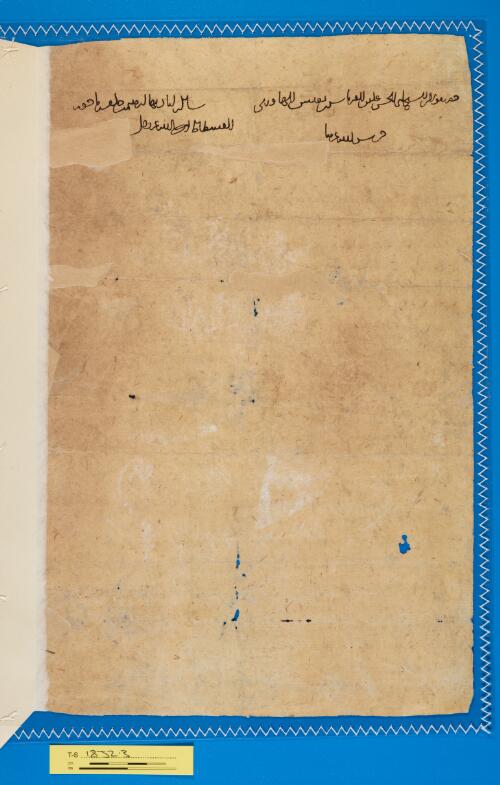
Verso, address, left column
- شاكر اياديها ابراهيم بن خلف بن ناخوم
- للفسطاط ان شاء الله عز وجل
Verso, address, right column
- حضرة موﻻي الشيخ ابي الحسن علون الفرناس بن يعيس الهاورني (!)
- حرس الله عزها
verso, address
[To:] His Excellency my master the elder Abu ’l-Ḥasan ‘Allūn the parnas b. Ya‘īsh the Aaronide. May God protect his honored position. Fusṭāṭ, if God—mighty and great—wills.
[From:] Ibrahīm b. Khalaf b. Nāḥūm, who is grateful for your favors.
