טקסט ספרותי: T-S NS 163.101
טקסט ספרותי T-S NS 163.101What's in the PGP
- תמונה
- 1 Transcription
- 1 Translation
תיאור
Glossary of phrases in parallel Judaeo-Arabic and a Judaeo-Turkic language. The latter is not based in Ottoman Turkish, but possibly Old Uzbek and/or Chagatai. Given that Uzbek descended linguistically from Chagatay, there are a variety of shared grammatical forms to consider and this fragment may be a transitional grammatical text. Dating: probably no earlier than 13th century on paleographic grounds and likely no later than 16th century. Genre: The glossary could be a learners' text/primer based on the practical nature of its phrases. Written in a distinctive hand (with high chance of joins). The speaker uses terms of patronage in reference to an addressee (in Judaeo-Arabic): מא אחסן וגהך יא סידי . . . יא סדי אנת סידי ומכדומי . . . אקרי ממאליכך. He specifically says "give me my salary" and "do not neglect my rights" (אעטיני גאמכיתי . . . לא תפרט פי חקי). The corresponding Turkic phrase follows the second-person imperative form in Chagatay (-gil): "vergil" בירגיל ("do give" me my salary). (András Bodrogligeti, A Grammar of Chagatay, 177). The second-person imperative form -gil also exists in some early Ottoman Turkish texts (Korkut Buğday, Literary Ottoman, 17). The first-person singular pronoun "men" (מן) is used throughout instead of "ben", an archaic feature of early Ottoman Turkish texts that is otherwise common in Uzbek, Chagatay, and other Turkic languages. For example in line 3 on the verso: (men nicesen) איש כנת אנא : מן ניגיסן -- is an unclear interrogative phrase, possibly translating idiomatically as "what/how much did you have for me?" The next bilingual phrase is damaged, but could be interrelated, ending in: .n yarım sen (".. you half"). The first line of the verso, contains the clearly rendered phrase: bir safar qīlūrman ביר ספר קילורמן ("I will go on a trip"), which bears evidence of the Uzbek future first-person indefinite conjugation -arman/-urman for the verb qilmoq (to do). This conjugation form does not exist in Ottoman Turkish. https://en.wiktionary.org/wiki/Appendix:Uzbek_verbs // https://en.wiktionary.org/wiki/qilmoq On the recto, the first legible phrase pairing reads: ולא מסאפר: מן ספרכא... (men safarga). This construction seems to draw on the Uzbek and/or Chagatay dative case -ga, yielding the partial translation "I am on a trip," though the equivalent negation (as ולא) is missing along the paper tear. The dative suffix -ga is also repeated in l. 10 of the recto (חקינכא). For a full overview of relevant case suffixes, see: https://www.turkolog.ist/uzbek/Uzbek_cases.pdf // Bodrogligeti, 33-34 Another phrase on the recto reads: לא תר.. חתי אגי // אכיתמאס כלינגא -- "do not (verb) until I arrive/come." Although the verb stem's meaning is unclear, it might bear the Uzbek indefinite future negation suffix -mas (akitmās gelence/agitmās gelence). Chagatay features a verbal negation suffix -mas for the Aorist present tense (Bodrogligeti, 204). (Identified by Alan Elbaum and Matthew Dudley) The contemporary historian Muḥsin ʻAlī Shūmān has found evidence in Ottoman qadi court records that a wave of Jewish refugees arrived in Cairo from Central Asia in the early 1600s, naming Uzbekistan as one of the potential points of emigration. (The Jews in Ottoman Egypt Until the Beginning of the Nineteenth Century/al-Yahūd fī Miṣr al-ʻUthmānīyah ḥattá awāʾil al-qarn al-tāsiʻ ʻashar, vol. II, 361-363). For an early modern geniza fragment mentioning someone who is "from Samarqand," in modern-day Uzbekistan, see the following Ladino accounts: T-S AS 209.112 (PGPID 39773)
Editors: Dudley, Matthew; Elbaum, Alan; Siddiqui, Ali Gibran
Translators: Dudley, Matthew; Elbaum, Alan; Siddiqui, Ali Gibran
T-S NS 163.101 1r
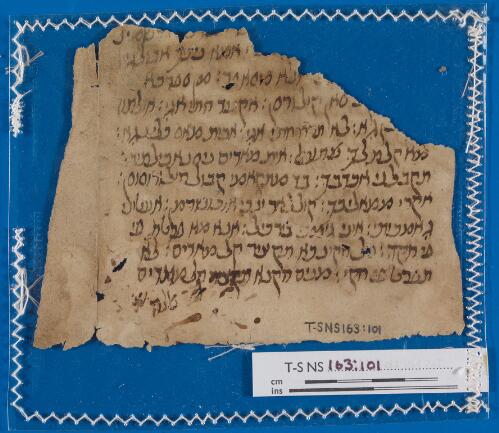
Recto
- ...] .שמינ
- ...]. אמא ענך אבולגיי.
- ...] ולא מסאפר : מן ספרכא (men safargā)
- ...] סאן קילורסאן (sēn qīlūrsen) : אקעד חתי אגי : אולתור (oltūr)
- ... כלי]ןגא (?gelence) : לא תרד[ו?] חתי אגי : אכיתמאס כלינגא : (agītmās gelencā)
- מא קלת לך [[.]]תעאל : איתמאדים ניסנאכילתיר : (ayıtmadım nesnā gelter)
- תקלבני אכרבך : בד מתקאמי קבול קילורומסן : (bd mtqāmī qabūl qīlūrūmsen)
- אקרי ממאליכך : קוללארינכי אוכושרמן (qūllārıngı okūşurman) : אעטיני
- גמאכיתי : איניגימני(?) בירכיל (aynığımnı (aylık?) vergīl) : אנא מא פרטת פי
- פי חקדי : [.]ל חקינכא תקציר קאלמאדים (l ḥaqqıngā taqṣīr qalmādım) : לא
- תפרט פי חקי : מנים חקנא תקסיר קלממאדים(!) (menim ḥaqqnā taqṣīr qalmamadım)
- אללה ת׳
Recto, translations of Judaeo-Arabic phrases with transliterations of Judaeo-Turkic phrases (line numbers approximate)
- [damaged]
- [damaged]
- and not a traveler (ولا مسافر) : men safargā [...] (من سفركا)
- sit until I arrive/come (اقعد حتى اجي) : oltūr [...] (اولتور)
- do not respond(?) until I arrive/come (لا ترد[و؟] حتى اجي) : agītmās gelencā (اكيتماس كلينجا)
- I did not tell you to come (ما قلت لك تعال) : ayıtmadım nesnāgelter (ايتماديم نيسناكيلتير)
- You receive me, I hurry to you(?) (تقلبني اكربك) : bd mtqāmī qabūl qīlūrūmsen (بد متقامي قبول قيلورومسن)
- I summoned/dictated to your slaves (اقري مماليكك) : qūllārıngı okūsrman (قوللارينكي اوكوسرمن)
- give me my salary (اعطيني جماكيتي) : aynığīmnī/aynıcīmnī vergīl (/اينيغيمني اينيجيمني بيركيل)
- I have not let go of my ill will/malice (انا ما فرطت في في(!) حقدي ) : [.]l ḥaqqıngā taqṣīr qalmādım (ل حقينكا تقصير قلماديم)
- do not neglect my rights (لا تفرط في حقي) : menim ḥaqqnā taqṣīr qalmamadım (منيم حقنا تقصير قلممديم)
- God the ex[alted] ('الله ت)
T-S NS 163.101 1v
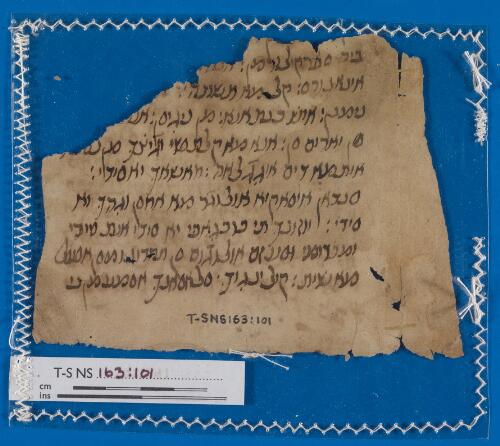
Verso
- ביר ספר קילורמן : אנא [... (bir safar qīlūrman)
- אינאנורם (iynānūram) : קל מא תשתהי : [...
- נימנן (?nīmnan) : איש כנת אנא : מן ניגיסן (men nicesen) אע[...
- סן יארים סן (sen yarım sen...) : אנא מא קלתשי יגיצך מן נ[...
- איתמאדים איגגלאה ((?)ben [...] ayıtmadım ayciñlāh) : חאשאך יא סידי :
- סנדאן איסאקיא אולוגר (sendān aysāqīya olūñur) מא אחסן וגהך יא
- סידי : יוזונך תי כוכגאכי (yüzünüñ tī gökçekī) יא סידי אנת סידי
- ומכדומי וסעזם אולוגום סן תחדו.ומסן (vesʿzim(?) olūñūm sen taḥdu.msen) אפעל
- מא שית : קילינגיך (qīlīncīñ) : סלאםאנך(!) אסמע מןני(!)
Verso (translation line numbers approximate)
- I will go on a trip (بير سفر قيلورمن) : I [...] (انا)
- iynānūram (اينانورم) : say what you crave/desire (قل ما تشتهى) : [...]
- nīmnen (نيمنن) : what/how much was it you had for me(?) (ايش كنت انا) : men nicesen (من نيجيسن) [...]
- sen yarım sen (سن ياريم سن) : I did not say anything, he belittled(?) you (انا ما قلت شي يغيضك) : men n.[...] ayıtmadım ayciñlah (من ن[...] ايتماديم ايجغلاه)
- God forbid, O my lord (حاشاك يا سيدي) :
- sendān aysāqīya olūñur (سندان ايساقيا اولوغر) : What is greater than your visage, O my lord : (ما احسن وجهك يا سيدي)
- yüzünüñ tī gökçekī (يوزونك تي كوكچاكي) : O my lord, you are my lord and master (يا سيدي انت سيدي ومخدومي)
- vesʿazim oluğum(?) sen taḥdū[.]ūmsen (وسعزم اولوغوم سن تحدو.مسن)
- Do what I wanted [alt.] I do what you wanted (افعل ما شيت): qīlīncīñ (قيلينجيك) : Hello, if you listen to me[?] (سلام انك اسمع من ني)