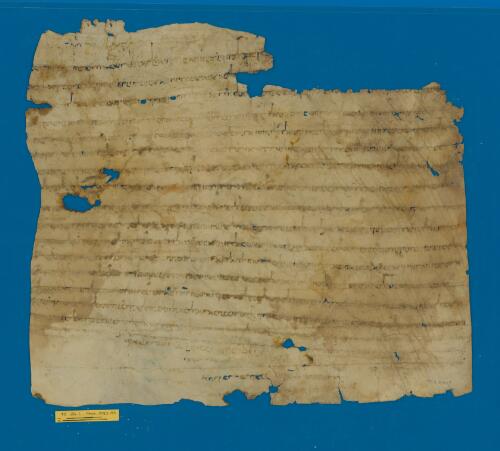
רשומה קשורה ל-מסמך משפטי: T-S 24.1
מסמך משפטי T-S 24.1- ציטוט
- Solomon Schechter, "Geniza Specimens: A Marriage Settlement,"Jewish Quarterly Review 13, no. 2 (University of Pennsylvania Press, 1901), 218-221.
- Location in source
- pp. 218-221
- Relation to document
- מהדורה
- ציטוט
- Avi Steinhart, "Karaite-Rabbanite Ketubah (Fustāt, Egypt)," in Posen Library of Jewish Culture and Civilization (Yale University Press, 2026), vol. 3.
- Location in source
- Relation to document
- Digital Translation
- ציטוט
- S. D. Goitein's unpublished edition (1950–85), available online through the Princeton Geniza Project at https://geniza.princeton.edu/documents/3559/.
- Relation to document
- Digital Edition
Editor: Goitein, S. D.
Translator: Steinhart, Avi (in English)
T-S 24.1 1r
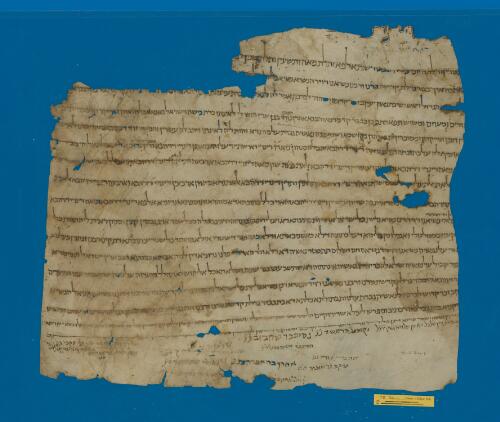
recto
- ע]שרין ותלתה יומי בירח . . . דשנת אלפא ותלת מאה ותשעין ותלת שנין ל[מנין שטרות . . . . . . . . . . . . . . . . . . . . . . . . . .
- דעל נילוס נהרא] מותבה איך כבוד גדלת קדשת מרנו ורבנו נשיאנו דויד הנשיא נשיא גליות כל י[שראל . . . . . . . . . בן כבוד גדלת קדשת מרנו ורבנו אדוננו
- נשיאנו דניאל הנשיא] הגדול ראש ישיבת גאון יעקב זכר קדוש ו[ט]הור לברכה אמר לה לנאש[יה ג]ברת עלמות [ב]תולתא כלתא בת כבוד גדלת קדשת מרנו ורבנו א[דוננו
- משה הכהן דגל היה]ודים ומעוזם ומשוש תפארתם בן כב גד קד מרנא ורבנא אהרן //הכהן// נוחו בגן עדן הואי לי לאינתו כדת משה וישראל ואנא אפלח ואזון ואייקר ואיסובר יתיכי
- כהלכת גוברין יהודאין דפלח]ין וזנין ומייקרין ומסוברין ית נשיהון בקושטא ושמעתיה נאשיה גברת עלמות דא והות ליה לאינתו ויהב לה עשרין וחמשה זוזי דכספא מוהרי בתולאתא
- דחזן לה מן אוריתא ו]אוסיף לה על כתובתה תלת מאה דינר דדהבא יהב לה מנהון מאה דינרי ואישתייר עלוהי מאתן דינרי דדהבא //טאבי מעליא// ודין נדוניא דהנעילת עלוהי מבית
- אבוהא . . . . . . . . .] מאה דינרי דדהבא ותלתא ועשרין דינרי דדהבא אלאת פצה שון מאה דינרי דדהבא וארבעה ותלתין דינרי דדהבא תיאב אללבאס שון מאה דינרי
- ]אלאת אלתעליק אלבסט שון מאה דינרי דדהבא ותלתין ותרין דינרי דדהבא אלאת נחאס שון ארבעין דינרי דדהבא וארבעה דינרי דדהבא אלאת
- דינר]י דדהבא [מקדמה] ומה דאית בה שויה עשרין דינרי דדהבא והאוי כלל כתובתא דא מוהרא ותוספתא ונדוניא אלפא דינרי דדהבא ומאה דינרי דדהבא
- //]עשרין וחמש]ה זוזי דכספא// [וקביל ע]לוהי נשיאנו דויד דנן נשיא גליות כל ישראל אחריות כתובתא דא ועל ירתוהי בתרוהי דמגבי לה מכל שפר ארג נכסין קנין וממון דאית ליה תחות כל
- כל שמיא . . . . . . . ממקר]קעי וממטלטלי ואפילו מן גלימא דעל כתפיה דלא כאסמכאתא ודלא כטופסי דשטרי אילא כחומר כל שטרי כתוב/א/תא דתקינו רבנן ונהגין בעלמא
- מיומא דנן ולעלם וקביל] נמי על נפשיה נשיאנו דויד דנן דאם חס ושלום תתפטר נאשיה דא דלא ולד האדר . פלגו נדוניא דין לבית אבוהא כמנהגא רבני ארץ ישראל וכמימרא
- ]עוד קביל על נפשיה שלא להכריח נאשיה אינתתיה דא שתשב עמו בנר שבת ושלא תאכל אליה ושלא תחלל מועדיה על מנת שתשמור עמו המועדים
- ]ר וקנינא מן כבוד גדלת קדשת מרנו ורבנו נשיאנו דויד הנשיא דנן נשיא גליות כל ישראל בן כבוד גדלת קדשת מרנו ורבנו אדוננו נשיאנו דניאל הנשיא
- הגדול ראש ישיבת גאון יע]קב זכר קדוש לברכה לנאשיה גברת עלמות בתולתא כלתא דא בת כבוד גדלת קדת מרנו ורבנו אדוננו קציננו משה הכהן דגל היהודים ומעוזם ומשוש
- תפארתם בכלי הכשר ל]מקניא ביה וכל מה דכתיב ומפרש לעילא שריר וקיים תלי ביני שיטי הכהן וטאבי מעליא: ועשרין וחמשה זוזי דכספא וקיימין כולהון ודין קיומיהון ותלי נמי א מן כתובאתא וכתיב על גיהטא י מן דמגבי
- וקיימין כולהו]ן ודין קיומיהון ושטר פרנא דנן כוליה אריך ושריר וקיים ומשום דאין למידין משיטה אחרונה אי . . . . . . למיכתב
- . . . . . . א]ב בית דין של כל יש נין שלמה גאון זצל יקותיאל בר משה ננ נסים בר מחבוב ננ יחזקאל הכהן החבר ביר עלי החבר . .
- הודיה ביר יאשיהו אב נט רח שלמה בן יצחק זצל . . . ן הכהן בר אברהם //סט// . יוסף ביר שמואל . . . . .
- יוסף בר אלעזר נע
- צדקה בר מובחר סט אהרן בר אברהם ננ נתנאל ביר יפת החבר נע
- הלל החזן ביר [. . . . .] [אב]רהם בר יצחק נע
Translated by Avi Steinhart.
. . . the twenty-third day of the month of Shevat, in the year 1393 [1082 CE] in the [Era of Documents] . . . its location. That the honorable, dignified, our holy teacher and rabbi, our prince, David ha-Nasi, the nasi of the exiles of all Israel . . . to . . . [son of Daniel] the great, head of the Academy of the Pride of Jacob, may the memory of the holy and pure man be for a blessing, said to Nāshiya, a young lady, a virgin, the bride, daughter of the honorable, dignified, our holy teacher and master, our master, our leader, Moses ha-Kohen, the banner of the Jews, their strength and the joy of their glory [see Ezekiel 24:25], son of the honorable, dignified, our holy teacher and master, Aaron //ha-Kohen//, may his rest be in the Garden of Eden:
“Be to me a wife, in accordance with the law of Moses and Israel, and I will work, feed, honor, and support you [like the men of Israel] who work, feed, honor, and support their wives faithfully. If this young lady, Nāshiya, will listen to me and be my wife, I will give her twenty-five silver zuz, the dowry of virgins [see Exodus 22:16] . . . I will add to her marriage contract three hundred gold dinars. I will give her one hundred dinars from this sum, and leave over and above it two hundred //good, fine-quality// gold dinars, which will have the status of a dowry that she has brought from the house of . . . 123 gold dinars for her silver vessels; 143 gold dinars for her clothing; one hundred dinars . . . for expensive bedding, 132 gold dinars for copper vessels; forty-four gold dinars as [a down payment] in gold . . . as well as that which I possess in the value of twenty gold dinars.”
Thus, the sum total of her marriage contract—the dowry, the addition [mohar], and the dowry she brought with her—is one thousand one hundred gold dinars . . . and our nasi, this David, the nasi of the exiles of all Israel, accepted the responsibility upon himself //of twenty-five silver zuzim// and upon his heirs after him, that it can be collected from the best part of the property, possessions, and money that I own under all [the heavens] . . . both real estate and movable property, even from the shirt on my back, and this is not a transaction with questionable consent, nor a template of documents. Rather, it has the obligations of all marriage contracts, as instituted by the sages and which are universally observed . . . our nasi, this David, has also accepted upon himself that if, God forbid, this Nāshiya passes away without offspring, then [?] half of this dowry will go to her father’s house, in accordance with the custom of the rabbis of the land of Israel, and in accordance with the statement of . . . He also accepted upon himself that he will not force his wife Nāshiya to sit with him alongside a Sabbath candle, nor to eat the fat of a rump, nor to profane her festivals [according to the Karaite calendar], on the condition that she observes the festivals [according to the Rabbanite calendar] with him. . . .
We have completed the act of acquisition from the honorable, dignified, our holy teacher and rabbi, our prince, David ha-Nasi—the nasi of the exiles of all Israel, son of the honorable, dignified, our holy teacher and rabbi, our master, our prince, Daniel ha-Nasi, . . . [head of the Academy of the Pride of] Jacob,” may the memory of the holy and saintly man be for a blessing—for the virgin Nāshiya, the bride, daughter of the honorable, dignified, our holy teacher and rabbi, our master, our leader, Moses ha-Kohen, the banner of the Jews, their strength and the joy of their glory. . . . She thereby acquired all that is written and detailed above, and everything is confirmed and established.
The following additions were included between the lines: “ha-Kohen”; “good, fine-quality”; “twenty-five silver zuz.” These are all confirmed, and this is their verification. Also, the letter alef from “her marriage contract” is hanging above the line, and the letter yod from “that it can be collected” is written over an erased spot on the parchment . . . and this is their verification, and this marriage settlement document is entirely in order, confirmed and established. In accordance with the principle that “one may not learn from the last line” [see b. Bava Batra 162a], it was necessary to write . . .
. . . the head of the court over all Israel, great-grandson of Solomon Ga’on
Jekuthiel ben Moses
Nissim ben Maḥbub
Solomon ben Isaac
Ezekiel ha-Kohen ben Eli he-ḥaver [fellow].
Hodaya ben R. Josiah, “Av”
Joseph ben R. Samuel
Joseph ben Ma‘ud.
‘Arqah ben Muvḥar
Aaron ben Abraham
Nathaniel ben R. Yefet he-ḥaver
Hillel ha-ḥazan [the cantor] [ . . . ]
Abraham bar Isaac.
T-S 24.1 1v