רשומה קשורה ל-מכתב: T-S 8J41.11
מכתב T-S 8J41.11- ציטוט
- Dora Zsom, "Letter to the Nagid in Egypt," in Posen Library of Jewish Culture and Civilization (Yale University Press, 2026), vol. 3.
- Location in source
- Relation to document
- Digital Translation
- ציטוט
- משה גיל, (634–1099) ארץ-ישראל בתקופה המוסלמית הראשונה (in Hebrew) (Tel Aviv University, 1983), vol. 3.
- Location in source
- #595
- Relation to document
- Digital Edition
- מהדורה
Editor: גיל, משה
Translator: Zsom, Dora (in English)
T-S 8J41.11 1r
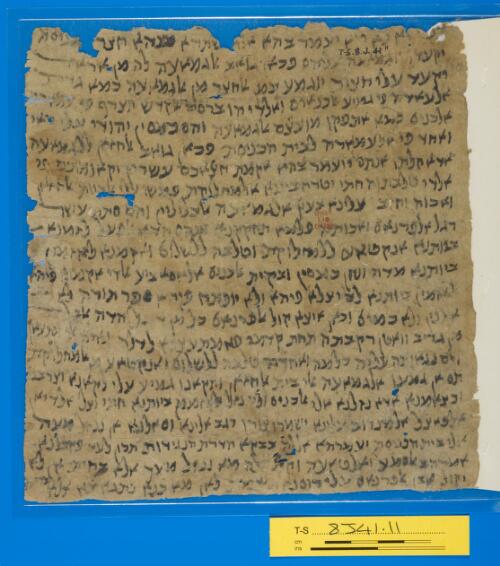
- [ ]נא לא מא יעמר בהא אלא [י]שתרא מנהא חצר [לל]כניסה
- יקעדו אלגמאעה עליהם (!) פכאן גואב אלגמאעה לה מן אראד
- יקעד עלי חצור יוגמע תמן אלחצר מן אלגמאעה כמא גרת
- אלעאדה פי גמיע אלכנאיס ואלדי הוא ברסם אלקדש תצרף פי עמארה
- אלכניס במא אתפקו מועצם אלגמאעה והם כמסין יהודי עלי ראי
- ואחד פי אלעמארה לבית הכניסת (!) פכאן גואב אלחזאן ללגמאעה
- אדא קלתו אנתם יועמר בהא אקמת חצאכם עשרין וקאומוכם פי
- אלדי טלבתוה חתי יטרח ביננא אלמחלוקת פמשו עלי אלביות אלחזאן
- ואכוה וחזב עלינא בעץ אלגמאעה אלכליליין והם סתה עשר (!)
- רגל אלפרנאס ואכותה פלמא תחקקנא מנהם הדא אלפעל לזמנא
- ביותנא אנקטאע ללמחלוקת וטלבה ללשלום ואקמנא לאזמון (!)
- ביותנא מדה ונחן כמסין ובקית אלכניס אלאסאביע אלדי אקמנא פיהא
- לאזמין (!) ביותנא לם יצלא פיהא ולא יופתח פיהא ספר תורה לא יום
- אתנין ולא כמיס וכאן איצא קול אלפרנאס כל מן דכל הדה (!) אלבלד
- מן גריב וואטן רקבתה תחת קדמי פאמתעצנא לדלך גאיה אלאמתעאץ
- ולם נגאובה עליה כלמה ואחדה טלבה ללשלום ואנקטאע מן אלמחלוקת
- תם אן גמעו אלגמאעה אלי בית אלחזאן ותקאנו גמיע עלי לקאנא וצרבנא
- וכצאמנא אדא נזלנא אלי אלכניס ולם נזל לאזמון (!) ביותנא חתי וצל
אלדיאן
- אלפאצל אלמנדוב עלינא ישמרו צורו רגב אלינא וסאלנא אן ננזל מעה
- אלי בית הכניסת (!) יעמרהא אללה בבקא הדרת הנגידות תכון לעד פקבלנא
- אמרה באלסמע ואלטאעה וקלנא לה מא ננזל מעך אלא בחית אן לא
- יקול אבן אלפרנאס עלי רוסנא נשמת לאן מא כנא נתגאצא אלא בחית
Translated by Dora Zsom
. . . not for renovations, but to buy mats for the synagogue on which the congregation can sit. The answer of the congregation to him was, “He who wants to sit on a mat collects the price of the mats from the congregation, according to the custom of all synagogues. And regarding those [monies] in the account of the kodesh [charitable trust]—they will pay for the repair of the synagogue, as the majority of the congregation has agreed—that is, fifty Jews, who share one opinion about repairing the synagogue.”
And the answer of the ḥazan [cantor] to the congregation was, “If you say that you will repair it with [those monies from the kodesh], I will set against you twenty [persons] who will oppose you in what you asked for.” [He said this] to incite controversy among us. So, they went to their homes, the ḥazan and his brother, and some of the people from Hebron turned against us—sixteen of them, the parnas [administrator of charitable funds] and his brothers. And when we ascertained this, we remained in our houses in order to avoid controversy and seek peace, and we remained in our houses for a while, and there were fifty of us.
During the weeks that we remained in our houses, no one prayed in the synagogue, and no Torah scroll was opened there either on Monday or on Thursday [when the Torah was traditionally read]. Furthermore, the parnas said, “Anyone who enters this town, either foreigner or local, his neck should be under my feet [i.e., must obey my ruling].” And we were very much annoyed by that, but we did not respond to him at all, for we were seeking peace and wanted to avoid controversy.
After that, the community gathered together at the house of the ḥazan, and they decided that if we were to go to the synagogue, they would come out and meet us and assault and fight us. But we remained in our houses until the dayan [judge] came—that excellent person, appointed over us, may God preserve him—and he asked us to go with him to the synagogue—may God rebuild in the time of our great nagid, may his position be everlasting—and we accepted his proposal, heeding it obediently, but we said to him, “We won’t go with you unless the son of the parnas does not lead us, [standing] over our heads, in the Nishmat prayer [perhaps synecdoche for the prayers in general]. Because we only acquiesced so long as
T-S 8J41.11 1v
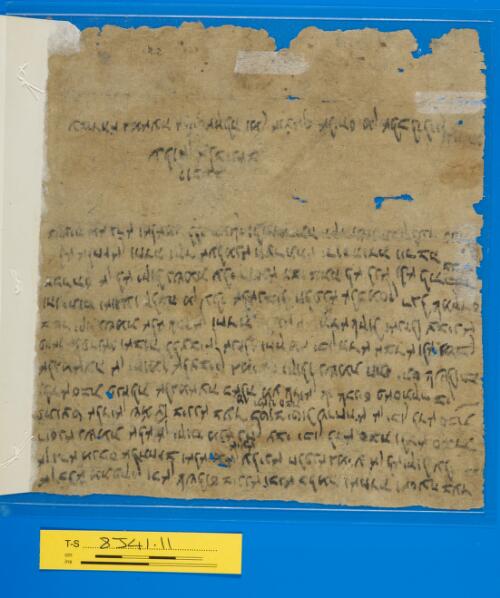
verso
- אן כנא מתפקין וכאן אלשלום ביננא וכנא כלמה ואחדה ואסעה בעד
- אן גרא מנכם אלתחזב ואלאימאן עלינא חלפנא גמיע אן לא יקול עלי
- רוסנא נשמת אלא אן יקום מנא //איצא//נחן צבי יכון לדא סבת ולדא סבת
- פתוצט אלדיאן שמ צו ביננא בעד כטוב יטול שרחהא אן יכון לדא סבת
- ולדא סבת פנזלת אלגמאעה כא/מ/לה //תאני סנת// מע אלדיאן אלי אלכניס
פאסתקר בין
- אלגמאעה אן יקומו אלצביין גמיעא יקולו נשמת חתי יתם אלשלום
- פקאל אלפרנאס ואבנה ללצביאן אנזלו וחק מא יכון הדא אבדא ולא נמכן
- בשר יקול נשמת אלא אלחזאן וחדה פלמא קאלו הדא אלקול ואנזלו צבינא
- והו יתום ואוגעו קלבה מן עלי אלאנבול חלפנא אלכמסין רגל אלמקדם
- דכרהם אן לא יקול נשמת עלי רוסנא צבי בתה לא לנא ולא להם
- אלא אלחזאן וחדה וקד אעלמנא חצרתהא ירום הודה וירבה כבוד[ה]
- בקציה מא גרא ואלאמר ללה תעאלי ולהדרתה הקדושה תכון לעד ול[עו]ל[ם]
address
- יוכתב
- עלואן אלכתאב
- עבידהא גמאעה אלעסאקלה ומן אנצאף אליהם מן אלכליליין וגירהם
verso
we would be in agreement, and peace would be among us, and our positions would be united. But now, after you formed a faction and took oaths against us, we took an oath together: No one shall say Nishmat over us except if we also appoint a young lad from among us, and each one will have his own Sabbath.”
The dayan acted as an intermediary between us after discussions that would take long to explain, so that each one would have a Sabbath. So the whole group went out with the dayan to the synagogue, and it was decided that the two youngsters would stand together and say Nishmat, so that peace would be attained. Then the parnas and his son said to the youngsters, “Go out! I swear, it was never like that, and we won’t allow anyone but the ḥazan himself to say Nishmat.” And when they pronounced these words, they sent down from the prayer stand our youngster, an orphan; they caused him anguish. We took an oath, the above-mentioned fifty of us, that no young man should say Nishmat over our heads, ever, neither one of ours nor one of theirs, but only the ḥazan himself. We informed your excellency, may your glory be increased and your honor be multiplied, about the matter that happened. God, may He be exalted, is the [supreme] authority, and your holy excellency, forever and ever.
address
It shall be written on the letter:
Your slaves, the community of Ascalon and those who are attached to it from Hebron and from other places.
