רשומה קשורה ל-מכתב: T-S 24.49
מכתב T-S 24.49- ציטוט
- S. D. Goitein, unpublished index cards (1950–85), #8515. Princeton Geniza Lab, Princeton University.
- Relation to document
- דיון
- ציטוט
- Brendan Goldman, "Letter to Eli ben Ḥayim ha-Kohen," in Posen Library of Jewish Culture and Civilization (Yale University Press, 2026), vol. 3.
- Location in source
- Relation to document
- Digital Translation
- ציטוט
- משה גיל, (634–1099) ארץ-ישראל בתקופה המוסלמית הראשונה (in Hebrew) (Tel Aviv University, 1983), vol. 3.
- Location in source
- #547
- Relation to document
- מהדורה
- ציטוט
- S. D. Goitein, היישוב בארץ ישראל בראשית האיסלאם ובתקופת הצלבנים (in Hebrew) (Yad Izhak Ben Zvi Publications, 1980).
- Location in source
- pp. 126-131
- Relation to document
- Digital Edition
- מהדורה
Editor: Goitein, S. D.
Translator: Goldman, Brendan (in English)
T-S 24.49 1r
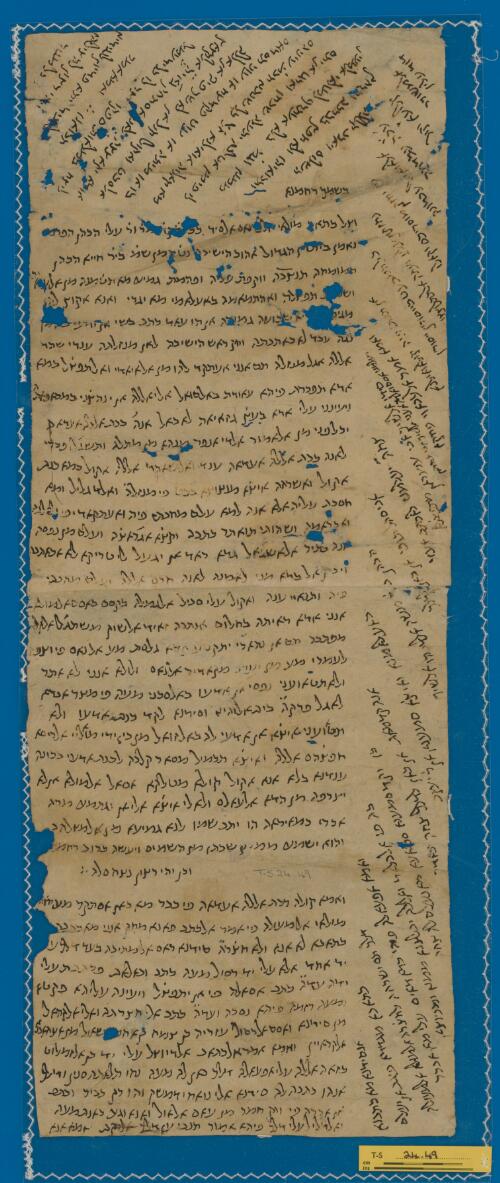
- בשמך רחמנא
- וצל כתאב מצלאי אלפרנאס אלסיד כב גד קד מר ור עלי הכהן הפרנס
- נאמן בית דין הגדול אהוב הישיבה נטר מן שמ ביר חייא הכהן
- המומחה תנצבה ווקפת עליה ופהמת גמיע מא תטמנה מן אלעתאב
- ושכ[ר]ת תפצלה ואהתמאמה באעלאמי מא יגרי ואנא אקוץ להו
- מגי[בא ענה]א שבועה גמורה אן הו עאד כתב בשי אן ידעי בה מן
- לגה עבד לא כאתבתה וחק ראש הישיבה לאן מנזלתה ענדי שהד
- אללה אגל מנזלה תם אנני אעתקד להו מן אלאיאדי ואלתפצל במא
- אדא תפכרת פיהא עאודת באלסואל אלי אללה אן ינהצני במכאפאתה
- ויעינני עלי אדא בעץ גזאיאה לאבאל אנה כבת אללה אעדאה
- יכלפני מן אלאמור אלדי אנפר מנהא מן מתלה ותשגל פכרי
- לאנה כבת אללה אעדאה ענדי ואלשאהד אללה אקול כמא כנת
- אקול ואשרחה איצא מכצוצא בכט פי מנזלה ואלד גליל ומא
- חסבת עליה אלא אנה למא עלם מחבתי פיה ואעתקאדי פי גלאלתה
- ואכראמה ושהותי תואתר כתבה וקצא אגראצה ועלם מן נפסה
- אנה כתיר אלאשגאל גדא ראד אן יגעל לי טריקא לא אכאתבה
- ויבקא אלברא מני לא מנה לאנה חרסה אללה יעלם מחבתי
- פיה ותנאיי ענה ואקול עלי סביל אלגמלה בקסם אלמולא
- אנני אדא ראיתה בחלום אנתבה זאיד אלשוק משתגל אלקלב
- מפתכר תם אני נהארי יתקטע אדא גלסת מע אלנאס פי וצפה
- לעמרי מע מן צנית(?) מקאדיר אלנאס ולולא אנני לא אתר
- ולא תטאועני נפסי אן אדעו באלסכני מעה פי מצר אבדא
- לאגל פרקה בית אלוהינו וסידנא לקד כנת אדעו ולא
- תט/א/ועני איצא אן אדעי לה באלזואל מן בין ידי מו/א/ליי אלריסא
- חפצהם אללה ואיצא תכמיל מסאר קלבה לכנת אדעי בכונה
- ענדנא בלא אנא אקול קולא מטלקא אסאל אלמולא אן לא
- יצרפה מן הדא אלעאלם ולא לי איצא אלי אן נגתמע מרה
- אכרי כמא יראה הו יתב שמו לנא גמיעא מן אלמצלחה
- והוא ישמע ממכון שבתו מן השמים ויעשה כרוב רחמיו
- וכן יהי רצון נתח סלה
- ואמא קולה כבת אללה אעדאה פי כבר מא כאן אסתקר מע חצרה
- מולאי אלמעולה פי אמר אלכתב פאנא מחק אנני מא כתבת
- כתאבא לא אנא ולא חצרה סידנא ראס אלמתיבה בעד דלך ע[לי
- יד אחד אלא עלי יד רסול מעה כתב וכאלאת פכתבת עלי
- ידה עדה כתב אסאלה פי אן יתפצל ויעינה עליהא פקטא (=פי קטאהא)
- ומעה רזמה פיהא נסכה ועדה כתב אלי חצרתה ואלי אלקהאל
- מן סידנא ואסם אלרסול עזריה בן צמח בן אחו[ת] שאול מן אצחאבנא
- אלקראיין ואמא אמר אלכתאב אלדי וצל עלי יד בן אלזמלוט
- כזאה אללה עלי אפעאלה דלך כאן לה מעה נחו תלאתה סנין ודלך
- אנהו כתבה לה סידנא אלי נואחי דמשק והו רק כביר וכתב
- אן אכרה פי ורק חמר מן עאם אלאול ואנא וגע כאנת מעה
- ואלדליל עלי דלך פיהא אמור תנבי ען דלך אלוקת אמא אנא
Right margin:
- או סידנא מא כתבנא
- כתאבא מגדדא פיגב אן יעלם
- דלך תם ישרחה לחצרה אלמולא אלמעולה
- ואמא אפעאלה פהי כדא דאים עלי מא אכבר
- בה פי אלבלאד ואללה יכלצנא ממנו ומכיוצא
- בו וקד סמענא סמאעא מא נעלם לה צחה
- אנה קד מאת אן כאן לדלך צחה יבאדר
- באעלאמנא ואיצא סמענא אן ר יעקב
- הכהן ביר משה אלדי הו אלשיך
- אבי סהל תופי אן כאן לדלך
- צחה יעלמני לאכתב אעזי
- סידי אלשיך אבי עמראן מתפצלא
- //ויעלמני אסם ואלדה אעני אלשיך אבי עמראן//
- ואמא אמר אלעכאוי פחקא
- אן תבת פיה קול אואילנא
- כל המבעט בייסורין ייסורין
- נחזקין עליו עתה אל תתלוצצו
- פן יחזקו מוסריכם וקאלו
- אלאואיל עבדונה
- עבה עבדונה
- קליעא וקול
- אלמשורר
- דוד עליו
Upper margin:
- השלום ויאהב קללה
- ותבואהו ולא חפץ בברכה ותרחק
- ממנו וגמ בלא אעתרף למולאי אלמעין
- לי פימן אטלבה יתעלה שבחו וארגו אן יתם
- מא קאלוה אואילנא זל כל שנתנו חכמ עיניהם
- בו או מיתה או עוני פקד צח או עוני תם דאם
- אלסכט ואקול קול אן לא שך פיה אן אללה
- א . . א יקאצצה לאני אסתחק גאיה אלקצאץ
- ליצח במלאות ספקו יצר לו כל יד עמל
- תבואנו ואמא אמר
- אלעיד יהא פדיון לנגידנו
- ויהי רצון להציליהו
- מכל מגור
Translated by Brendan G. Goldman
In Your name, O Merciful One.
The letter of my master—the parnas [administrator of charitable funds] and lord, his honor, the great and holy, lord and master Eli ha-Kohen the parnas, the trusted one of the great court [bet din ha-gadol], the beloved of the academy, the son of our master Ḥiyya ha-Kohen, the expert judge, may his soul rest in peace—arrived. I read it, and I understood the wondrous things contained in it.
I was grateful for your kindness and interest in what happened with my affairs. I am giving you an answer about those [matters]—I swear [to the truth of the account]. If you return to writing letters about any subject and refer [to yourself] in them with self-deprecating language [lit., “the language of a slave”], I will not respond to them. For—by the head of the academy!—your standing with me, as God is my witness, is of the greatest stature. Moreover, the magnitude of your consideration and favor are such that if I think of them, I must ask God that He grant me [the opportunity] to [further] your fortune and help me pay back some of your favor—may God destroy your enemies. He charged me with the matters from which I flee, like you. My thoughts are preoccupied because you—may God destroy your enemies—are with me [in thought]. As God is my witness, I am telling [you] as I have said [before] about what I explained and even recorded in writing, in the position of an exalted parent. I did not doubt you, because you know of my love for you and my belief in your sublimity and your honor and my longing for your continued correspondence and to execute your objectives. You know, yourself, that you have many troubles, and it is almost as if you are making an excuse not to continue your correspondence [with me], and the fault will lie with me, not you, because you—may God protect you—know of my love for you and how I praise you. I said, for example—I swear by the name of our Lord—that I see you in my dreams such that I wake up out of longing, which is weighing down my heart and my mind. Then days went by in which I sat with people, describing—[I swear by] my life!—you as one who treats all types of people justly. Perhaps there is no chance [to be with you?].
My heart does not even allow me to pray that I live with you in Fustāt indefinitely, since I would have to be separated from God’s house [i.e., the Temple Mount] and our Lord. But I have prayed [for such nonetheless]. [My heart] also does not permit me to pray that you neglect your duties to appear before our lord, the ra’īs [head of the Jews of Egypt]—may God guard him—[tasks] that also satisfy your heart’s desire; otherwise, I would pray that you would be with us. Despite this, I say without doubt: I ask the Master not to take you from this world nor from me until we are reunited once again as He sees fit—may His name be blessed—[and that we may be] together in good times.
God will hear from His dwelling place in the heavens and bless [us] in His mercy.
Such may it be His will forever, selah.
Concerning what you—may God destroy your enemies—said about what you decided with our glorious master [i.e., the ra’īs], the elevated one, about the letters, I swear that I did not send him a single one, neither I nor our glorious lord, the head of the academy, afterward, with anyone except the messenger who has the letters and powers of attorney. I sent a number of letters with that messenger, in which I asked him only to permit me to help him concerning [any] matter. He is carrying a package of papers with him, including a copy [of a letter] and several letters for you and for the community from our lord, [the head of the academy]. The name of the messenger is ‘Azariah ben Tsemaḥ, the nephew of Saul, who is one of our Karaite colleagues. With regard to the matter of the letter that was carried by Ibn al-Zamlūṭ—may God shame him for what he did—he had that [letter] with him for around three years. That was after our lord wrote to him in the region of Damascus regarding this in a long letter. He wrote other letters on red paper last year when I was sick [and staying] with [him].
He [the head of the academy] has the evidence for this with him, since among [the letters whose copies he has] are those dealing with things from that time. However, neither I
recto, margins [translation of right margin lines 1–13]
nor our lord has written a single new letter [since then]. It is therefore necessary for you to let [the ra’īs] know about this. And as for his [Ibn al-Zamlūṭ’s] actions, this is typical behavior, as is reported about him throughout the country. May God save us from him and from those who follow him. We heard a rumor—it is not known whether it is true—that [Ibn al-Zamlūṭ] had died. If this is true, be quick to inform us. We also heard that R. Jacob ha-Kohen ben R. Moses, who is known as the sheikh Abū Sahl, passed away. If this is true, please let me know so that I can write and console our lord, the sheikh Abū ‘Imrān. And tell me his father’s name. . . .
T-S 24.49 1v
Verso:
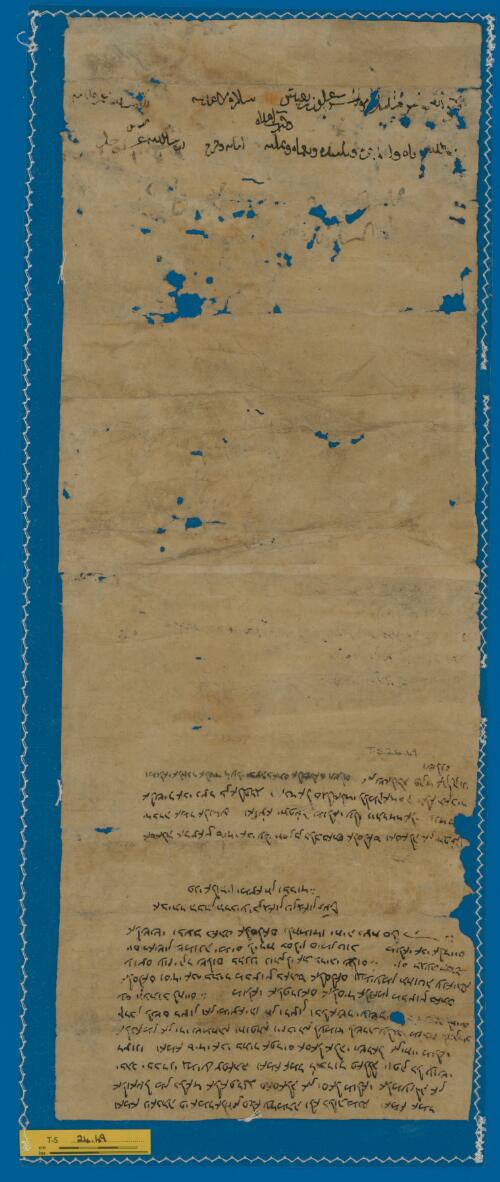
- ואמא ניאבתה פי אמר אל . . ן פלא עדמתה ולא כלות מנה ואמא אמר
- אלואצל מן בלאד אלאפרנג פאסאלה אן יסאל מולאי אלמעולה אן
- יכתב יכברני גמיע צפאתה ואמא אמר ר . דוד(?) פאללה יופק כל עושי
- רצוני ואמא סידי אבי כתיר אפרים אסאל אלהי ישראל
- אלנאמן אן ירי שמחתו וחופתו ויזכיהו לעמוד לשרת על גבי מזבח ולהקריב
- קרבן לשם רצון ואן ימיצאיהו חן ורצון וכל אשר יעשה . . . . . לחיים
- עם הכתוב לחיים מולאי אלפרנאס אלסיד אלנאמן מכצוץ באתם
- אלסלאם וסידי אבי כתיר מכצוץ באתם אלסלאם וגמיע מן תחוטה ענאיתהא
- עוצם עוז יקר שלום כהנני נותן לו את בריתי שלום יום הגעת הכתב
- יום ראשון שמונה ימים לירח כסליו סימן טוב מולאי אכי אלרייס
- אלששי יכצה באתם אלסלאם ולחמודו יחיה נצח סלה
- אביתר הכהן הרביעי בן גאון נין גאון זצל
- פני אלוהיו ימצא חן וכבוד
- אסאלה אכצאץ סידי אבי עלי חסן בן כלב באתם אלסלאם ואסאלה אן יתפצל
- ידכרה אמר אלנטע ואיצא יתפצל מולאי עלי ויתרדד אלי ענד ח[צרה
- אלשיך אבי נצר בן אלפרג ויאכד אלסגל אלדי ללמקאדסה בלא תאכיר
- ומולאי אלחבר אלסיד ר עלי יכצה באתם אלסלאם ושלום אן שאללה פקד אקלקוני
- ושלום
Verso, address:
- . . . . . . الجليل ابو الحسن علون بن يعيش
- ادام الله بق]اه و . . . . ه وتاييده ونعماه وتمكينه وكبت اعداه
- شاكره لا عدمته . . . . . . . . . .
- امانة وفرج(؟) ان شا الله عز وجل . . .
verso
Concerning the issue of his agent and the affair of Ḥazan, do not deprive me of [information about] it, and do not refrain from it. With regard to the issue of the one who arrived from Western Europe [lit. “land of the Franks”; bilād al-ifranj]: I request that you ask our exalted master to write and inform me of all details about him. Concerning the matter of R. Barukh, may God make all his acts successful according to His will. And concerning the matter of my lord, Abū Kathīr Ephraim, I ask that the God of Israel grant long life to our master, the trusted one [of the academy], and that He bring him happiness and a marriage canopy, and that He grant him to stand and serve at the [temple] altar, to make a sacrifice to God according to His will, and that he . . . by the grace and desire [of God], and that everything he does is successful, and that he is inscribed for life with the inscription for life.
[Send to] my master the parnas, the trusted lord, special [greetings] of perfect well-being. And to my lord Abū Kathīr, special greetings of perfect well-being. And to everyone you look after in your care, great strength and precious peace. Grant him the covenant of peace. The day that the letter arrived was Monday, eight days from the new moon of Kislev, a favorable sign. My master, the brother of the ra’īs, the “sixth” [ranking member of the Palestinian academy], may you be given perfect well-being. And may your dear one live forever, selah!
Evyatar ha-Kohen, the fourth [ranking member] son of the Ga’on, grandson of the Ga’on, the righteous of blessed memory, may he find grace and honor in the presence of his God, I ask that you convey to my lord Abū ‘Alī Ḥasan ben Caleb perfect well-being. I ask that you please remind him of the matter of the tablecloth. Similarly, my master, please prevail upon my lord the sheikh Abū Naṣr ibn al-Faraj to take the rescript [of the caliph] concerning the Jerusalemites and not delay. And convey to my master the ḥaver, my lord R. Eli wishes for perfect well-being and shalom. God willing. It worries me.
And Peace.
Verso, address
To my lord, the ḥābīr [i.e., ḥaver (fellow), an honorific], the exalted one, Abū ’l-Ḥasan ‘Alūn ibn Ya‘īsh, [from his] dear one. Do not take him from me.
May God lengthen the remaining [days of his life] and make permanent his strength, his favor, his support, and his exaltedness. And may He destroy his enemies. Faith and prohibition.
[Send to:] [the synagogue of] the Palestinians [al-Shāmiyīn], may it be preserved, in Fustāt.
By the will of God Almighty.
