מכתב: T-S 32.7
מכתב T-S 32.7What's in the PGP
- תמונה
- 1 Transcription
תיאור
Long letter in Judaeo-Arabic, most likely written in Fustat and sent to (or intended to be sent to) Tinnīs. Sender and addressee: According to the Arabic address on verso, the addressee is a distinguished elder (al-ḥaḍra al-rayyisiyya) and the sender is his "son" Abū l-Bayān. There is also an Abū l-Bayān referred to as mawlāy al-rayyis multiple times over the course of the letter as someone closely associated with the addressee but who is in the sender's location. The body of the letter repeatedly refers to "your slave Abū l-Ḥusayn" who carries out orders of the addressee and sends him news. It is possible that the letter is from a young Abū l-Bayān Moshe b. Mevorakh to his father Mevorakh b. Saʿadya, and Abū l-Ḥusayn is a household steward who is actually writing the letter on behalf of Abū l-Bayān (as Abū l-Bayān would not include blessings for himself or refer to himself as mawlāy al-rayyis). These identifications are tentative. Dating: al-Wuḥsha is mentioned in the top margin (l. 13), and her dated documents range from 1095–1104. If we anchor the dating to this range, the mention of Friday, 9 Tammuz narrows the year to 1095, 1098, 1099, 1101, 1102, or 1105 (the closest options on either side would be 1085 or 1112). The dating to the period of Mevorakh b. Saʿadya is corroborated by the appearance of two people with unusual names: Sitt Ihtimām (cf. T-S 10J4.1 (PGPID 1554)) and Dhakhīrat al-Mulk (cf. T-S 13J14.14 (PGPID 3231)). There is a complication, in that the margin refers to "Friday the eve of the holiday" (יום אלגמעה ערבה אלעיד), seemingly the same Friday the letter arrived. However, there is no Jewish holiday (ʿīd) near 9 Tammuz. A compelling solution is that it is referring to ʿĪd al-Aḍḥā, which falls on the 10th of Dhū l-Ḥijja. This would require a year in which Dhū l-Ḥijja coincided with Tammuz and in which the 9th of both months was a Friday; the only viable option fitting these constraints close to al-Wuḥsha's period is 1078 CE. This would be early for al-Wuḥsha (~15 years earlier than her other dated documents) but still plausible. It would also be right at the start of Mevorakh's first tenure as head of the Jews (when he was known as Rayyis, not yet Nagid). If the identifications of sender/addressee and the 1078 dating are both correct, this would show that Abū l-Bayān Moshe b. Mevorakh was born closer to 1064 than 1080 CE (the range given by Mark Cohen in Jewish Self-Government, 148–55). The letter contains several distinct sections: (1) An update on the health of various family members. Sitt Ihtimām is still in the same state as when the addressee departed: one week sick, the next week healthy. Either she or another woman (sittnā) had a brief bout of colic (qawlanj). Abū l-Riḍā is still "in the same state" (presumably sick). A woman referred to as ṣāḥibat al-dār sent him 30 dirhams for 2 weeks, and a flask of olive oil, then a payment for another 2 weeks. Abū l-Mufaḍḍal is going about his business (mutaṣarrif) as he used to (from context, he was also ill and has now recovered). (2) The people of Damietta and Tinnīs were apparently clamoring for the addressee's presence on sabbaths and holidays. The sender tries to dissuade him by asking if it is right for him to exhaust himself on the nights of holidays and sabbaths just to satisfy others and sicken himself. But Abū l-Maʿālī Ibn al-Qasqās came and reported that the addressee's arrival in Tinnīs and Damietta was a great success. (3) A note (ruqʿa) from the addressee arrived with instructions to obtain the tax receipt (wuṣūl) from the son of the Ṣāḥib al-Dīwān. Abū l-Ḥusayn presented the ruqʿa to him and obtained the receipt. He says he will then deliver it to the tax farmer of the quarter/compound (ḍāmin al-rabʿ). (4) There follow detailed reports on business transactions and fluctuating prices. Mentions: a payment of 8 2/3 dinars to Abū Naṣr al-Kohen on the same day the addressee's letter arrived, which they would have delayed had they known the contents of the letter; leaving something in the house of Abū l-Riḍā; a payment of 1 1/3 dinars to al-Ḥayawānī; 130 jugs (kūz); cups (qadaḥ); 1/3 + 1/4 for Ismāʿīl; kaʿk and wood(?) related to Ibn al-Saqīl (= Ibn al-Siqillī?); a half dinar for the sister of Abū l-Manṣūr; the laying out of carpets and goods in Fustat and Cairo; the delivery of a saddle to Abū l-Mufaḍḍal; an intention to fulfill the addressee's orders regarding Dār al-Baḥr; Abū l-Munā obtaining a tray (ṣiniyya) from the brother of the craftsman (ṣāniʿ); an intention to deliver the addressee's letter to Zāhir after the sabbath; the price of sugar, SRY, DʾNSH(?); something medium-grade; qaṭāra; honey; jars; and raisins. There is a difficult passage (ll. 40–46) about what happened to the raisins en route and how the camels left behind one unit of them and the sender obtained a quantity and covered them with a tablecloth and cleaned them and locked them in the warehouse of the saddles with an iron lock, and also ate 5 raṭls of them; there is a discrepancy over the expected weight, and so the writer will have them weighed. Mentions Masʿūd and the family of Saʿd al-Rikābī; rent for Ramaḍān and someone named Tashīsh(?); a payment of 3 dinars to Abū l-Mufaḍḍal until obtaining the 10 dinars from the ḍāmin al-rabʿ (the same one mentioned above in Section 3); Abū Saʿd the goldsmith (al-ṣāʾigh) has completed the setting for the gem (qālib al-faṣṣ), and only the polishing remains. The rosewater arrived. Ibn Futayḥ (or Futūḥ) arrived in Fustat and stayed only a week. Benaya is "all over the place" and the sender is trying to obtain Benaya's letter for the addressee. The sender has conveyed the addressee's greetings to Dhakhīrat al-Mulk and Sharaf al-Dawla, who greet him back and kiss his hand. He has previously written about the price of sheep (? al-khirāf). As for the packsaddle (bardhaʿa), 2 dinars were spent for it. As for the headdress (bukhnuq) and niṣāfiyya (probably a variant spelling for the garment usually known as niṣfiyya), only a meager amount was paid or offered. As for the addressee's instruction that no one should enter—the sender explains that he was exaggerating when he previously said that "they are knocking down our door." However, these people are in fact in the synagogue and the markets and "in every place." He previously informed the addressee of the divorce of Abū l-Mufaḍḍal and was perplexed at the lack of acknowledgment to this in the addressee's letter. Everyone in "both of the houses" (kull man fī l-dārayn) is in good health. Greetings from Abū Isḥāq b. Pinḥas, Abū Ṭāhir, "your slave Abū l-Ḥusayn," and his brother. (5) A passage regarding the enforcement of market practices (ḥisba). Dhakhīrat al-Mulk identified two vendors in the markets of Cairo (one baker and one watermelon seller) whose weights were short; he disciplined them and paraded them in Cairo (darrabahum wa-ashharahum). Similarly, Sharaf al-Dawla found a Jerusalemite Jewish baker and his son in Fustat, in the little market of Ḥabs Bunān, using short raṭls "to an indescribable degree." He had them arrested and was about to parade them, until Abū l-Ḥusayn went and intervened with Sharaf al-Dawla and "took them from him, may God the exalted never remove your protection from the community. Your slave Abū l-Ḥusayn did not do this as a kindness to them, rather we feared that it would damage the standing of the Jews among the gentiles, and particularly with you not being present." This passage suggests that the addressee was someone of high standing and power both within the Jewish community and with Muslim state or judicial officials, which would again be consistent with the addressee being Mevorakh b. Saʿadya himself. (6) A report that Abū l-Bayān "from the day of your travel until this day" has not ridden either of the mules. The sender purchased a new saddle for his donkey. "If al-Shams is present when you arrive, I will ride it and go around the house" (this is somewhat unclear). (7) Various additional postscripts: "I wrote this letter on Friday when the courier arrived because he said he could not wait, but he did wait until after the Sabbath. Mentions a payment of 1/2 dinar to Ibn Nufayʿ on Friday "the eve of the holiday" (refering to the sabbath?). He had four camel-loads of firewood removed from the house in Fustat, and half a wayba of almonds. "Their prices are moving due to the shortage of ships." He will pay Abū l-Yaʿaqov al-Jahbadh and obtain the receipt from him. After he meets with Zāhir and obtains his response, he will go up to Cairo to obtain or deliver the wheat to Ibn al-Qāḍī. He asks about how long the rosewater should sit in the sun and what vessels to use for storing it. Mentions Tashīsh(?) the miller who is asking the sender to make "teeth" (adrāṣ, i.e., aḍrās) for his mill as well as a water bucket (? qādūs) "that will be for the tongue (? lisān) of the mill." He will pay his rent when the addressee arrives. The packsaddle brought 2 dinars, but as for the bukhnuq and niṣāfiyya (which as mentioned earlier did not obtain a good price), he will deliver them to al-Wuḥsha, and he will collect whatever they bring. He does not think it is a good idea to give them to Umm Abū l-Khayr because she wore them out previously. As for Abū l-Ḥasan al-Khādim, he went to Tinnīs with a power of attorney. Abū l-Mufaḍḍal sent a letter with him for the addressee. The contents of the uppermost margin are obscure but contain a request for further instructions, and another assurance that further details will be sent in the forthcoming letter of Abū l-Ḥusayn.
תגים
Editor: Elbaum, Alan
T-S 32.7 1r
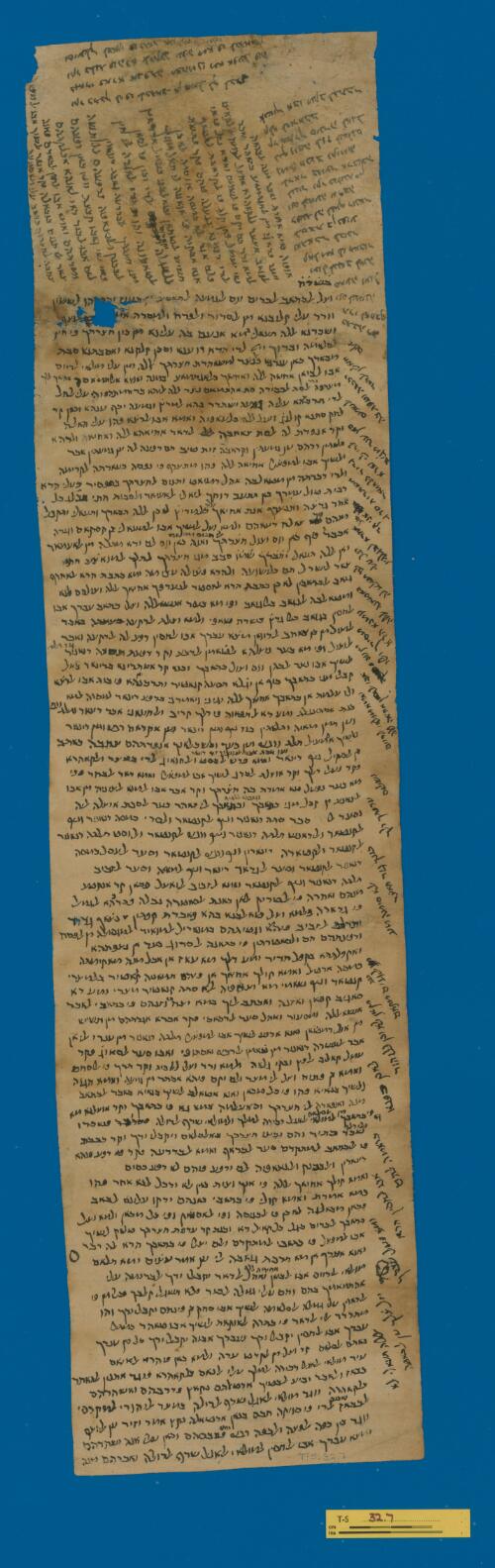
Recto
- בש רח
- וצל אלכתאב אלכרים יום אלגמעה אלתאסע מן תמוז יהפ[כ]הו לששון
- וורד עלי קלובנא מן אלסרור ואלפרח ואלמסרה אמ[ר יזיד] ען אלוצף
- ושכרנא אללה תעאלי /ב/מא אנעם בה עלינא מן כון חצרתך פי חיז
- אלסלאמה וברוך ייי אלדי הדא רוענא וסכן קלקנא ואסבתנא סבת
- מבארך כאן ענדנא כ/אל/נצר למשאהדת חצרתך אללה ימן עלי מולאי אלרייס
- אבו אלביאן אחיאה אללה ואחיאך באלאגתמאע במנה ואמא אלתמאסך אחיאך אללה
- מערפה //כבר// אלסת אלכבירה סת אהתמאם נצר אללה אליהא ברחמתה[[.]] והי עלי אלחאל
- אלדי תרכ/ת/הא עליה גמעה ישתדד בהא אלמרץ וגמעה יכף ענהא וכאן קד
- לחק סתנא קולנג ועגל אללה באלעאפיה ואמא אבו אלרצא פהו עלי חאלה
- וקד אנפדת לה אלסת צאחבה [[אלל]] אלדאר אחיאהא אללה ואחיא[[ה]] ולדהא
- תלאתין דרהם ען גמעתין וקראבה זית טיב תם דפעה לה ען גמעתין אכר
- ואלשיך אבו אלמפצל אחיאה אללה פהו מתצרף פי נפסה כעאדתה אלקדימה
- ואלדי דכרתה מן מטאלבה אהל דמיאט ותניס לחצרתך בתפסיר(?) פעלי הדא
- רבית טול עמרך באן תתעב רוחך ליאלי אלאעיאד ואלסבות חתי תבלג כל
- אחד גרצה ותנצרף אנת אחיאך //אללה// כאלמריץ לאכן אללה תבארך ותעאלי יתקבל
- מנהם [[מא]] //פיך// צאלח דעאהם ולמא וצל אלשיך אבו אלמעאלי בן קסקאס וגירה
- אכבר כיף כאן יום וצול חצרתך //אלי תניס ודמיאט// ואנה כאן יום לם ירא מתלה מן אלאעמאר
- ואן אללה תעאלי יתברך שמו סבב מגי חצרתך לתלך אלמואצע חתי
- צאר לישראל תם כלישועה ולהדא פצילה עצימה ומא כתבת הדא אלאחרף
- גואב אלכתאבין לאכן כתבת הדא אלאסטר לנערפך אחיאך אללה וצולהם לנא
- ומטאלבה אלנגאב באלגואב ופי מא בעד אנשאאללה יצל כתאב עבדך אבו
- אלחסין בגואב כל גרץ בשרח שאפי ולמא וצלת אלרקעה [[בעעדה]] באכד
- אלוצול מן בן צאחב אלדיואן מצא עבדך אבו אלחסין דפע לה אלרקעה ואכד
- אלוצול ופי מא בעד נוצלהא לטאמן אלרבע וקד דפעת תסעה דנאניר גיר תלת
- לשיך אבו נצר אלכהן יום וצול כתאבך וכנא קד אטתרינא בדינאר בטל(?)
- קבל מגי כתאבך כוף אן יגלא תסעה קנאטיר ותרכנ/א/הא פי בית אבו אלרצא
- ולו עלמת אן כתאבך אחיאך אללה יגיני ויאמרני בדפע דינאר למסרה למא
- כנת אסתעגלת ומע דא אלתפאות פי דלך קריב ואלחיואני אכד דינאר ותלת ו . . .
- וען תמן מאיה ותלאתין כוז נצף ותמן דינאר וען אקדאח רבע ותמן דינאר
- ואלשיך א/ס/מעיל תלת ורבע וען כעך וכשב(?) לאנך אנפדתהם צחבה כאתב
- בן אלסקיל נצף דינאר //וען אכת אבו אלמנצור נצף דינאר// ואמא פרש אלבסט ואלחואיג אלדי במצר ואלקאהרה
- פקד פעל דלך וקד אוצלת אלסרג לשיך אבו אלמפצל ואמא דאר אלבחר פפי
- מא בעד נפעל מא אמרת בה חצרתך וקד אכד אבו אלמנא אלציניה מן אכו
- אלצאנע מן קבל מגי כתאבך //וגאבהא ללבית// וכתאבך אלי זאהר בעד אלסבת אוצלה אליה
- וסער אל סכר סתה דנאניר ונצף אלקנטאר ואלסרי כמסה דנאניר ונצף
- אלקנטאר ואלדאנש(??) תלתה דנאניר ונצף ורבע אלקנטאר ואלוסט תלתה דנאניר
- אלקנטאר ואלקטארה דינארין ונצף ורבע לקנטאר וסער אלעסל כמסה
- דנאניר אלקנטאר וסער אלגראר דינאר ונצף אלמאיה וסער אלזביב
- תלתה דנאניר ונצף אלקנטאר ואמא אלזביב אלואצל פכאן קד אנקטע
- מנהם ואחדה פי אלטריק לאן כאנת אלסאטרה יבלה פתר/כ/הא אלגמאל
- פי גרארה פלמא וצל טאלבהא בהא פאכדת קפתין . נצאף גד[א]ד(?)
- ותר[[ל]]כת(?) אלזביב פיה/מ/א וגטיתהם במנאדיל אלמואיד אלמגסולה מן אלפסח
- ודפעתהם הם ואלסאטרתין פי כזאנה אלסרוג בעד אן נצפתהא
- ואקפלתהא בקפל חדיד ומע דלך מא עאז אן אכל מנה מא קימתה
- כמסה ארטאל ואמא קולך אחיאך אן פיהם תמאניה ק/נ/אטיר באלמצרי
- קנטאר ונצף שאמי מא וצלו(?) פיה אלא סתה קנאטיר מצרי ומע דא
- סאגיב קבאן(?) ואזנה ואכתב אליך במא יצח //פי// וזנהם פי כתאבי אלאכר
- אנשא אללה ומסעוד ואהל סעד אלרכאבי פקד אכרא אגרתהם מן תשיש
- מן אול רמטאן ואנא אדפע לשיך אבו אלמפצל תלתה דנאניר מן ענדי אלי אן
- אכד אלעשרה דנאניר מן טאמן אלרבע ואסתופי ואבו סעד אלסאיג פקד
- עמל קאלב אלפץ ובקי גלאה ואלמא ורד וצל ללבית וקד תרך פי אלסחם(?)
- ואמא בן פתיח וצל אלי מצר ולם יקם פיהא אכתר מן גמעה ואמא הגוה(?)
- ללשיך בנאיא פהו פי כל מכאן ואנא אטאלב אלשיך בנאיא באכד אלכתאב
- מנה ואנפאדה אלי חצרתך וסאעלמה במא גא פי כתאבך וקד אוצלנא מא
- //פי// כתאבך //מן אלסלאם// למולאי אלאגל דכירה אלמלך ולמולאי שרף אלדולה //פסר . .// פשכרו
- //עלי דלך// שכר כתיר והם יכצו חצרתך באלסלאם ויקבלו ידך וקד כתבת
- פי אלכתאב אלמתקדם סער אלכראף ואמא אלברדעה פקד [[פי]] דפע פיהא
- דינארין ואלבכנק ואלנצאפיה לם ידפע פיהם אלא דפע כסיס
- ואמא קולך אחיאך אללה פי אנך וצית באן לא ידכל לנא אחד פהו
- כמא אמרת ואמא קולי פי כתאבי באנהם ידקו עלינא אלבאב
- פכאן מבאלגה לאכן פי אלכניסה ופי אלאסואק ופי כל מכאן ולמא וצל
- כתאבך אלכרים כגל כל קאיל דא וכנת קד ערפת חצרתך טלאק אלשיך
- אבו אלמפצל פי כתאבי אלמתקדם ולם יצל פי כתאבך הדא לה דכר
- ואנא אערף אן מא תרכת גואבה לי ען אמר עצים ומא תלאם(?)
- מולאי אלשיך אבו אלביאן //אחיאה אללה// ואהל אלדאר יקבלו ידך אלכרימה עלי
- אהתמאמך בהם והם עלי גמלה אלכיר פלא תשגל קלבך כל מן פי
- אלדארין עלי גמלה אלסלאמה אלשיך אבי סחק בן פינחס יקבל ידך והו
- מתרדד אלי אלדאר פי כתרה אלאוקאת אלשיך אבו טאהר כמתל
- עבדך אבו אלחסין יקבל ידך ועבדך אכוה יקבל ידך <ויד> כל מן ענדך
- באתם אלסלאם קד וצל מן אלקרט(?) עדה ולמא כאן פי הדא אלאיאם
- טיר(?) מולאי אלאגל דכירה אלמלך עלי אלנאס באלקאהרא פוגד אתנין אלואחד
- כבאז ואלאכר יביע אלבטיך ארטאלהם נקאץ פדרבהם ואשהרהם
- באלקאהרה ווגד מולאי אלאגל שרף אלדולה במצר אליהודי אלמקדסי
- אלכבאז //ואבנה// אלדי פי סויקה חבס בנאן ארטאלה נקץ אמר יזיד ען אלוצף
- ווגד בין כפה אלפצה ואלכפה רבע //ו . . .// פחבסהם וכאן עלי אנה ישהרהם
- ומצא עבדך אבו אלחסין למולאי אלאגל שרף אלדולה ואכדהם מנה
Right margin
- אללה תעאלי לא
- יזל צלך ען אלכאפה
- ומא פעל עבדך
- אבו אלחסין הדא
- כראמה להם
- לאכן כפנא
- מן אן לא יכן לליהוד
- [[מן]] מע אלגוים מקאם
- לא סימא מע
- כונך גיר חאצר
- ערפתך דלך
- ושלום
- ואמא מולאי אלרייס
- אבו אלביאן אחיאה אללה
- מן יום [[. . . . ך]]
- מסירך ואלי
- יומנא הדא
- באמאנה אללה
- לם תטלע לה
- רגל עלי
- אחדא אלבגלתין
- [[בלא]] אני קד
- אשתרית סרג
- גדיד ללחמאר
- אלדי לי ואדא
- כאן ענד מגיך(?)
- אלשמס
- רכבתה וטפת בה
- חואלין אלדאר
- [ו]שלום
- כתבת [[דה]]
- הדי אלאחרף
- יום אלגמעה
- סאעה וצול
- וצול אלנגאב לאנה
- קאל מא לו תאכור
- ואתאכר לבעד
- אלסבת בן נפיע
- דפעת לה אלנצף דינאר
- יום אלגמעה ערבה
- אלעיד וקד טלעת מן
- אלדאר במצר ארבעה
- גמאל חטב וקימה
- נצף ויבה לוז לשלום
- קד תחרך סערה לאגל
- קלא אלמראכב
- אלשיך אבו יעקב אלגהבד
Top margin
- אופיה כמא אתודת(?) ואכד מנה אלבראה
- וענד פראגי מן אלאגתמאע בזאהר אכד
- אלגואב אצעד ללקאהרא אחצל אלקמח לבן(?) אלקאצי
- אלמא ורד כם יקם(?) פי אלשמס ואדא נזל פי אי
- שי יעמל פאן קלת פי אלקראבת אללטאף
- אלדי רצמנא(?) נגעלה פיהם פקד פתשת
- פלם אגד אלא כמסה או סתה לאכן
- אנא אבקיה פי אואעה אלי חאל מגייך
- תשיש(?) אלטחאן יטאלבני בעמל אדראץ
- ללעגלה וקאדוס [[וקאקוס]] אלדי יכון פי לסאן
- אלטאחונה והו [[..]] ירי(?) אלאגרה אלי חין
- מגי חצרתך אלברדעה גאבת דינארין
- אלבכנק ואלנצאפיה נדפעהם ללוחשה
- פאי שי גאבו קבצת ומא כאן דפעהם
- לאם אבו אלכיר ראי לאנהא אכלקתהם
- ומרתהם ואמא אבו אלחסן אלכאדם פאנה
- צאר אלי תניס בוכאלה וקד אנפד אלשיך אבו אלמפצל
- צחבה לחצרתך כתאב עלי מא סמעת
Top margin, at 180 degrees
- וקד כתבך(!) לי פי אלכתאב אן אוצל לך אלברג
- בגארי(?) פאדא אנפדתה תפהמני מא אפעל פיה
- וקד בלגת פי הדא אלרקעה עליה מא פי אלכתאבין
- וסיצלך אלבאקי פי כתאב אבו אלחסין ושלום
T-S 32.7 1v
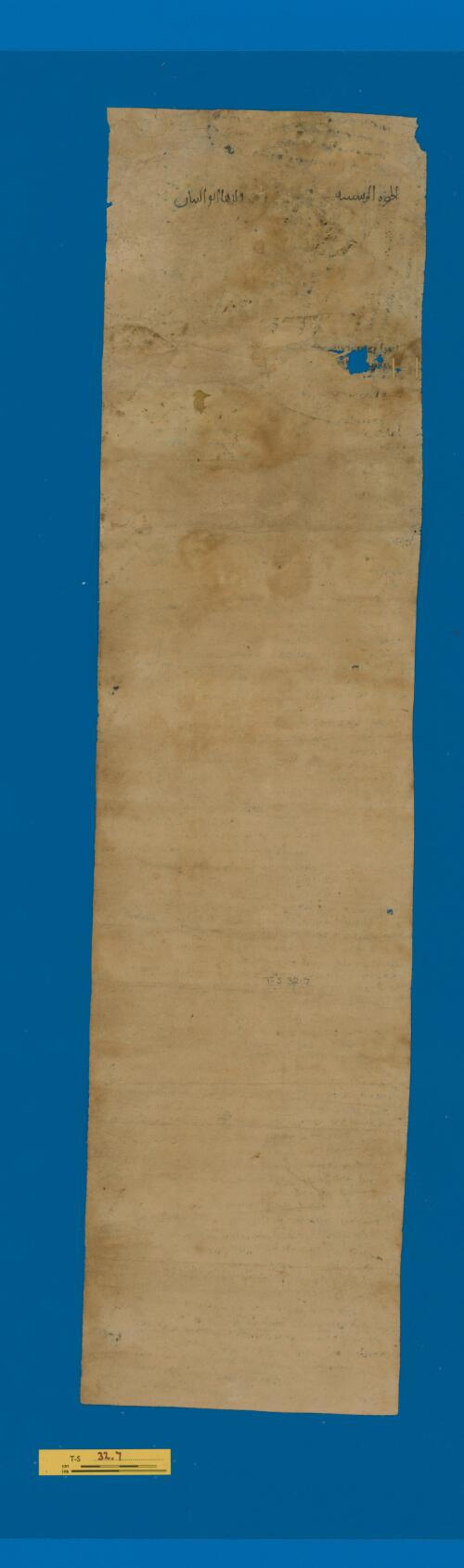
Verso - address
- الحضرة الرييسية . . . . . . . . . ولدها ابو البيان
