Scholarship on Literary text: T-S Ar.39.153 + T-S NS 297.51
Literary text T-S Ar.39.153 + T-S NS 297.51- Bibliographic citation
- Jane Hathaway, Ottoman-Era Documents from the Cairo Genizah (Open Book Publishers, 2026).
- Relation to document
- Digital Edition
- Digital Translation
Editor: Hathaway, Jane
Translator: Hathaway, Jane (in English)
T-S Ar.39.153 1r
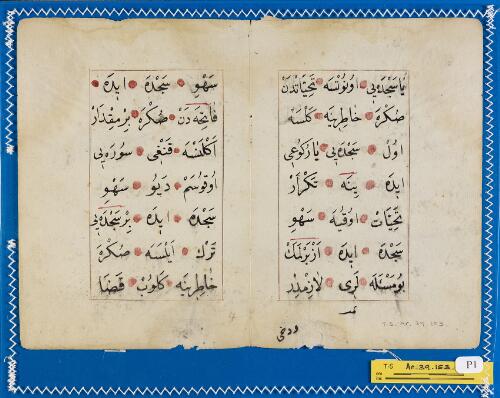
Page 7: Folio 1r, left side
-
sehv-i secde ide.
-
Fātiḥa’dan ṣoñra bir miḳdār
-
eğlense, ‘ḳanġı sūreyi
-
oḳusam’ deyü, sehv-i
-
secde ide. Bir secdeyi
-
terk eylese, ṣoñra
-
ḫāṭırına gelüb, ḳażā
Page 10: Folio 1r, right side
-
ya secdeyi unutsa, taḥiyyātdan
-
ṣoñra ḫāṭırına gelse,
-
ol secdeyi ya rukūʿı
-
ide, yine tekrār
-
taḥiyyāt oḳuya sehv-i
-
secde ide. Ezberlemek
-
bu mesʾeleleri lāzımdir.
-
ve daḫi (bottom left)
Page 7: Folio 1r, left side
-
your prayer is invalid.
-
If, after the Fātiḥa, you hesitate
-
for a while, thinking, ‘Which chapter
- shall I read?',
- your prayer is invalid.
- If you leave out a prostration,
- then later you remember it and perform it,
Page 10: Folio 1r, right side
-
If you forget bowing or prostrations, and
-
you remember after the taḥiyyāt,
-
and you perform the prostration or bowing
-
and recite
-
the taḥiyyāt again,
-
your prayer is invalid.
-
You must learn these matters by heart.
-
Furthermore (bottom left)
T-S Ar.39.153 1v
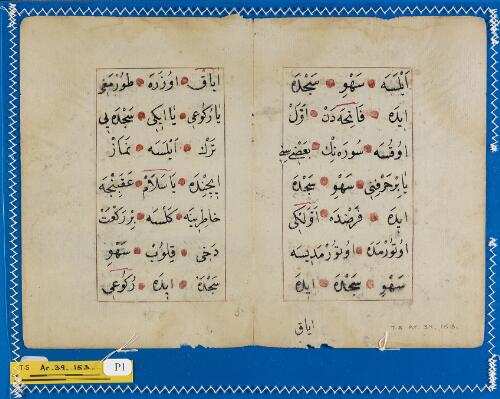
Page 8: Folio 1v, right side
-
eylese, sehv-i secde
-
ide. Fātiḥa’dan evvel
-
oḳusa sūrenin baʿżısını
-
ya bir ḥarfini sehv-i secde
-
ide. Farżda evvelki
-
oturmada oturmadıysa
-
sehv-i secde ide.
- ayaḳ (bottom left)
Page 9: Folio 1v, left side
-
Ayaḳ üzere ṭurmaġı
-
ya rukūʿı ya iki secdeyi
-
terk eylese, namāz
-
içinde ya selām ʿaḳabince
-
ḫāṭırına gelse, bir rekʿat
-
daḫi ḳılub, sehv-i
-
secde ide. Rukūʿı
Page 8: Folio 1v, right side
-
your prayer is invalid.
-
If, before reciting the Fātiḥa,
-
you recite part of the chapter
-
or [even] one letter [of it], your prayer is invalid.
-
If, during an obligatory prayer,
-
you do not perform the first jalsa,
-
your prayer is invalid.
- standing (bottom left)
Page 9: Folio 1v, left side
-
If you leave out standing upright,
-
bowing, or the two prostrations,
-
and you remember in the course
-
of the prayer or following salām
-
and add a rakʿa,
- your prayer
- is invalid.
T-S Ar.39.153 2r
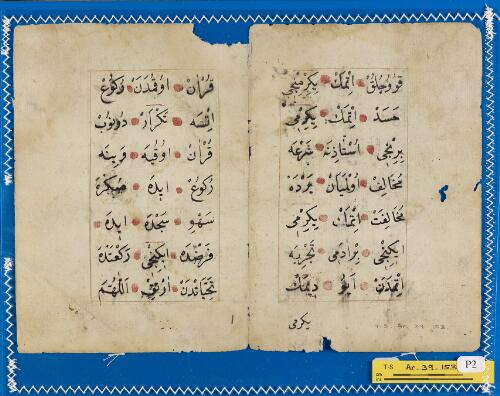
Page 1: Folio 2r, left side (Shurūt al-ṣalāt Section)
-
Ḳurʾān oḳumadan rukūʿ
-
itse, tekrār dönüb,
-
Ḳurʾān oḳuya ve yine
-
rukūʿ ide ṣoñra
-
sehv-i secde ide.
-
Farżda ikinci rekʿatda
-
taḥiyyātdan artıḳ ‘Allahümme
Page 16: Folio 2r, right side
-
ḳovuculuḳ etmek. Yiğirminci
-
ḥased etmek. Yiğirmi
-
birinci üstāzına şerʿe
-
muḫālif olmayan yerde
-
muḫālefet etmek. Yiğirmi
-
ikinci bir ādamı tecribe
-
etmeden ‘ayu’ dimek
- yiğirmi (bottom left)
Page 1: Folio 2r, left side ("Rules of Prayer" Section)
-
If you bow without reading [a chapter from] the Qurʾān,
-
then go back
-
and read the Qurʾān and
-
bow again afterward,
-
your prayer is invalid.
-
If, during the second rakʿa of [one of the five] obligatory prayers,
-
before the taḥiyyāt,
-
you have already said
Page 16: Folio 2r, right side
- to commit slander. The twentieth
- is to be envious. The twenty-
- first is to
- oppose your master [or teacher] when
- he has not violated the sharīʿa. The twenty-
- second is to call a man
- 'stupid' without testing him.
- the twenty-[third] (bottom left)
T-S Ar.39.153 2v
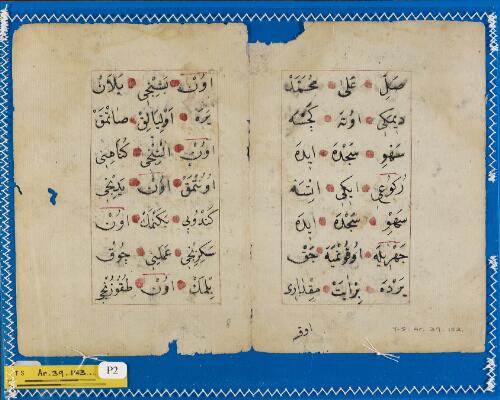
Page 2: Folio 2v, right side
-
ṣalli ʿala Muḥammed’
-
dimeği öte geçse
-
sehv-i secde ide.
-
Rukūʿ iki itse,
-
sehv-i secde ide.
-
Cehriyle oḳunmayacaḳ
-
yerde bir āyet miḳdārı
- okusa (bottom left)
Page 15: Folio 2v, left side
-
On beşinci yalan
-
yere evliyālıḳ ṣatmaḳ.
-
On altıncı günāhını
-
unutmaḳ. On yedinci
-
kendüyi begenmek. On
-
sekizinci ʿamelini çoḳ
-
bilmek. On ṭoḳuzuncı
Page 2: Folio 2v, right side
- ‘May God have mercy on Muḥammad’,
- mixing them up,
- your prayer is invalid.
- If you bow twice [in succession],
- your prayer is invalid.
- If you recite a number of verses audibly
- when they should not be recited [aloud],
- if you recite (bottom left)
Page 15: Folio 2v, left side
- The fifteenth is to
- sell ‘sainthood’ [friendship with God] on false pretences.
-
The sixteenth is to forget your sin.
-
The seventeenth is
-
to be pleased with yourself.
-
The eighteenth is to know your deeds too well [exact meaning unclear].
- The nineteenth is
T-S Ar.39.153 3r
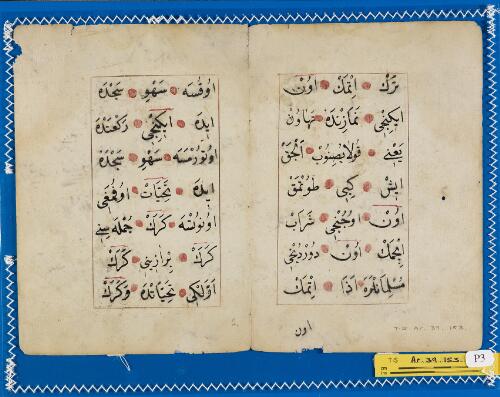
Page 3: Folio 3r, left side
-
oḳusa, sehv-i secde
-
ide. İkinci rekʿatda
-
oturmasa, sehv-i secde
-
ide. Taḥiyyāt oḳumaġı
-
unutsa, gerek cümlesini,
-
gerek birazını, gerek
-
evvelki taḥiyyātda ve gerek
Page 14: Folio 3r, right side
-
terk etmek. On
-
ikinci namāzında tehāvün
-
yaʿnī ḳolayṣınub alcaḳ
-
iş gibi ṭutmaḳ.
-
On üçünci şarāb
-
içmek. On dördünci
-
Müslimānlara ezā etmek.
- on (bottom left)
Page 3: Folio 3r, left side
-
your prayer is invalid.
-
If, during the second rakʿa,
-
you do not sit down, your prayer is invalid.
-
If you forget to recite the taḥiyyāt,
-
whether all of it,
-
or a little of it, or
-
in the first taḥiyyāt or
Page 14: Folio 3r, right side
- The twelfth is to behave
- carelessly during your prayer—
- that is, as if you were undertaking
- something easy or insignificant.
- The thirteenth is to drink wine.
- The fourteenth is
- to harm Muslims.
- the [fif]teenth (bottom left)
T-S Ar.39.153 3v
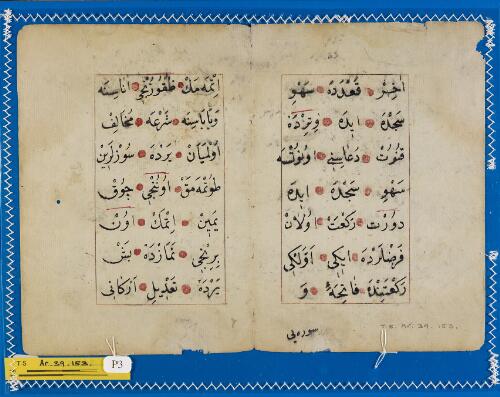
Page 4: Folio 3v, right side
-
āḫir ḳaʿdede sehv-i
-
secde ide. Vitir’de
-
ḳunūt duʿāsını unutsa,
-
sehv-i secde ide.
-
Dört rekʿat olan
-
farżlarda iki evvelki
-
rekʿatında Fātiḥayı ve
-
sūreyi (bottom left)
Page 13: Folio 3v, left side
-
etmemek. Ṭoḳuzuncı anasına
-
ve bābāsına şerʿe muḫālif
-
olmayan yerde sözlerin
-
ṭutmamaḳ. Onuncı çoḳ
-
yemīn etmek. On
-
birinci namāzda beş
-
yerde taʿdīl-i erkānı
Page 4: Folio 3v, right side
-
in the last qaʿda, your prayer is invalid.
-
If, during the witr prayer,
- you forget to say the ‘qunūt’ prayer,
-
your prayer is invalid.
-
If, during the first two rakʿas in
-
[one of the three] four-rakʿa obligatory prayers,
-
you leave out both the Fātiḥa and
-
the chapter (bottom left)
Page 13: Folio 3v, left side
- The ninth is not to obey your mother
- and father when they have
- not violated the sharīʿa.
- The tenth is to make
- too many vows.
- The eleventh is to abandon
- the correct performance of the five obligatory prayers.
T-S Ar.39.153 4r
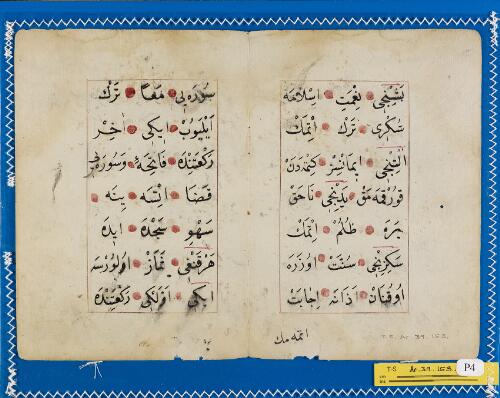
Page 5: Folio 4r, left side
-
sūreyi maʿen terk
-
eyleyüb, iki āḫir
-
rekʿatında Fātiḥayı ve sūreyi
-
ḳażā itse, yine
-
sehv-i secde ide.
-
Herḳanġı namāz olursa,
-
iki evvelki rekʿatında
Page 12: Folio 4r, right side
-
Beşinci niʿmet-i İslām’a
-
şükri terk etmek.
-
Altıncı īmānsız gitmeden
-
ḳorḳmamaḳ. Yedinci nā-ḥaḳḳ
-
yere ẓulüm etmek.
-
Sekizinci sünnet üzere
-
oḳunan ezāna icābet
- etmemek (bottom left)
Page 5: Folio 4r, left side
- the chapter,
- then in the last two
- rakʿas, you say the Fātiḥa and the chapter,
- again,
- your prayer is invalid.
- Whateer obligatory prayer it is,
- if in the first two rakʿas
Page 12: Folio 4r, right side
- The fifth is to abandon gratitude
- for the blessing of Islam.
- The sixth is not to fear falling into faithlessness.
- The seventh is unjustly
- to oppress someone.
- The eighth is not to answer
- the customary call to prayer
- not to [answer] (bottom left)
T-S Ar.39.153 4v
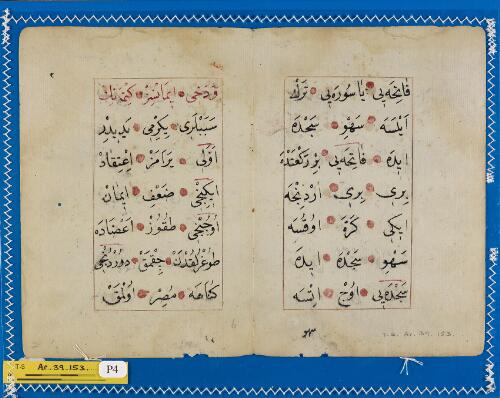
Page 6: Folio 4v, right side
-
Fātiḥa’yı ya sūreyi terk
-
eylese, sehv-i secde
-
ide. Fātiḥa’yı bir rekʿatda
-
biri biri ardınca
-
iki kerre oḳusa,
-
sehv-i secde ide.
-
Secdeyi üç itse
- sehv (bottom left)
Page 11: Folio 4v, left side (Alfāẓ al-kufr Section)
-
[in red ink] Ve daḫi īmānsız gitmenin
-
sebebleri yiğirmi yedidir.
-
Evveli yaramaz iʿtiḳād.
-
İkinci żaʿf īmān.
-
Üçüncü ṭoḳuz aʿżāda
-
ṭoġruluḳdan çıḳmaḳ. Dördünci
-
günāha muṣırr olmaḳ.
Page 6: Folio 4v, right side
-
you leave out either the Fātiḥa or the chapter,
-
your prayer is invalid.
-
If in one raʿka,
-
one right after the other,
- you recite the Fātiḥa twice,
-
your prayer is invalid.
-
If you prostrate three times,
- invalid (bottom left)
Page 11: Folio 4v, left side ('Utterances of Unbelief' Section)
- Furthermore,
-
there are 27 causes of falling into unbelief
- The first is inadequate conviction.
- The second is weak belief.
- The third is to stray from the
- right [path] by means of the nine organs. The fourth
- is to sin persistently.
T-S NS 297.51 1r
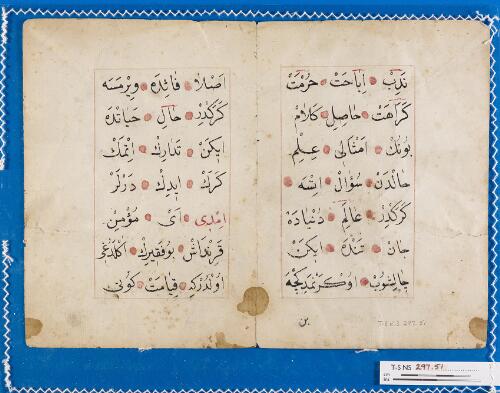
Page 1: Folio 1r, left side (Concluding Section)
-
aṣlā fāʾide virmese
-
gerekdir. Ḥāl-i ḥayātda
-
iken tedārik itmek
-
gerek idin dirler.
-
İmdi [in red ink] ey müʾmin
-
ḳarındaş, bu faḳīrin añladuġı
-
oldur-ki Ḳıyāmet Güni
Page 4: Folio 1r, right side
-
nedib, ibāḥat, ḥürmet,
-
kerāhet. Ḥāṣıl-i kelām
-
bunun emsāli ʿilm-i
-
ḥāldan suʾāl itse
-
gerekdir ʿālem-i dünyāda
-
cān tende iken,
-
çalışub öğrenmedikçe
- ben (bottom left)
Page 1: Folio 1r, left side
- it would certainly be of no use.
- They would say that you should
- have prepared
- when you were [still] alive.
- Now then [in red ink]: O brother believer,
- this is what the poor one [i.e., the author] has come to understand.
- On the Day of Judgement,
Page 4: Folio 1r, right side
-
recommended, permissible, forbidden,
-
and reprehensible. In short,
-
you must ask questions
-
in this way about religious matters
- while you are [still] in this world,
- while life is [still] in the flesh
- Unless you work hard and learn,
- I (bottom left)
T-S NS 297.51 1v
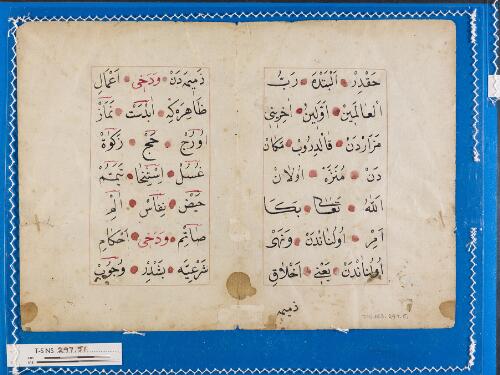
Page 2: Folio 1v, right side
-
ḥaḳḳdır elbetde Rab
-
ul-ʿālemīn evvelin āḫirini
-
mezārdan ḳaldırub, mekān-
-
dan münezzeh olan
-
Allāhü teʿālā bana
-
emir olunandan ve nehy
-
olunandan, yaʿnī aḫlāḳ-ı
- zemīme (bottom left)
Page 3: Folio 1v, left side
-
zemīmeden, ve daḫi [in red ink] aʿmāl-ı
-
ẓāhire—ki abdest, namāz,
-
oruc, ḥacc, zekāt,
-
ġusül, istinḥā, teyemmüm,
-
ḥayż, nifās, alım
-
satım. Ve daḫi [in red ink] aḥkām-ı
-
şerʿīye beşdir: vücūb,
Page 2: Folio 1v, right side
- it is unquestionably true that the Lord
- of the universe
- will raise from the grave from first to last [i.e., everyone].
- God the exalted,
- he without limit, [has shown] me
- what is ordered and what is forbidden,
- that is, the morals of
- reprehensible acts (bottom left)
Page 3: Folio 1v, left side
-
reprehensible acts, and also [in red ink] the public acts of
-
ablution, obligatory prayer,
-
fasting, ḥajj, alms,
-
major ablution, washing in the prescribed manner, ablution with clean earth,
-
[cleansing of] menstrual and vaginal discharge, buying
-
and selling. Furthermore [in red ink], the statutes
-
of the sharīʿa are five [categories]: mandatory,