Letter: T-S 24.47
Letter T-S 24.47What's in the PGP
- Image
- 1 Transcription
- 1 Translation
Description
IB ח92. Letter from Ḥalfon b. Netanel, probably in Fustat, to Yehuda ha-Levi, in Alexandria. Extremely faded and damaged. Dating: September 1140 CE. Written shortly after the poet's arrival from Spain. The letter deals almost entirely with the troubles that befell Ḥalfon in Egypt upon his return the previous year from Spain. He explains that due to his depression and poor health he is unable to properly read Yehuda ha-Levi's letter or travel to meet him. The letter revolves mostly around his heavy mourning over the death of his beloved brother, the judge ʿEli, and justifying the divine decree regarding his loss (verso, right margin). Ḥalfon states that he remained in Alexandria "a year less a month" (verso, right margin, l. 13) immersed in deep depression and thoughts of death. He lived an ascetic life and abstained from drinking wine and eating meat and fruits and other pleasures of this world. As a result of his prolonged stay there and especially his gloomy state of mind, his business affairs suffered. He also mentions delays caused by a number of court documents being "under seal" and inaccessible (verso, right margin and top margin). Because of the troubles that have overwhelmed him in Egypt, Ḥalfon regrets having left Spain at all where he had enjoyed the company of Yehuda ha-Levi; he wishes he had remained in Spain and then accompanied Yehuda ha-Levi on his journey eastward (verso, ll. 37–38; recto, l. 7). He describes his distress over his brother's death as part of the troubles of Egyptian Jewry generally ("during the five years of his absence," recto, l. 17). It is known from other sources that these troubles stemmed from the edicts against the Jews by the vizier Riḍwān Ibn Walakhshī (r. 1137–39), who is not mentioned explicitly in this letter (the circumspection may have been due to the oppressive political climate, as Ḥalfon writes, "it is not possible to speak," recto, l. 16). Even though Riḍwān had been deposed, and imprisoned for the last ten months, some of these decrees remained in effect. Ḥalfon states that many of the notable Jews were killed, while others were imprisoned in jails or held under house arrest and were still imprisoned at the time of writing the letter (recto, ll. 12–16). He implicitly refers to the death of the Gaʾon Maṣliaḥ ha-Kohen without stating in so many words that Riḍwān ordered his killing, but this detail is known from al-Maqrīzī, Ittiʿāẓ al-Ḥunafāʾ, in the chapter for the year 533 AH (وقبض الوزير على عدّة من خواصّ الحافظ منهم أبو المعالى بن قادوس وابن شيبان المنجم ورئيس اليهود وجماعة فقتلهم) (https://shamela.ws/book/176/860). In light of the oppression of Egyptian Jewry and the killing of men of distinction there, Ḥalfon expresses his dismay ("ashamed and humiliated," recto l. 19) at the things said by Yehuda ha-Levi about the desirable qualities of the land. Additionally, the burden of the capitation tax on the Jews was increased, and benefits they had previously enjoyed were canceled (recto, l. 28). The Jews found comfort in the appointment of the Nagid Shemuʾel b. Ḥananya after the death of the Gaʾon Maṣliaḥ ha-Kohen (recto, l. 30). Ḥalfon yearns for a meeting with Yehuda ha-Levi, but as mentioned postpones setting out on the road due to his illness and wretchedness. In the address, Ḥalfon signs as "wounded by his love" (פצוע אהבתו) for Yehuda ha-Levi. (information mainly from India Book IVa, 289–95, and IVb, 500–13.) This document was not part of Goitein's original list, but was identified as a Ḥalfon document by M. A. Friedman, who included it in India Book IV.
מכתב מאת חלפון אל יהודה הלוי כנראה פֻסטאט, ספטמבר 1140 חומר הכתיבה: נייר; מידותיו: 23.5 x 58 ס"מ. ע"א וע"ב באותו כיוון. המכתב ניזוק נזקים קשים, בקרעים וחורים וכתמים עמוקים וגדולים וכתב דהוי. הוא נקרע עכשיו לשניים, וקטע א, העליון, שאורכו 23.5 ס"מ, מתחבר לקטע ב, התחתון, שאורכו 34.5 ס"מ, בע"א, שורה 16, ובע"ב, שורה 10 (ההפרש בגלל כתיבת הכתובת בראש ע"ב).1 איגרת גדולה מאת חלפון אל יהודה הלוי, לאחר הגיעו של המשורר מספרד אל אלכסנדריה. האיגרת עוסקת כמעט כולה בחלפון ובצרות שהשיגוהו במצרים בשובו בשנה הקודמת מספרד, ורק מיעוטה ביהודה הלוי. חלפון מסביר שבגלל דיכאונו ובריאותו הלקויה איננו מסוגל לקרוא כדבעי את איגרתו של ריה"ל ולא לצאת לדרך לפגשו. במרכז האיגרת תיאור האבל הכבד שהוא שרוי בו על מות אחיו האהוב, הדיין עֵלי, וצידוק הדין על אבדנו. צרתו על מות אחיו נוספה על צרותיהם של כלל יהודי מצרים ('בחמש שנות היעדרו'!) בעטיית הגזרות שגזר עליהם הווזיר רִ̇צְוַאן. אף על פי שכבר עברו כעשרה חודשים מאז ש הווזיר נאסר מקצת הגזרות עוד נמשכו. רבים מגדולי ישראל הומתו, אחרים נאסרו בבתי סוהר או ישבו במאסר בית, ועוד היו שם בעת כתיבת האיגרת. כמו כן הוכבד עול המסים (מס הגולגולת) שעל היהודים ובוטלו הטבות שנהנו מהן קודם. בשל הצרות שתכפוהו במצרים הצטער חלפון שבכלל עזב את ספרד ואת חברתו של יהודה הלוי שם, ולא נשאר לצדו כדי לעזור לו בנסיעתו למזרח וללוותו בה. לנוכח דיכוי יהודי מצרים והריגת אנשי המעלה שבה חלפון מביע את תדהמתו ('בוש ונכלם') מן הדברים שאמר (יהודה הלוי!) על שכיות החמדה של הארץ. נחמה פורתא מצאו היהודים במינויו של הנגיד שמואל בן חנניה לאחר מות הגאון מצליח הכהן. חלפון נשאר באלכסנדריה 'שנה פחות חודש' שרוי בדיכאון עמוק ובמחשבות על מוות. הוא חי חיי סגפנות ופרש משתיית יין ומאכילת בשר ופֵרות ומשאר הנאות העולם הזה. כתוצאה מישיבתו הממושכת שם ובייחוד ממצב רוחו הקודר גם עסקיו סבלו. הוא מייחל לפגישה עם ריה"ל, אך כאמור דוחה את היציאה לדרך בשל מחלתו ואומללותו. בכתובת חותם חלפון בתור 'פצוע אהבתו' של יהודה הלוי.
Tags
Editors: Goitein, S. D.; Friedman, Mordechai Akiva; Ashur, Amir
Translator: Ashur, Amir (in English)
T-S 24.47 1v
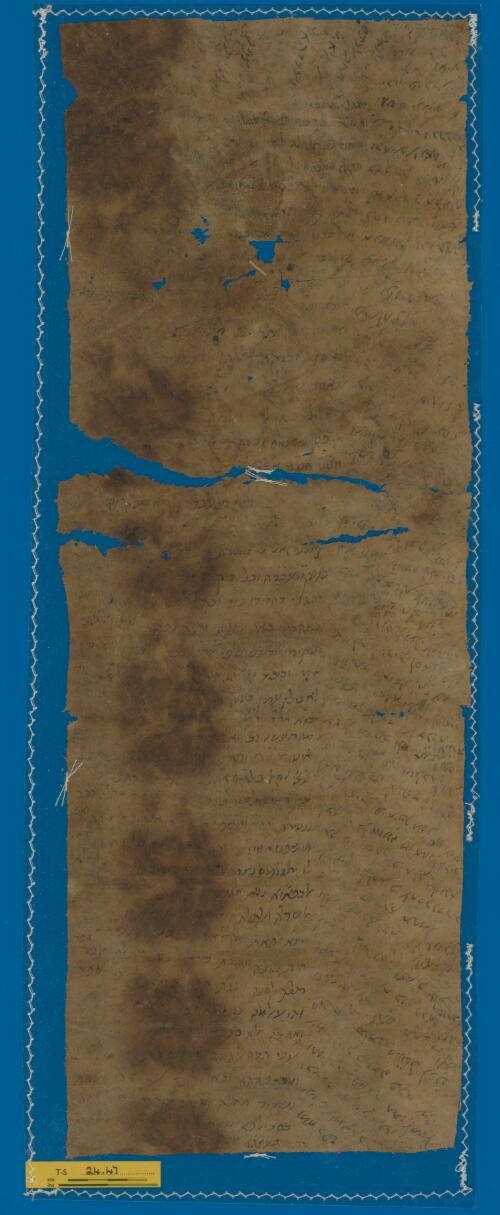
Verso
- מגדל עוז שם יי וג'
- יאמולאי ומאלך נפסי וגאיה אמלי ומנאי אִןִ ..לִלִ.....אה יִגִדהא פי חאלה
- ואחואל לא יצלח לה ולא יתפק לִיתקִ[ן] מִכא[טבה ...] הִדִאִ ..........
- פכיף אקרא מק[ו]ל כִטִאבִ מתלִ אלח̇צרה אל̇צִ... [............] בִכִמִאִ
- וסימא תעלק אלכאטר באלאעדאב ע[ן ............] מן גאִיִהִ אלמסרה
- ונהאיה אלפרח ואלאסתבשאר וִכִתִ[רה .........]לאהִ בִהִ .... ....
- וזואל סכטה לאמרִ חאלִהִ כמא מִ[......]א סבבִא ...לִהִ ואחִדִ
- מן אלמסרה אליה בבק[י]ת אִלִשִ[..] קבלִ [...]תאִ ... ....ץִ ואלאשרִאף
- עלי אל..אִףִ [... ] אלפא̇צליִהִ אל̇טאהרה ו̇תקה
- אלנפס ותחקיק אמלהא ודואהא באלא̇גתמאע לישפא אלנפס אלראיִצִהִ
- ואלרוח אלפאניה ודלך נפסִ מיל אלנעםִ ...... אִלצרב הִדִה
- ולם יזדי עבדהא אלי אלנהו̇ץ ואלנפוד פי[ה]אִ מִעִ [...]אִ
- אלכאטר מן סבילִ אל[מסרה] וגיאבה ען מתולה בהִאִ ולא
- לסאן ולא בנאן לחִ[כאי]הִ בע̇ץ פיהִ מִןִ עִדִם מא .....
- מן פנון אִחכאם אלכאלִק תעאלי ובחק א... אִל... אל...
- ח̈נוני ח̈נוני א̈תם רעי לאבִלִ [ע]לִ [אד]וִנִיִ ומרי ורבי [...]
- [..... ע]לי וצח פי עבדהא מא סבק אלקול ואלוִעִיִדִ
- אִלִמ.. לא שלותי ולא שקטתי ולא נחתי ותמאמה
- ויקימני זמני לו למטרה / והיביא [בכלי]ות[י בני אשפתו]
- בזע̈ף וע̈ברה / וכלי ריק הציגני / ובכובעִ[ו ה]תִיִיִצִבִ
- נִיִהגני / בהסירו נזרי וכתרי / וצניף הודי ועטרתִ ראשי /
- ובצהרים באה שמשי / והכִה כפתורִ מכון שבתי
- ומקורי / ורע̈שו ס̈פי סדרי מנהִגִ רבצי מִדורי / ונשאתי
- אימיוִ וכובד זעמוִ / עד ירִ[אה .....]מִ. לשלם ניחומו /
- לאבילי עמו / כענין נח̈מו נח̈מו ע[מי י]אמר ̇אִ וִמִיִ
- יב̈וא אח̈רי ה̈מלך ̇א אשר כבר עשוהו ומי [יאמר לו]
- מה תעשה וכאלואגב אלקול ואִלִאעתדִאלִ קִשִיִטִיִןִ
- א̈ינון ד̈ינוהי ות̈קנין עובד̈והי חסב שִבה וליה
- ̇ע̇א קאל באל̈הים א̈הלל דבר בייי אהלל דבר
- בין במ̈ידת ד̈ין ב̈ין במ[ידת רחמים] א̈הלל ד̈בר
- ונ̇טירה ח̈סד ומ̈שפט אשי̈רה אם חסד אשירה ואם
- מש̈פט אש̈ירה ובכל מידה וִמִידה כולנו חייביִםִ להודות
- לו יתר̈ומם נצח יא מולאי ומאלכי קד עלם עלאם
- אלכפَאיא מא אגדה וענדי מן שדיד אלשִוִק וע̇טים
- אלשרّה ואלתלאף לנ̇טר מולאי נ̇ט ר̇ח ונדמיִ עלי
- מ̇צא ופאת מן אלאלתזאם במחלה אלשריף וכוני
- חית כונה ונדמת בעד אלפות חית לם אוכר ספרי
- תלך אלסנה וכُנת אפוז בצחבתהא פי אלספר
- והי עאלמה כוני לא צבר לי ען פרקתהא סאעה
- ואחדה אלא בנכד ותחמל מ̇צ̇ץ וכאן קִדִ תאכר
- עני הדה אלהמום ואלמצאעב אלדי אנא מכאפיהא
- ומכאבדהא וכאן יבעَד עני סורה אלמות
- ושדיד מחלה ומריר דוקה וִאִחואל אנא
- בסבילהא ממא לא שד פי סלא[מה] מולאי
- בע̇צהא ממא סתר לִלנאס גלִ... ....
Verso - right margin
- ומא כפא
- ע̇טים אלמצאב
- בעדם מן עדמתה
- וחסרתי במותה חתי אלאחואל
- אלמתולדה בעדה פכאן עלי
- אלחק סיִרִ מ̈יתי מו̈טל לפ̈ני
- וחזן יתגדד והם יתאכר וק̇ציה
- וקע אלכלוף פיהא בין חכאם ובע̇צה
- לגר̇ץ וגיר גר̇ץ ואמור יטול שרחהא
- ולחק ענדהא הדא אלסוק אלנאפק
- מע כון עבדהא תחמל אלמ̇צ̇ץ
- אלע̇צים וגלסת פי אלאסכנדריה
- סנה גירִ שהר פי חאלה יעלמהא
- אלבארי גל אסמה מן אחואל גריב
- חאזן כאיב פי א̇ציק מסכן ואסוי עיש
- לאני טלבת אלעסר עלי נפסי
- ואלת̇ציק בכל וגה וטלבת אלמות
- עדה מראר ולם אוצל נפסי
- לשי מן מלאד אלדניא וה̇גרת
- אלשראב ראסא ואללחם ואלפואכה
- ואלמלאד וחתי אלי אלאןّ עמדת
- בתלך אלטריק לם א̇גד סלוה
- עןִ מִן עדמתה ועלי אלחקיקה [צ]חִ
- בי אר[ד] על̈יו א̈בל ̈עד שא̈ול
- ובעד מא אטלת אלמקאם פי
- נ̈וא א̈מון אלמדה אלמדכורה
- לִם יפיד שיִ ובקית גמיע
- אמור אלאנפאד מעאקה
- אלי חִיִת אִלִ..לִ ואלנ̇טר פִיִ
- אלתרכה אלמכלפה אִלִמִרִפִוִעִ
- ואלמלך ו̇גמיע אמור ...לִ
- ̇גמיע דלך לם ינפצל
- פיה חאלי אלי חית וצלת
- וחתי אלאן לם ינפצל
- לטוקִהִ ירגעִ אליי
- פי אלח̇צור
- מן נפסיִ רִגִוִעִ [אלי]
- גמלִה טִוִקִהִ .לִךִ
- אנתרה והו תחת
- כתם בית דין ואנא
- לא אקדר אסמע
- בדכרה מ̇צאף אלי
- ודאיע אלנאס מן
- שטרות וכתובות
- וגטים וגמיע מא
- יכון פי בית דין
- מודועִ גמיע
- דלך מנעאק
Verso - top margin
- עלי אלנאס
- תחת אלכתם
- אלי אלאןّ
- ועדדהא ̇לִ
- אמור ומִר
- יִטִוִל וצפה
- ומולאי תגלב
- עדרה עלי
- [א]לִמִצאעב לנִאִ
- וִאלעדִ[ר] קד
- [ע]לִמִהִ אלקלב
- מִאִ אגדה מן
- אלחאל ואלמר̇ץ
Translated by Amir Ashur.
The name of the Lord is a strong tower (Proverbs 18:10).
My lord and master of my soul, and the object of my hopes and longings. Because of his sadness and his poor health, and due to other circumstances, your slave [i.e., the writer] is suffering; he is unable to read your lord’s letter properly. And how can I read a missive from a person of his splendor while I am suffering? And especially when I prevent myself from [enjoying] any happiness, joy, or gaiety? [ . . . ]
And neither the tongue nor the writing hand is sufficient for describing even a little of my suffering due to the predestination of God, may He be exalted. And I swear, Have pity upon me, have pity upon me, O my friends (Job 19:21) because of my mourning over my master, lord, and teacher Eli. And in your servant has materialized what is mentioned in scripture: I was not at ease, neither was I quiet, neither had I rest (Job 3:26). And my destiny set me up for His mark, and He has caused the arrows of His quiver to enter into my reins (Lamentations 3:13) in rage and wrath, and He has set me down as an empty vessel (Jeremiah 51:34), and stood forth with his helmet—he led me, while he removed the turban and lifted the crown from off my head. And the sun went down at noon, and the lintel struck my dwelling place, and the door jambs shook. [ . . . ]
And I have carried His horrors and the burden of His wrath until I . . . , to restore comforts to Him and the mourners of His people, as it says: Comfort, comfort My people, says your God (Isaiah 40:1). And who will come after the king, [to do] what has already been done (Ecclesiastes 2:12)? And who may say to him, “What are you doing?” (Ecclesiastes 8:4). It is obligated by scripture and the Justification of the Judgment [i.e., the funeral prayer known as Tsiduk ha-din]: “His laws are true, and His actions are correct.” As was said by His faithful one—may he rest in peace: In God I will praise His word; in the Lord I will praise His word (Psalms 56:11). Either with a measure of justice or with a measure of mercy I will praise His word. And so on. Of kindness and justice I will sing (Psalms 101:1). “If it is kindness, I will sing, and if it is justice, I will sing” [b. Berakhot 60b]. No matter which measure, we must all thank Him—may He be eternally exalted.
My lord and master, the Knower of Mysteries alone knows how upset I am and how much regret I feel because of my fierce longing, desire, and impatience to see my lord—may our Merciful One protect him—and my sorrow for the time that has passed and been wasted because I was not in the presence of your noble honor, and that I did not remain in the same place as him. And I felt regret for not delaying my trip that year—only when it was too late already. Had I done so, I would have enjoyed his company while traveling. You know, your honor, that I lack sufficient endurance to be distant from him even one hour—so I have suffered great distress and trouble that I would have saved myself [had I only postponed my journey]—all those sufferings and hardships which I’m dealing with would have been prevented!
And it is not enough that I suffered a great disaster by losing the one whom I miss and by my mourning over his death, but also more hardships were added to me after his demise. In addition, I behaved like one whose dead lies right before him. First came mourning and then hardship. Also, there was a court session in which a disagreement between the judges occurred—some relevant to the matter and some not, and more difficult matters that I lack the space to describe here. And at that time, the merchandise started to be sold at good prices in the market while your servant was suffering from great distress. And I have stayed in Alexandria one year less one month, in a dreadful state such as only the Creator knows, may His name be great—as a foreigner, mourning, in the most miserable agony and deep sorrow, because I wanted to make it hard for myself and to live a life of sorrow in every way. And several times, I wanted to die. And I did not allow myself the pleasures of life, and I stopped drinking wine and eating meat and fruits and other delights. And even now I remain attached to this way, and yet I still haven’t found any comfort after the demise of the one I miss. And truly it is confirmed in me; I shall go down to him in mourning, even unto Sheol [see Genesis 37:35].
And because I prolonged my stay in No Amon [Alexandria] over this time, to no advantage, all the issues that needed to be arranged were delayed—the examination of the inheritance, the estate, and all the other issues—nothing was arranged before I arrived here, and even now, nothing is arranged. When I am here in person . . . The deposit has been locked away by the court, and I cannot find out anything about it, and it is included with other people’s deposits, legal deeds, marriage contracts, and bills of divorce—everything that should be deposited with a court. All of it is inaccessible to the public, kept under seal till today. And they number thirty items. There is another issue, which the page is too short to describe. And my lord’s forgiveness overcame our difficult circumstances. My heart has already announced to the extent of his mercy how much I suffer from this difficult situation and the illness.
And yet we should not complain unless in front of Him; and He gives this knowledge to His servant; and to Him I give thanks. It is impossible for a person to live all his life in happiness and ease. And the living will die and will leave the world—this is the structure of life. If the world would remain forever for one who comes first, it would not be available for one who comes later.
To sum up: I swear in the name of your kindness and benevolence—if I knew about his death while I was in al-Andalus, I would not have left there, for the rest of my life. And I also would not have been able to assist my lord to depart [al-Andalus] and travel, not having the person I admire. And most people [are without] happiness after the death of the head of [the academy, and] from what happened through the vicissitudes of time and the misfortunes of fate, and the deaths of the heads, the excellent elders. [ . . . ] The outstanding men of their generation, and its princes and its servants, were killed; they went out hastened and pressed by their king’s command [see Esther 8:14]. Some are still in prison today, and a few are under house arrest, and so forth. No one can utter it (Ecclesiastes 1:8). The events that took place over the five years in which your servant was absent are troubles that have not met their parallel throughout the years.
And only the Creator, blessed and exalted, knows how much shame and disgrace his servant feels at what you say about the beauty of the land, its praise and wonders, and at what you tell of them, and about those you miss from among the people of ideals, leadership, and piety, when the evil non-Jew plotted. Because most of it has ceased to be, if not all of it. And indeed, what should I say, what should I speak to my Lord, and how should I exonerate myself [see Genesis 44:16] to my Lord about the loss of the righteous, the death of the faithful men and the demise of the purest one, and the death of some of the leading lights [“highest lamps”] of the Jews. They shall come forth into the palace of the King (Daniel 1:4) who sat first in the kingdom. And in their absence, some long-standing privileges of the Jews have been taken away.
But the Creator—may He be exalted—had mercy on us and left us a remainder and a remnant, and He made the sun of our nagid rise, the leader of our generation, our lord Samuel the great nagid—may his glory and splendor be exalted, before the sunset of our gaon—may he find rest—to set a remnant in the land, to preserve a great people. Because he was, in truth and sincerity, already among the king’s great courtiers, who ranked highest in the kingdom (Esther 1:14). And afterwards, the king lifted him up, bestowing on him honor and power, and sat him on the throne of Israel to dispense justice and righteousness. Are not his ways and his character known and renowned among all who pass through here? And his qualities and his gifts are all honesty and worthiness, and the fear of his God is his way of life.
And I swear by your mercy and your noble self, which is in the highest realms of splendor. . . . May God heal me with your assistance. I am certain beyond doubt that my agony will come to an end when I am finally in the same place as you. The life of your servant depends on your life. He who testifies for me is on high (Job 16:19). And be steadfast as the witness in the sky. Selah (Psalms 89:38).
Written in haste, at night, out of great sadness and great worry. Sorry and sorry again. And peace.
T-S 24.47 1r
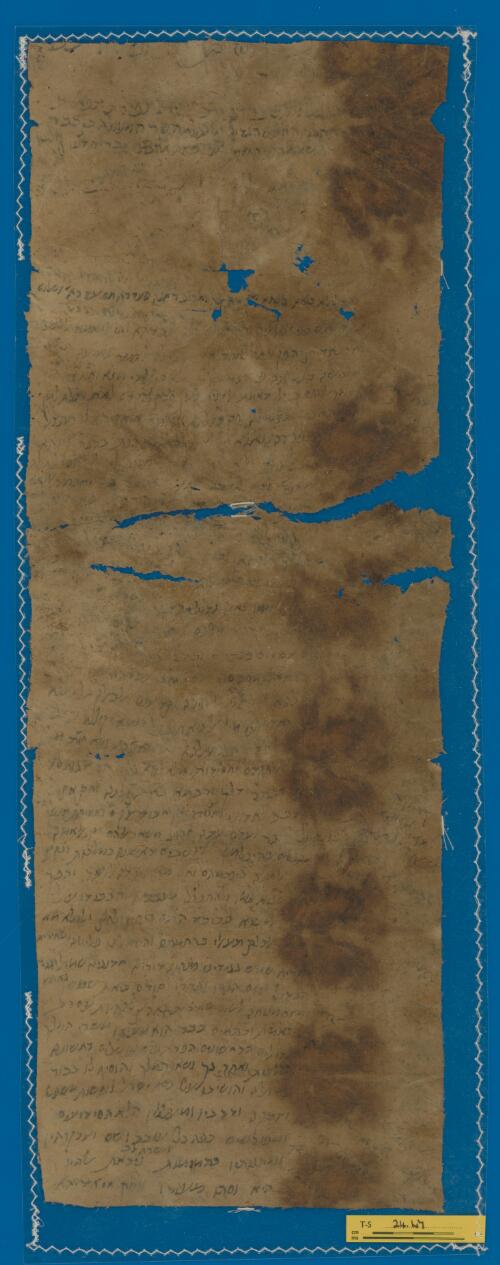
Recto
- כתב לילא בנחץ / ובלחץ / מרִ[ו]בִ ת[ו]גה / ומרוב דאגה / פעדרא תם עדראً ושלום
- ובעד לא שכוִי אלא אליה והי תעלם דלך עבדהא והו אלמחמוד אלמשכור
- ולא יכאד אן יתפק ויתם לאחד אן יִ[ח]יִיִ ̇גמלה אלעמר גמיעה פי נעמִהִ
- ולא עישה בגמלתה פי רגד יצב ולא כן אלחי מ̇צא ואנק̇צי הו
- אלעמר אלמחסוב ולו דאמת אלדניא למן סבק ותקדם למא וצלת למן
- לחק ותאכר ובאלגמלה וחק פ̇צלהא וג'אמר איאדיהא לו אתצל
- בי מותה ופקדה ואנא פי אלאנדלס למא כנתُ כרגת מנהא
- אִלִיִ אנק̇צי אלעמר ולא צרִת איִצא חסّנת למולאי וסהّלת לה
- אלכרוג ואלספר לכוִנִיִ עדמת שכץ אפתכִר בה ואכתר אלנאס
- באִכִ[... ]מִןִ [... ]סִדִ לִהִםִ מסרִ בעד פקד ראסִ אלאִ...
- יִמִ[..........]אִמִוִרִ [...]מִ[ ] מִ[מ]אִ
- חדת מן תגייר אלזמאן ותקלב אלאחִוִאל ופקד אל[רוס]א אלאהִדִّאִ
- [...]תִב[...] פקחִםִ מנהם באלמִות וִקִ[תל ................ ] יבקיך
- הִמִלִךִ והִומתו ממן כאנו גדולי הדוִר ושריו ועִבִדִ[יו] יצאו
- מבוהלים ודחופים בדבר מלכם ומִקִצִתִםִ בבית הסוהר עד היום
- ואחדים אסורים בבתיהם וכהנה וכהנִה ולא יוכל איש לדבר
- וטריק הדה אלכמסה סנין אלדי גאב עבדהא אמור לא
- יתפק מתלהא פי אלסנין אלטוילה וקד עלם אלכאלק גל ועלא
- מא ענד כאדמהא מן אלחיא ואלכ̇גל ממא יקולה ויצפהִ
- מן מחאסן אל̈א̈ר̈ץ ופ̇צאילהא ואמִתאלהא ומִא פִוّת מ[ן] אהל
- אלפצאיל ואלתקדם וחסידות מלאיִהא בִאלדי הם אלגויי סו
- וחית זאל אכתר דלך ורבמא כאן בִגמלתה וחק אקול
- מה אדבר לאדוני ואצטדק מן אבוד צד[י]קים ואסיפת אנשי חסד
- וכמול אלאִבר ועדם עדה סרוג משאר אליהם מן אלאמה
- והִםִ נכנסים בהיכל מלך ויושבים ראשונה במלכות ונקץ
- קִדמא אלמלה בעדמהם וחל מא וִעדִ לה אלועיד והפך
- [ל]בם לשנוא עמו ולהתנכל בעבדיו והכבידו עול
- והוסיפו משא בכובד המס בנחץ ולחץ ולולא מא
- קד מןّ אלכאלק תעאלי ברחמתה והניח לנו פליטה ושאירית
- והזריח שמש נגידינו מנהיג דורינו אדונינו שמואל הנגיד
- הגדול ירום הודו והדרו קודם ביאת שמש גאונינו
- ימצא מנוחה לשום שאירית בארץ להחיות עם רב
- כי באמת ובתמים כבר הוא מעודו משרי המלך
- הגדולים הראשונים הפרתמים היושבים ראשונה
- במלכות ואחר כך נשאו המלך והוסיף לו כבוד
- וגדולה והושיבו על כסא ישראל לעשות משפט
- וצדקה ודרכיו ומעלליו הלא הם ידועים
- ומפורשים בפה (!) כל עובר ושב וצדקותיו
- ומתנותיו בתמימות וישרת לב ביראת אלהיו
- היא וסתו מעודו ווחק איאדיהא
Recto - right margin
- ושרפהא
- אלדי הו אגל קדר
- לקד כנת פי אקִדִאם אל..ה
- לאין אתוגה ואסאפר למא ראית
- מן שנוי המקומות מ̇צאף אלי
- חִנִיִנות54 לבִ ויגוןִ נפש חתי
- כנתُ וקת אקוִלִ [...]
- ווקת ירא להִ קלבי [...]
- אלי עלדה אִלִלה יִ... אִלִיִ נחו מולאי
- ונחו סאדאתי אלאכמלא ובקית
- מתוקף חדר מן מכאלפה
- אלטרק לעל מרִץִ לִמולאי
- [אל]מתוִגִעִ יִגִרִיִ בלא צִחִהִ
- לעִל יִקפע ען אלאספאר
- אלי ש̇גר לקלבי ותעלק
- אמלי במולאי ואלאן
- ינגִע לי אלכאלק גל
- אסמה בקוִתִ[ה] אלשפא
- ותחקקת ואללה אִלִמִתבִות
- בזואל כל תלִךִ [...]
- בכוני חית כִוִנִהִ
- ת.ל. ב[...]
- [...] מִתִאִבִ [...]
- באִ[ר]ץ [...]אִלִ
- פקד .ל... ...
- ...... עִלִיִ קלבה
- ..צ. [...] אִלִיִהִ
- וִכִלִ מִןִ ..צִ..
- אִלִעאלי אִןִ מתע..
- [...]תהִאִ
- קִדִ [...]
- ופי קד [...]
- אן חיי עִ[בדו תלויים]
- בחייו וש̈הדי
- במ̈רומים וע̈ד
- בשח̈ק נ̈אמן
- סל̈ה
Recto - address - right side
- لحضرة مولاى السيد الفاظل [...]
- אדוני רבינו יהִוִדִה
Recto - address - left side
- רִבנא
- ...
- תודה
- ...
- ...
- תובל נא בשמחות וגיל למושב הדרת יקרת צפירת תפארת
- מרנא ורבנא יהודה הלוי החכם הגדול המפלא השר המעולה בן כבוד
- השר האדיר מ̇ר ו̇ר שמואל הלוי החסיד ̇ז̇ל פצוע אהבתוִ עבד יד[י]דוִתִו חלפון לוי
