Literary text: BL Or. 6197.7–8 + T-S NS 298.55 + T-S 8Ka7.4
Literary text BL Or. 6197.7–8 + T-S NS 298.55 + T-S 8Ka7.4What's in the PGP
- Image
- 1 Transcription
- 1 Translation
Description
Gzar-dina de-Yeshu (Toledot Yeshu, JA1 in Bohak's edition, Judaeo–Arabic translation, "Pilate" recension), final portion of the text on BL Or. 6197.7 (through passage 9.5); read consecutively with T-S NS 298.55 (PGPID 41697) and T-S 8 Ka 7.4 (PGPID 41698) as a single irregular quire; followed on BL Or. 6197.8 by a short Hebrew acrostic piyyut beginning בש(ם) רחמ(נא) נתח(יל) זה השבח, 'In the Name of the Merciful One, we shall begin this praise', and a viddui (confession prayer) by Nissi al-Nahrwani (Baghdad, early tenth century), titled וידוי לנהרואני ז' צ' ל, 'A confession prayer by Nahrwani, may the memory of the righteous be for a blessing', beginning רבון כל העולמים קודם כל דבר, 'Master of all the universe, before any thing'. (Information from Gideon Bohak, The Sentencing of Jesus (Gzar-dina de-Yeshu), 15–19.)
Editor: Bohak, Gideon
Translator: Bohak, Gideon (in English)
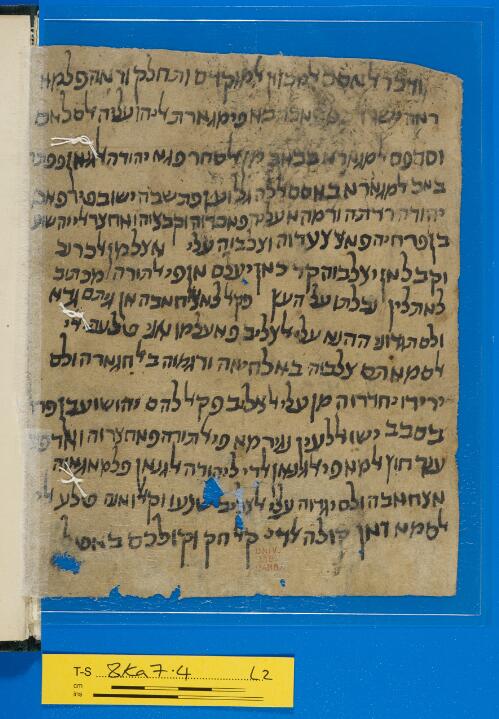
BL Or. 6197.7–8 recto

BL Or. 6197.7r (ninth section in join)
- פלמא כתר אלכלאם אסתדעא [אלמ]ל֯ך ב[י]ה֯ו֯דה
- אלגנן פקאללה אלרגל אלדי צלבתה איש עמלת בה.
- פקאל ד֯פ֯נ֯ת֯ה פי א֯ל֯ג֯נ֯[א]ן֯ פקאל לה אלמלך איש ה֯דה אלשנאע
- אלמסמ[ועה פקאל] לה איוה אלמלך אן ישו אלמלעון כאן יעלם
- [בא]ן֯ [מכ]ת֯ו֯ב פי אלתורה אן אל מצלוב לתב֯י[ת] נ֯בילתה עלי
- אלכשבה פאגר אצחאבה וקאל להם אן֯ גית֯ם גדא ולם
- תגדוני עלי אלצליב אעלמו אני קד צ'עדת אלי [אלס]מא. פקאל אלמלך
- ליהודה אלגנאן אנבשה ואחצרה. פנבשה יהודה אלגנאן ושד
- פי רגלה חבל וגרה פי אסו֯אק טבריה ונוד֯י עליה הדה ישו
- א֯ל֯מארק אלדינכת בטאעת אללה פאערפוה. בעץ֯ אצחאבה
- אמנו בדלך ובעצהם לא יאמן. תם קאל אל[מ]לך ליהודה
- [כ]מא ראית אלצואב פי דפנך לה פי אלגנאך אדפנ֯[ה] מע֯ [סא]י[ר]
- אל אמואת. פפעל דלך. ויום ישו כאן י"ד פי ניסן ויום אן נ֯ו֯ב֯ש֯
- א֯ו גר פי אלאסואק טבריה כאן כ"ב פי ניסן. ואלדי אנתקם מן ישו
- [ה]וא ינתקם מן אלכפאר ומן עובאד אל אותאן. ואלמלך טברינוס
BL Or. 6197.7r (ninth section in join)
-
When the word had spread, [the ki]ng summoned Yehudah
-
he gardener and said to him: “The man whom you (sg.) have crucified—what did you do with him?”
-
And he (i.e., Yehudah) said: “I buried him in the garden.” And the king said to him: “What is this calumny
-
that is hea[rd?” And he said] to him: “Oh king, the cursed Yeshu knew
-
[that it is wr]itten in the Torah that one who is crucified—‘Do not let his corpse remain overnight on
-
the tree’, and he deceived his followers and said to them: ‘If you come tomorrow and do not
-
find me on the cross, know that I ascended to [Heav]en’.” And the king said
-
to Yehudah the gardener: “Dig him out and bring him.” Yehudah the gardener dug him out and fastened
-
a rope to his leg and dragged him through the markets of Tiberias. And it was proclaimed about him: “This is Yeshu
-
the heretic who violated God’s will—recognise him!” Some of his followers
-
believed it (i.e., that it is the body of Yeshu) and some of them did not believe. Then the king said to Yehudah:
-
“[Just] as you saw fit when burying him in the garden, bury him with the [rest of?]
-
the dead.” And he (i.e., Yehudah) did so. The day of Yeshu was the fourteenth of Nisan, and the day Yeshu was dug out
-
dragged through the markets of Tiberias was the twenty-second of Nisan. He who took revenge upon Yeshu—
-
He will take revenge upon the heretics and the worshipers of idols. King Tiberinus
BL Or. 6197.7–8 verso
BL Or. 6197.7r (tenth section in join)
-
קיסר ופלטוס אלקאיד ויהושוע בן פרחיה
-
ומרינוס אלשיך אלכביר ויהודה אלגנאן וגמיע אלמ֯ח֯פל
-
חצרו קתל [י]שו וצלבה וגרה פי אלאסוא֯[ק] ט֯בריה. כדאך
-
יהלכו כל אעדא אללה וישרק נור מחביה[ כ]אשראק
-
נור אלשמס בקותה. תם גזר דין ישו אלמארק
-
כן יובדו כל אויביך י"י אשריך ישראל מי כמוך
-
עם֯ נושע בי"י.
BL Or. 6197.7r (tenth section in join)
-
Caesar, and Pelatus the governor, and Yehoshuʿa ben Peraḥiah,
-
and Marinus the great elder, and Yehudah the gardener and the whole congregation
-
were present at the execution and crucifixion of Yeshu and his being dragged through the markets of Tiberias. “Thus
-
may all God’s enemies perish, and the light of his friends shine [ ] like the shining
-
of the light of the sun in its strength.” Here ends The Sentencing of Yeshu the Heretic.
-
“Thus may all your enemies, Lord, perish” etc. “Happy are you, Israel; who is like you—
-
a people saved by the Lord.”
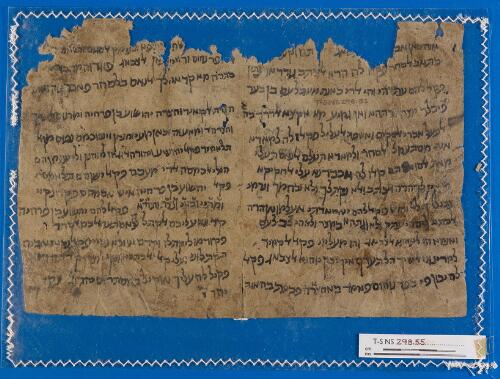
T-S NS 298.55 1r
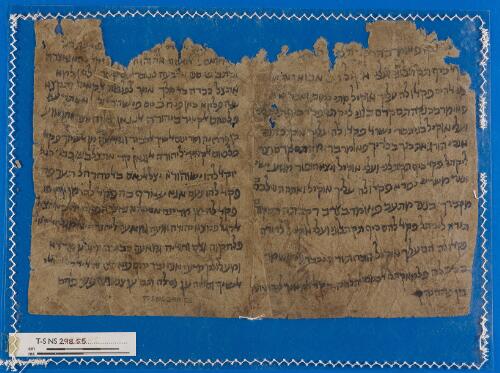
T-S NS 298.55 1v
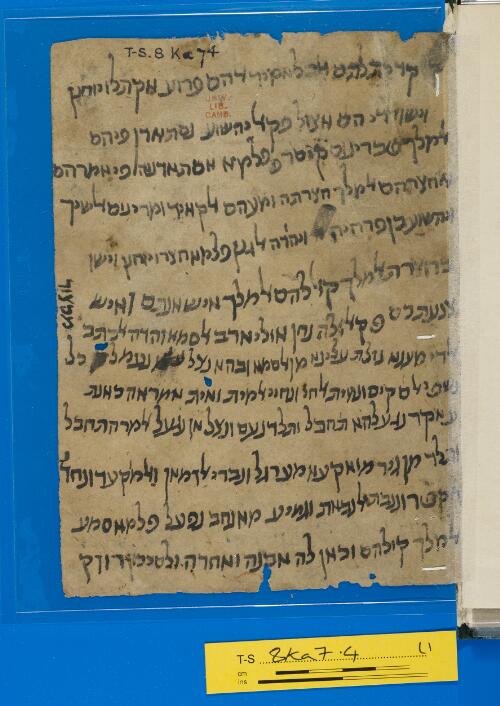
T-S 8Ka7.4 1r
T-S 8Ka7.4 1v
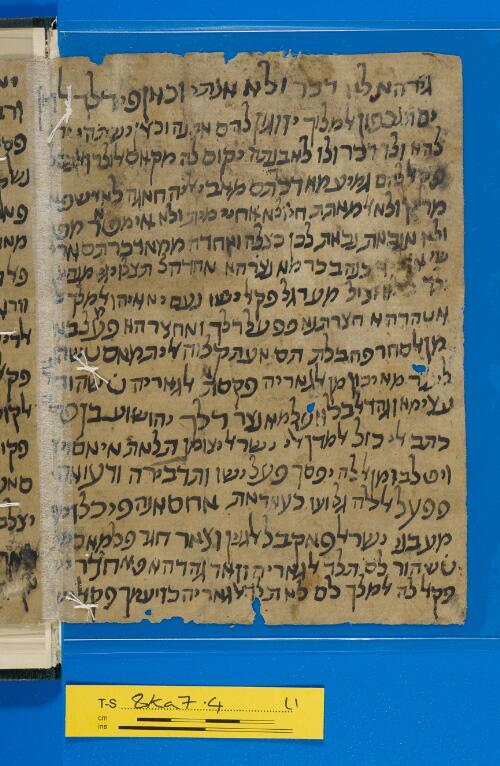
T-S 8Ka7.4 2r
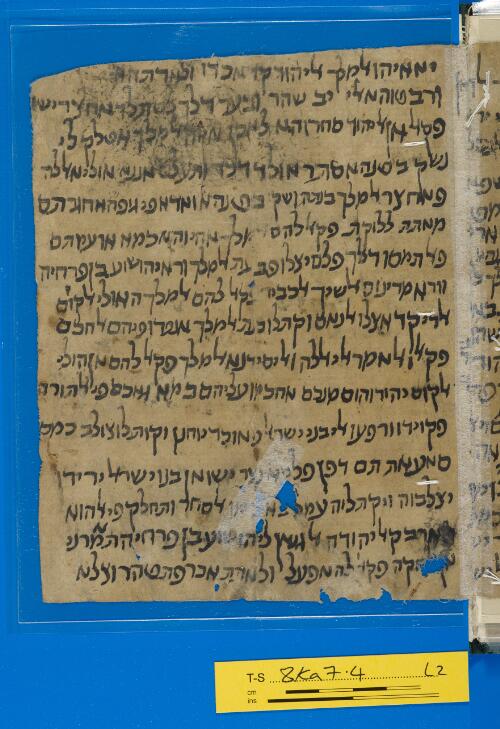
T-S 8Ka7.4 2v