Letter: T-S 13J26.13
Letter T-S 13J26.13What's in the PGP
- Image
- 1 Transcription
- 1 Translation
Description
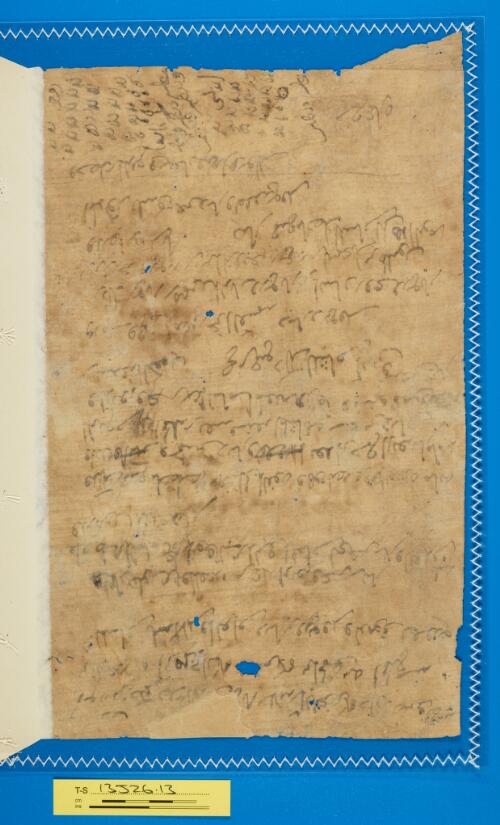
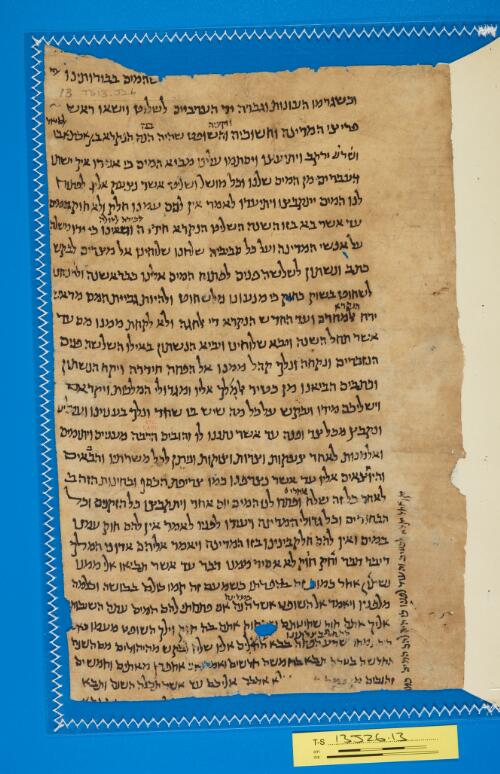
Communal letter in Hebrew, from a city in Palestine (per Goitein and Mann) or Damascus (per Gil) to the yeshiva in Jerusalem (per Gil) or Fustat (based on the accounts on verso). Dating: 1050–55 CE, based on the likely identifications of Ḥaydara and Khaṭīr al-Mulk. "The extortion of payments of the capitation tax in advance is thus far known from Geniza records only for Palestine and for the second quarter of the eleventh century, a period of anarchy and misrule. According to one report, payment was asked a full five months before the Muslim New Year on which it was due." (Goitein, Med Soc II, p. 389.) The story in the document is very interesting. The sender describes that the Bedouins (הערביים) gained control over the city and collaborated with a judge, the nephew of Abū l-Sayyār(?), to cut off the water supply of the Jews. Whenever the Jews succeeded in swaying a ruler (כל מושל ושליט) to restore the water supply, their enemies united and denied that the Jews had any right to the water. Another ruler (shaliṭ) came to power this year, named Ḥaydara Dhakhīrat al-Dawla (appears also in T-S K25.249 in 1031 CE). The community sent emissaries to Egypt to obtain "a document (ketav) and a decree (nishtevan)" with three requests: (1) to restore the water supply, (2) to restore the right of slaughtering in the market, and (3) to prohibit collection of the (capitation) tax before the year has begun. The requests were accepted and the decree was issued by Khatīr al-Mulk (=the son of al-Yāzūrī, or possibly al-Yāzūrī himself; see Yaacov Lev, Administration of Justice in Medieval Egypt, p. 145)\. However, the ruler "read (the documents and the decree) and cast them from his hand" and demanded hefty bribes before fulfilling any of the injunctions. The Jews' enemies were outraged and protested, but gave up in disgrace when the ruler said that they would have to obtain a counter-decree annulling the first one. Nevertheless, the judge of the city persisted in demanding the capitation tax 5 months ahead of time, 250 gold coins from the community. On verso there are communal accounts in Arabic script—see separate record. For further analysis and identifications of the state officials involved, see Gil, History of Palestine, sec. 599, and Rustow, Lost Archive, p. 255.
Tags
Editor: Gil, Moshe
Translator: Outhwaite, Ben (in English)
T-S 13J26.13 1r
....
- [ ] שהמים בבורותינו
- וכשגרמו העונות וגברה יד הערביים לשלוט וישאו ראש עם
- פריצי המדינה וחשוביה //וזקניה// והשופט שהיה //בה// הנה הנקרא בן אכת אבו אלסיאר
- וש רש ירקב ויתיעצו ויסתמו עלינו מבוא המים כי אמרו איך ישתו
- העברים מן המים שלנו וכל מושל ושליט אשר נצעק אליו לפתוח
- לנו המים יתקבצו ויתיעדו לאמר אין להם עמנו חלק ולא חוק במים
- עד אשר בא בזו השנה השליט הנקרא חידרה //דכירה אלדולה// וראינו כי ידו משלה
- על אנשי המדינה ועל כל סביביה שלחנו שלוחינו אל מצרים לבקש
- כתב ונשתון לשלשה פנים לפתוח המים אלינו כבראשונה ולהניחנו
- לשחוט בשוק כחוק כי מנעונו מלשחוט ולהיות גביית המס מראש
- ירח //הנקרא// אלמחרם ועד החדש הנקרא די אלחגה ולא לקחת ממנו מס עד
- אשר תחל השנה ויבא שלוחינו ויבוא הנשתון באילו השלשה פנים
- הנזכרים ונקחה ונלך קהל ממנו אל הפחה חידרה ויקח הנשתון
- וכתבים הביאנו מן כטיר אלמלך אליו ומגדולי המלכות ויקראם
- וישליכם מידו ויבקש על כל מה שיש בו שחד ונלך בענוינו ועמלינו
- ונקבץ מכל צד ופנה עד אשר נתננו לו זהובים הרבה מעניים ויתומים ב
- ואלמנות לאחר צעקות וצרות וצוקות וניתן לכל משרתיו והבאים א
- והיוצאים אליו עד אשר נצרפנו כמו צריפת הכסף ובחינות הזהב
- לאחר כל זה שלח //אחרי זקן אחד יקרא אלכטיב והעיד לפניו כי היה להם המים כמו[.... // ופתח לנו המים יום אחד ויתקבצו כל הזקנים וכל
- הבחורים וכל גדולי המדינה ויעידו לפניו לאמר אין להם חוק עמנו
- במים ואין להם חלק בינינו בזו המדינה ויאמר אליהם אדוני המלך
- דיבר דבר וחק חוק לא אסיר ממנו דבר עד אשר תביאו אלי ממנו
- נשתון אחר כמות זה בהפרתו כשמעם זה קמו כולם בבושה וכלמה
- מלפניו ויאמר אל השופט אשר //במדינה// הנה אני פתחתי להם המים עתה השיבותי
- אליך אתה חוק שחיטתם ו[ת]חקוק אתה בה חוק וילך השופט מעמו כאש[ר]
- היה ולמחר //התחיל בצרתינו// שמע הפחה בבא החילים אליו שלח לבקש מהיהודים מס השנה
- החדשה בטרם תבא בחמשה חדשים ואמ[ר] אני אחפוץ מאתים וחמשים
- זהובים מן [קהלכם עתה ו]לא אדבר אליכם עד אשר תכלה השנה ותבא
....
The increase of our iniquities caused the hand of the Arabs to strengthen its rule, until, growing bold, the tyrants of the city, its notables, its elders and the qadi there, called “the Nephew of Abu’l-Sayyar”—May the name of the wicked rot!—conspired to cut off our water supply. For they said, “How can the Hebrews drink from our water?” And whenever we called on a leader or governor to reopen our access to the water, they would gather and attest that “They have no share or legal right over our water.” This went on until the arrival this year of the governor called Haydara “Treasure of the Realm.” We saw that his hand ruled over the people of the city and the surrounding area. So we sent our emissary to Egypt to obtain a letter and a decree to deal with three matters: to reopen the water supply to us as it was previously; to allow us to slaughter in the market according to the law, because they [i.e., the locals] had prevented us from slaughtering; and that the collection of tax should be from the beginning of the month called al-Muharram until the month called Du-‘l Hijja, and they should not take tax from us until the beginning of the year. Our emissary came back and brought with him the decree dealing with the aforementioned three points. We took the papers and we went, a group of us, to the governor Haydara. He took the decree and some letters that we had brought to him from the “Notable of the Realm” and other important people in the government, and he read them, before throwing them from his hand and seeking to obtain a bribe for doing all that they contained.
And so we went away afflicted and troubled, and we made a collection from every side and corner until we had given him a great many dinars, thus depriving the poor, the orphans and widows, after cries, trouble and distress. We also gave bribes to his officials and retinue, until we had been refined like the refining of silver and the testing of gold. After all this he sent for an elder called “the Preacher” who testified before him that the Jews had previously enjoyed rights to the water . . . And so the day came that he reopened the water for us, and all the elders, the young men and all the notables of the city gathered and testified before him saying: “They have no legal right to share our water and they have no share among us in this city.” He replied to them: “My lord the Caliph has spoken and has enacted a decree: I will not negate a word of it until you bring me from him another decree like this one but an annulment of it.” When they heard this, everyone got up from in front of him in shame and reproach. He said to the qadi of the city: “Look I have reopened the water for them; now I am returning to you alone the edict concerning their slaughtering because you alone can enact the edict.” The qadi left him as he was and the next day our destitution began. The governor heard of the arrival of soldiers [to his jurisdiction] and so he sent word to the Jews and sought to obtain the tax for the forthcoming year, five months in advance. He said, “I desire two hundred and fifty dinars from you. I will not speak to you again till after the end of next year . . . ”
T-S 13J26.13 1v