رسالة: T-S 13J16.4
رسالة T-S 13J16.4What's in the PGP
- صورة
- 1 Transcription
- 1 Translation
الوصف
Letter from Yisrael b. Natan, Jerusalem, to Nahray b. Nissim, Fustat.
العلامات
Editor: Gil, Moshe
Translator: Yagur, Moshe (in English)
T-S 13J16.4 1r
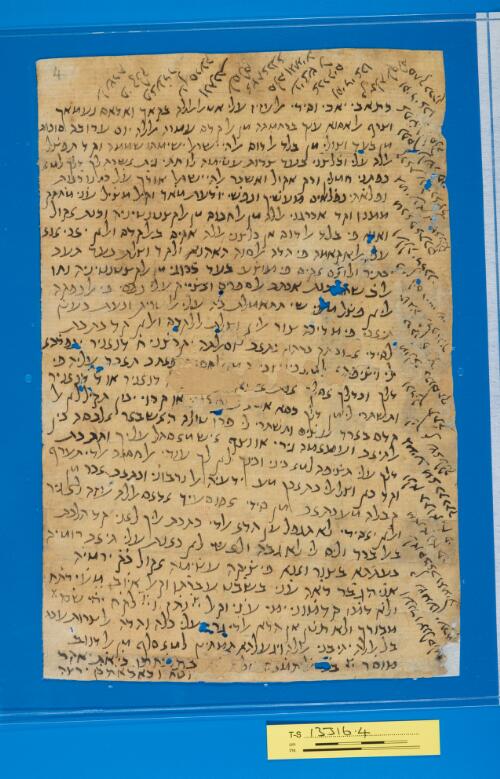
Recto
- כתאבי יאכי וסידי אלעזיז עלי אטאל אללה בקאך ואדאם נעמאך
- וצרף אלאסוא ענך ברחמתה מן אלקדס עמרה אללה יום ערובה סוכות
- מן בעד וצולי מן בלד אלרום אלהי ישראל ישימהו שממה וקד תפצל
- אללה עלי וכלצני בעד צרות עטימה לו חתי גית אשרח לך דלך למא
- כפתני חמלין ורק אקול ואשכר אלהי ישראל אודך על כל נוראות
- נפלאת נפלאים מעשיך ונפשי יודעת מאד וקאל מציל עני מחזק
- ממנו וקד אכרגני אללה מן אלחבוס מן אלקצטנטיניה וכנת אקול
- ואנא פי בלד אלרום אן כלצני אללה אקים באלקדס ואלאן יאכי אנא
- עלי אלאקאמה פי הדה אלסנה האהנא ולקד וצלת בעד תעב
- כתיר ולו לם אקים פי מוצע בעד כרוגי מן אלקצטנטיניה נחו
- אלכ שהו[ר] כנת אכתב אלספרים ואצייק עלי נפסי פי אלנפקה
- אלי אן פצל מעי שי תחאמלת בה עלי אלטריק ובעת בעץ
- תיאבי פי מדינה צור אלי אן וצלת ללקדס ואלאן קד כתבת
- לסידי אבוסחק ברהון כתאב וסאלתה יקרצני ח דנאניר ינפדהא
- אלי ויציפהא למא בי[ני] ובי[נ]ה מן אלחסאב פאחב תאכד עליה פי
- דלך וכדלך אסאלך אנת א[ן תקרצני ה] דנאניר או ד דנאניר
- ותשתרי לי מן דלך כסא אוסע [ ] או קרוי יכון תקיל לאן אל
- קדס בארד עצים ותשתרי לי פרו טולה ה אשבאר אלבסה בין
- אלתיאב ועמאמה גירי או נצף איש מא סהל עליך ותתבת
- דלך עלי תציפה למא ביני ובינך לאן לך ענדי אלחסאב אלדי תערף
- וקד כאן וצל אלי כתאבך מע ידעיה אלנרבוני וכתאב אכר מן
- קבלה מע כתאב מן סידי אבו סעיד אדאם אללה עזה ולא גיר
- ואלאן יאסידי לא תגפל ען הדא אלדי כתבת אליך ואני קד הלכת
- באלברד וליס לי לא גבה ולא שי לאן כאנת עלי תיאב רומיה
- בעתהא בצור ואבא פי ציקה עטימה אקול כק ירמיה
- אני הגבר ראה עני בשבט עברתו וקאל איוב מעי רתחו
- ולא דמו קדמוני ימי עני וקאל יי נתן ויי לקח יהי שם יי
- מבורך ולא תטן אן הדא אלדי גרי עלי כלה והדה אלצרות עבת
- בל אללה יתיבני אללה ויגעלהא תמחיץ למא סלף מן אלדנוב
- מוסר יי בנ[י] אל תמאס [ו]אל [תקוץ] בתוכחתו כי את יאהב
- יוכיח וכאב את בן ירצה
Right Margin
- וענד וצול סלמא[ן]
- בן שמעון יערפך
- אלאסבאב וגמיע
- מא אנא פי[ה]
- ולא תתואנא פי
- גמיע מא כתבתה
- אליך אן שא אללה
- וכדלך ת > כ < תב
- מולאי אבוסחק
- ברהון פי אל סחק ברהון
- תוגיה אלדנאניר
- לאן ליס בידי שי
- ואללה ידרכני
- מכאפאתכם
- גמיעא אן שא אללה
- קראת עלי כאצה
- נפסך אלשריפה
- אפצל אלסלם
- וסידי אבו
- סחק ברהון
Top Margin
- בן צאלח אלסלם
- וסידי אבו
- אברהים
- עיאש אל
- סלם וגמיע
- אצחאבנא
- אלסלם
- וכתבת
- ען סרעה
- פאעתדר
- פי קלה
- אלשרח
Translated by Moshe Yagur
My letter to you, my beloved brother and master, may God prolong your life and maintain your benefaction and shield you from evil—from Jerusalem, may God build it, on the eve of Sukkot, after my return from Byzantium, may the Lord of Israel desolate it.
God had mercy on me and rescued me after enormous troubles; if I were to start to recount them to you, two loads of paper would not suffice. I thank the Lord of Israel. I will give thanks You, for I am fearfully and wonderfully made; wonderful are Your works, and that my soul knows very well (Psalms 139:14); as it is said, You save the poor from him that is too strong for him (Psalms 35:10).
God has taken me out of prison, out of Constantinople, and I said, while I was in Byzantium, “If God saves me, I will dwell in Jerusalem.” And now, my brother, I intend to stay here this year. I came here with many difficulties. I have not remained in one place since leaving Constantinople, about twenty months ago. I was copying books and reducing my expenses so I would have something with which I could start my journey. I sold some of my clothes in Tyre [in southern Lebanon], and so I reached Jerusalem.
I have already written a letter to my master, Abū Isḥāq Barhūn, and asked him to lend me eight dinars, to send them to me and add them to the account between us. I would like you to put some pressure on him in this regard. I likewise ask you to [lend me five] or four dinars and buy a broad garment for me with them [ . . . ], but a heavy one, since Jerusalem is so cold! And buy me a long fur, about five handbreadths, so I can wear it in between the garments, and headgear made of soft leather, or a mantle, whatever is easier for you. And add it to my debt to you, to the account between us, which you know.
Your letter reached me via Yeda‘aya from Narbonne, and before that there was another letter via my master Abū Sa‘īd, may the Lord maintain his might—but no more. And now, my lord, do not neglect what I have written to you about, since the cold is killing me. I have nothing, not even a nickel, for I had Byzantine clothes, and I sold them in Tyre, and I am in great distress. I say with Jeremiah: I am the man who has seen affliction, by the rod of His wrath (Lamentations 3:1), and Job said: My innards boil and rest not; days of affliction are come upon me (Job 30:27), and he said: The Lord has given, and the Lord has taken away; blessed be the name of the Lord (Job 1:21).
But don’t think that all that happened to me and all the troubles I have been through were for nothing. God will recompense me and make these an exoneration for my previous sins. My son, despise not the chastening of the Lord, neither spurn His correction. For whom the Lord loves He corrects, as a father the son in whom he delights (Proverbs 3:11–12).
When Salamān ben Simon arrives, he will notify you of the situation and everything I have suffered. Do not delay anything I wrote to you about, God willing. And write to my master, Abū Isḥāq Barhūn, concerning the dinars, for I have nothing. God will show me how to recompense both of you, God willing. I send you, your honor, the best of peace, and peace to my master Abū Isḥāq Barhūn ibn Ṣāliḥ, and peace to my master Abū Ibrahīm ‘Ayyāsh, and peace to all of our associates. I wrote in haste; forgive me for the lack of details.
T-S 13J16.4 1v
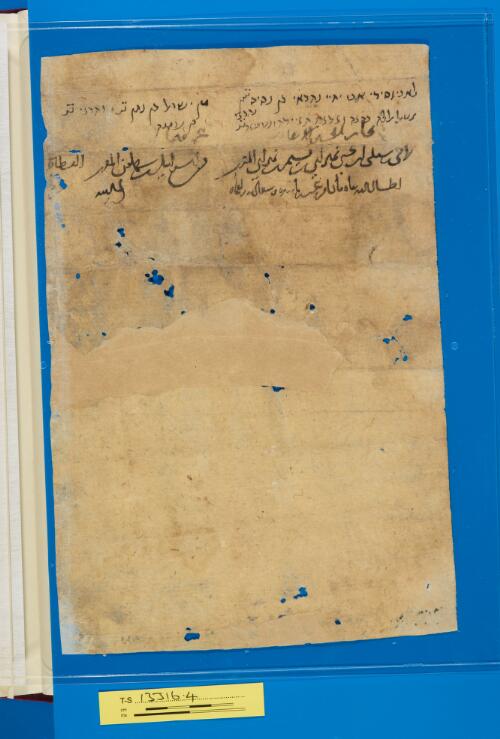
Verso Right
- לאכי וסידי אבי יחיי נהראי בן נסים ננ בן נהראי ננ
- אטאל אללה בקאה ואדאם תאיידה ונעמאה
#
- نجا بن الحسين اﻻنصاري
- ﻻخي وسيدي ابي يحيي نهراي بن نسيم بن نهراي المغربي
- اطال الل٥ بقا٥ وادام عز٥ وتاييد٥ وسعادته ونعما٥
# Left
- מן ישראל בן נתן ננ בן נהראי ננ
- בן עמה
#
- محمد بن نجا
- من اسراييل بن سهلان المغربي الفسطاط
- ان شاء الله
Verso, address, Judaeo-Arabic
To my master and brother Abū Yaḥya Nahray ben Nissim ben Nahray.
May God prolong his life and maintain his assistance and benefaction.
From Israel ben Nathan ben Nahray, his cousin.
Verso, address, Arabic
Najā ibn al-Ḥusayn al-Anṣārī. Muḥammad ibn Najā.
To my master and brother Abū Yaḥya Nahray ben Nissim ben Nahray the Maghribī.
May God prolong his life and maintain his might and assistance and happiness and benefaction.
From Israel ibn Sahlūn the Maghribī.
To Fustāt, if God wills it.
