رسالة: T-S 10J31.3
رسالة T-S 10J31.3What's in the PGP
- صورة
- 1 Transcription
- 1 Translation
الوصف
Draft of a letter in Judaeo-Arabic, heavily corrected and damaged, from Fusṭāṭ to a relative of the sender in Ifrīqiya, probably in al-Mahdiyya. Neither the writer nor the addressee is named. Dating: ca. 1062, since the letter mentions moving the body of Rabbenu Nissīm (b. Yaʿaqov), who died around then (see T-S 13J19.20, PGPID 5892). The writer is defending himself against two complaints, both of which had reached him partly through Abū l-Ḥasan Labrāṭ (b. Moshe b. Sughmār), the judge of al-Mahdiyya. Recto: the flax. One lot of flax was shipped from Egypt for Abū l-ʿAlāʾ b. Shaʿyā and Abū Naṣr Yehuda al-Dimashqī. Another belonged to the writer’s in-law, Abū l-Barakāt, and was supposed to go in the name of Abū Zikrī b. Qayyomā, who was supposed to act as his agent. That shipment was diverted, and the writer was blamed: someone said Abū Naṣr had told him about it. The writer swears he knew nothing until after the ships had sailed. Back in Fusṭāṭ, he reproached Abū Naṣr in front of Abū l-ʿAlāʾ, and Abū l-ʿAlāʾ also told Abū Naṣr off: “You did not inform me of anything of that, nor did I authorize you to do it.” The writer says the real grievance was not the commission (ʿumāla) on the flax; it was the injury to the addressee’s standing and what people were saying. Verso: R. Nissīm and the responsa. The addressee is also upset about money he had sent for carrying R. Nissīm’s body, which was apparently diverted from him. The writer insists that Abū Zikrī b. Qayyomā had shown the addressee nothing but friendship, and that no one knew the two were estranged. He had assumed they were working together on the transport. He had also assumed the addressee would share in buying the responsa (teshuvot) that he had asked Abū Zikrī to get for him. Abū Zikrī is “our friend and our brother,” but the addressee is “the head of our house and family,” who takes the place of a father. Finally, the writer says, he is sending a small amount of silver with the Elect of the Academy (baḥīr ha-yeshiva) to be sold in al-Mahdiyya. The proceeds will pay Abū Zikrī for the responsa, and the addressee gets the remainder. The passage also mentions the estate of R. Berakhya. See Goitein, Med. Soc. 5:293 and nn. 103–5.
Editors: Noily, Jesse; Rustow, Marina
Translators: Noily, Jesse; Rustow, Marina (in Judaeo-Arabic)
T-S 10J31.3 1r
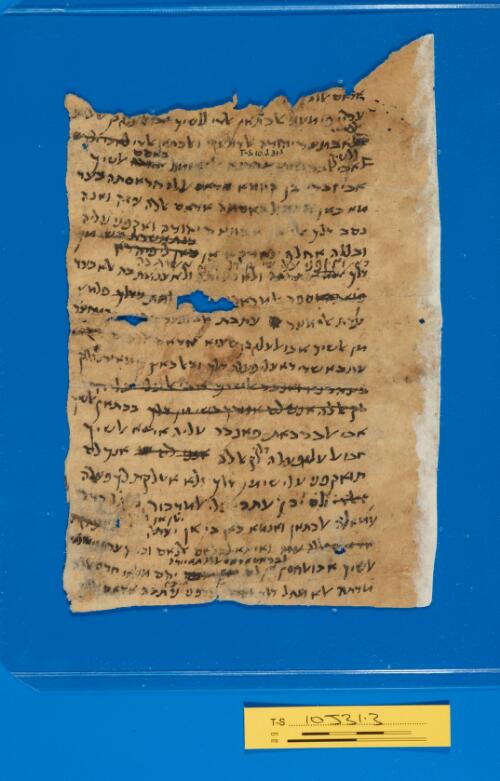
Recto
- אדאם אללה [עזה …]
- עליי פי מעני אלכתאן אלדי ללשיך אבו אלעלא בן שעיא
- ולאבו נצר יהודה אלדמשקי ואלכתאן אלדי
לאכד ולד - //ללשיך\\ אבי אלברכאת צהרנא אלמאמול //באסם\\ אלשיך
- אבי זכרי בן קיומא אדאם אללה חראסתה בעד
- מא כאן מאמול באסמה אדאם אללה עזה ואנה
- נסב דלך אלי אן אבונצר יהודה ואקפני עליה
- ובללה אחלף צאדקא אן //
כנת אשרת בשי מן כאן לי פי הדא\\ - //כאן ואקפני על׳ שי מן דל[ך] לא אשרת בה \\
- דלך … … ולא … ולא עלמת בה אלא בעד
- פואתהא ספר אלמראכ[ב … ע]למת בדלך פלמא
- ע/ו\דת אלי מצר עתבת אבונצר [יהודה] במחצר
- מן אלשיך אבו אלעלא בן שעיא אדאם אללה [תאיידה]
- עתבא שדידא עלי פעלה דלך ובאלכאץ פי מא יתעלק
בצהרנא ואנכר אלשיך אבי אלעלא עליהוקאל לה אנטלם אמרך בשי מן דלךבכתאן אלשיך- אבי אלברכאת פאנכר עליה איצא אלשיך
- אבו אלעלא פעלה דלך קאל לה
אנני לםאנך לם - תואקפני עלי שי מן דלך ולא אטלקת לך פעלה
ואלדיולם יכן עתב .. לי אלמדכור ל . . . . . .- עמאלה אלכתאן ואנמא כאן בי אן //יטן אן אל[ש]יך… \\
אדאם אללה עזהואיצא לכלאם אלנאס וכ[דל]ך ערפני מולאי- אלשיך אבו אלחסן //לבראט אדאם אללה תאיידה\\ אן לם כאן … יהם מולאי חרס אללה
- מדתה אלא מתל דלך [ … ] ערפני //איצא\\ עתבה אדאם אללה
Recto
- may God perpetuate [his honor …]
- against me (?) concerning the matter of the flax belonging to the elder Abū l-ʿAlāʾ b. Shaʿyā
- and to Abū Naṣr Yehuda al-Dimashqī, and the flax belonging to
l-ʾ-k-d (?) the son of - \\the elder// Abū l-Barakāt, our in-law, expected \\in the name of// the elder
- Abū Zikrī b. Qayyomā, may God perpetuate his protection, after
- what had been expected in his name, may God perpetuate his honor, and that he
- ascribed it to Abū Naṣr Yehuda’s having informed me of it.
- By God, I swear truthfully that //
I had advised anything of I had [any part] in this - \\he had informed me of anything of th[at]; I did not advise (?) it//
- that … … nor … and I did not know of it until after
its having passedthe departure of the shi[ps … I lea]rned of that. When- I returned to Fusṭāṭ (Miṣr), I reproached Abū Naṣr [Yehuda] in the presence
- of the elder Abū l-ʿAlāʾ b. Shaʿyā, may God perpetuate [his support],
- severely for having done that, especially in what concerns
our in-law; and the elder Abū l-ʿAlāʾ objected to himand said to him, “your affair has suffered injustice in anything of that”the flax of the elder- Abū l-Barakāt. The elder Abū l-ʿAlāʾ also objected to him
- for having done that. He said to him, “
I did not” “You did not - inform me of anything of that, nor did I authorize you to do it.”
And whatThe reproach of the aforementioned against me was not .. l … …- commission (ʿumāla) on the flax; rather, it was on my account that \\he thought that the [e]lder … //
may God perpetuate his honorand also because of what people were saying. Li[kewi]se my lord- the elder Abū l-Ḥasan \\Labrāṭ, may God perpetuate his support,// informed me that
… wasmy lord, may God preserve - his days, was concerned with nothing but something of that kind [ … ]. He \\also// informed me of his reproach, may God perpetuate
T-S 10J31.3 1v
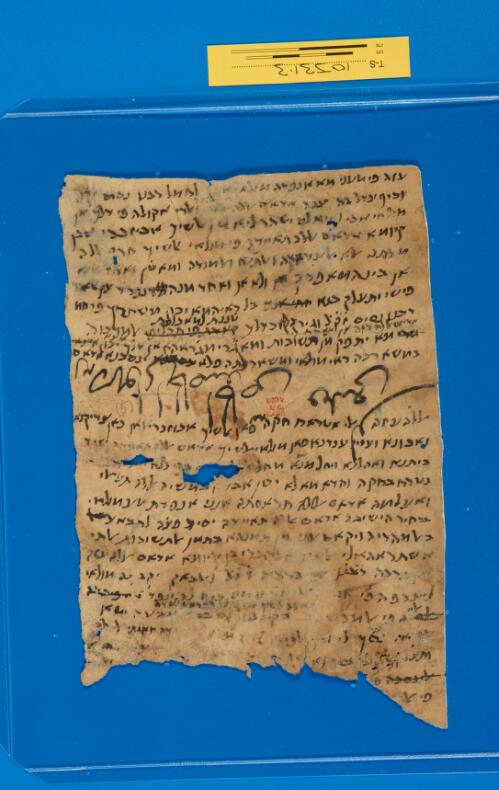
Verso
- עזה פי מעני מא אנפדה מולאי אכי לחמל רבנו נסים זקל
- וכיף עדל בה ענה אדאם אללה [עזה] ואלדי אקולה פי דלך אן
- מולאי אכי ואנא לם יטהר לנא מן אלשיך אבי זכרי אבן
- קיומא אדאם אללה תאיידה פי מולאי אלשיך חרס אללה
- מדתה אלא אלצדאקה ואלתנא ואלמודה ומא טן ואחד [מ]נא
- אן בינהמא פרק אן ולא
אןואחד מנהמא ינפרד ען אלאכר - פי שי יתעלק בנא
חתי אנניבל ראיהמא יכון משתרך פי חמ<ל> - רבנו נסים זקל וגיר דלך וכדלך
קצדת פי תכליפי//טננת למא כלפת\\ אלמדכור - //אדאם אללה עזה אן ישתרי לי\\
שרימא יתפק מן תשובות ומא גרי מגראהא אן דלך //איצא\\ יכוןאיצא- במשארכה ראי מולאי ומשארכתה פלא נסכנא ינסבנא אדאם
- אללה עזה אלי אטראח חקה פאן אלשיך אבו זכרי ואן כאן צדיקנא
- ואכונא ועזיז ענדנא פאן מולאי אלשיך אדאם אללה תאיידה שיך
- ביתנא ואהלנא ויחל מנא מחל אל[וא]ל[ד?] . . . . . . . לנא . . . . .
- נטרח בחקה והדא מא לא יכון אבדא ובמשיה אללה תעאלי
- ואעלמה אדאם אללה חראסתה אנני אנפדת מע מולאי
- בחיר הישיבה אדאם אללה תאיידה יסיר פצה לתבאע
- באלמהדיה ויקאם עני מן תמנהא בתמן אלתשובות אלתי
- אשתראהא לי אלשיך אבו זכרי בן קיומא אדאם אללה עזה
- ואן תרכה רבנן רבי ברכיה זצל ואלבאק[י] יקב[צ]ה מולאי
- ליצרפה פי א[ ] כיף לה ינפד …
- אליי פי אלמ … [ ]
- …
- ות …[ ] חאגתי אלי אל
אלי נסכהפ[- פי אל[
Verso
- his honor, concerning what my lord my brother sent for the carrying of Rabbēnū Nissīm, may the memory of the righteous be blessed,
- how it was transferred on his behalf/diverted away from him, may God perpetuate [his glory]. What I say about this is that
- my lord is my brother; and as for me, there did not appear to us on the part of the elder Abū Zikrī Ibn
- Qayyomā, may God perpetuate his support, toward my lord the elder, may God preserve
- his days, anything but friendship, praise, and affection; and neither of us thought
- that there was between them (dual) a rift that, nor that either of them (dual) was separating from the other
- in anything concerning us so that I; rather, their (dual) opinion was shared regarding the carrying of
- Rabbēnū Nissīm, of holy and blessed memory, and other things. Likewise,
I intended, in chargingI thought, when I assigned/commissioned the aforementioned (person) - \\may God perpetuate his honor, to buy for me//
the purchase ofwhatever responsa (teshuvot) and the like might come to hand, that this \\too// would be too- with the participation of my lord’s judgment and his partnership. So let him not
attribute(?) attribute to us, may - God perpetuate his honor, neglect of his due. For the elder Abū Zikrī, even if he is our friend
- and our brother and dear to us—my lord the elder, may God perpetuate his support, is the head
- of our house and family, and occupies for us the place of a father . . . . . . . . to us . . . . .
- [that] we should disregard his due. This will never be, God the Exalted willing.
- I inform him, may God perpetuate his protection, that I have sent with my lord
- the Elect of the Academy, may God perpetuate his support, a small amount of silver to be sold
- in al-Mahdiyya, and that from its proceeds there should be paid on my behalf the price of the responsa that
- the elder Abū Zikrī b. Qayyomā, may God perpetuate his glory, has bought for me,
- and that the estate of our master R. Berakhya, of blessed memory, and the remain[der] my lord should receive
- to spend it on [ … ] as he sees fit (?) to send …
