منحة في رسالة: T-S 16.261
رسالة T-S 16.261- الاقتباس المرجعي
- S. D. Goitein, unpublished index cards (1950–85), #8259. Princeton Geniza Lab, Princeton University.
- Relation to document
- المناقشة
- الاقتباس المرجعي
- Amir Ashur and Ben Outhwaite, "Letter to Solomon ha-Rofe’ ben Eli," in Posen Library of Jewish Culture and Civilization (Yale University Press, 2026), vol. 3.
- Location in source
- Relation to document
- Digital Translation
- الاقتباس المرجعي
- Moshe Gil, Palestine During the First Muslim Period (634–1099) (in Hebrew) (Tel Aviv University, 1983), vol. 2.
- Location in source
- #127
- Relation to document
- Digital Edition
- الطبعة
Editor: Gil, Moshe
Translators: Ashur, Amir; Outhwaite, Ben (in English)
T-S 16.261 1r
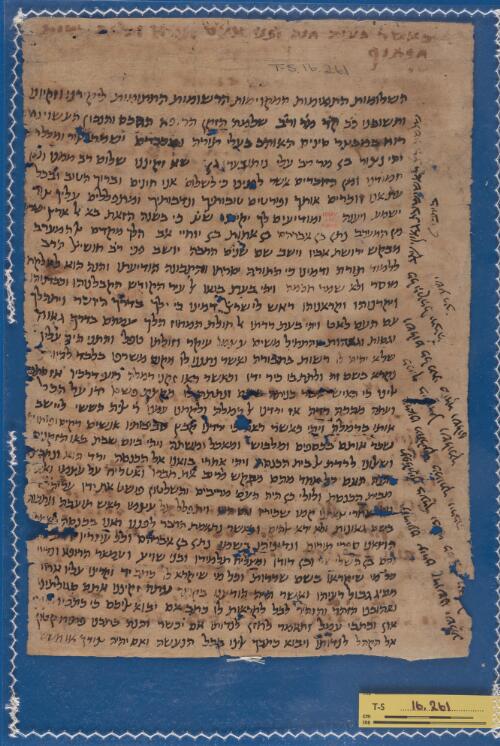
- השלומות התמימות המקוימות הרשומות החתומות ליקירנו וזקיננו
- וחשובנו כב קד מר ורב שלמה הזקן הרופא החכם והנבון העשוי נחת
- רוח במבצר סינים האוהב בעלי תורה ומכבדם ישמרו צור ומכל רע
- יהי נצור בן מר רב עלי נוחו בעדן גן שא זקיננו שלום רב ממנו ומן
- חמודנו ומן החברים אשר לפנינו כי לשלום אנו חונים וברוך הטוב ובכל
- עת אנו זוכרים אותך ופורטים טובותיך ונדבותיך ומתפללים עליך צור
- ישמע ויענה ומודיעים לך יקירנו שצ כי בשנה הזאת בא אל ארץ ישראל
- מן המערב נתן בן אברהם בן אחות בן יוחיי אב הלך מקדם אל המערב
- מבקש ירושת אביו וישב שם שנים הרבה יושב פני רב חושיאל הרב
- ללמוד תורה ודמינו כי התורה יסרתו והתבונה הודיעתו והנה הוא לא לקח
- מוסר ולא שמר חכמה ויהי בעת בואו אל עיר הקודש הקבלנוהו וכבדנוהו
- ויקרנוהו וקראנוהו ראש לישראל דמינו כי ילך בדרך היושר ויתהלך
- עם העם לאט ויהי בעת רדתו אל חולת המחוז הלך עמהם בדרך גאוה
- וגסות וגבהות והתחיל משים עצמו עיקר וזולתו טפל והתני היה עליו
- שלא יהיה לו רשות בחבורה ואשר נתננו לו מקום משרפו בלבד להיות
- נקרא בשם זה ולתת בו כיר ידו וכאשר ראו זקני רמלה רוע דרכיו אז כתבו
- אלינו כי האיש אשר כניתה בשם ונתתה לו מקצת פשט ידו על הכל
- ועתה מהרה רדה אז ירדנו אל רמלה ולקחנו עמנו ר אליה הששי ליישב
- אותו ברמלה ויהי כאשר ראה כי ירדנו קבץ סביבותיו אנשים רקים ופוחזים
- שכר אותם בכספים ומלבוש ומאכל ומשתה ויהיה ביום שבת באו הזקנים
- ושאלונו לרדת אל בית הכנסת ויהי אחרי בואנו אל הכנסה ירד הוא ונקבצו
- הנה העם כל אחד מהם מבקש לריב את חברו ואטריח על עצמי ואלכה
- מבית הכנסת ולולי כן היה העם מריבים והשלטון פושט את ידו עליהם
- ויהי אחרי צאתנו קמו שכיריו וגם הוא ויתפלל על עצמו ראש תועבה ונתכנה
- בשם גאונות ולא ירא אלהים וכאשר נתאמת הדבר לפננו ואנו בכנסה האחר[ת]
- הוצאנו ספרי תורות ונדינוהו בשמו נתן בן אברהם וכל עוזריו ו[מר]עיו
- והם בן השלישי ובן דודו ומצליח תלמידו ובני שויע ועמאר הרופא ונדינו
- כל מי שיקראו בשם שררות וכל מי שיקרא לו כתב יד וקרינו עליו ארור
- מסיג גבול רעיהו ואשר היה הודענו בקוצר עתה זקיננו אתה סגולתינו
- ואהובנו הזהר והזהיר לבל לקראות לו כתב אם יבוא אליכם כי כתביו חקקי
- און וכתבי עמל ותאמר לחזן לנדותו אם יכשר והנה כתבנו פתיח קטון
- אל הקהל לנדותו ויבוא כתבך אלינו בכל הנעשה ואם יהיה צורך או חשש
(right margin)
- תודיענו צורנו קדושנו ישמע
- תפלתינו בעדך ובעד כל בית יש[ר]אל
- ויראנו מחלציך כמותך וירבה
- כמוך בי[ש]ראל ושלומך
- ושלום כל מתי סודך ושלום
- כל הקהל ירבה
- ישע רב
- שלמה הצ ראש ישיבת גאון יעקב
- בירבי <
Translated by Amir Ashur and Benjamin M. Outhwaite.
May complete well-being be brought about, inscribed, and sealed up for our dear one and our elder and our noted one, the honorable, holy, our master and teacher, Solomon the elder, the wise and intelligent doctor, who has been made a source of comfort in the fortress of Sinim [Ṭarābulus al-Shām, Syrian Tripoli], who loves and respects scholars of the Torah—the Rock keep him, and may he be protected from all harm—son of master and teacher Eli—his rest be in Eden, the garden. Let our elder receive a mighty greeting from us and from our son and from all the ḥaverim [fellows; members of the Palestinian academy] who are before us, for we abide in peace—blessed be the Good One—and continually we remember you [in the synagogue service] and elaborate on your kindnesses and your donations, and we pray for you—may God hear and answer.
And we inform you, our dear one, the Rock keep you, that this year a certain Nathan ben Abraham came to the land of Israel from the West. He is the son of the sister of ben Yoḥai, the av bet din. He went long ago to the West to seek his father’s inheritance and lived there for many years, seated before our teacher Ḥushiel the Rav, learning Torah. And we imagined that the teaching would have disciplined him, and that the knowledge would have guided him, but clearly, he has not acquired any discipline nor retained any wisdom. On his arrival in the Holy City, we received him with respect, treated him with esteem, and named him a leader of Israel. We imagined that he would walk in the way of the upright and proceed carefully with the people. But from the moment he went down to the “Sandy City” [Ramla], he walked around in a proud, presumptuous, and arrogant way. He began by making himself the most important and everyone else subordinate.
And a condition was granted to him to ensure that he would have no authority within the Academy; we gave him his maternal uncle’s position, but only so that he could assume the title, and he gave his signature in agreement. But when the elders of Ramla saw the evil of his ways, they wrote to us, saying, “The man on whom you bestowed a title and to whom you gave a little [authority] has reached out his hand to take it all. Now, hurry down [to us]!” So, we went down to Ramla, taking with us R. Elijah “the Sixth” [in rank at the geonic yeshiva] in order to place him there in Ramla. When he [Nathan] saw that we were coming down, he gathered around himself vain and light fellows (Judges 9:4), enlisting them with coins, clothing, food, and drink. And so it happened that on the Sabbath, the elders came and asked us to go down to the synagogue, and after we had arrived at the synagogue, so did he. All the people gathered there, seeking to fight each other, but I took it upon myself to leave the synagogue. Were it not for that, the people would have begun to quarrel, and the authorities would have acted against them.
After we left, his hirelings rose up and so did he, and he prayed for himself as the “Rosh To‘eva” [“Head of Abomination”—a pun on Rosh Yeshiva, Head of the Academy], bestowing upon himself the title of the gaonate, and he did not fear God. When the matter was confirmed to us, we in the other synagogue took out the scrolls of the Law and excommunicated him by the name Nathan ben Abraham, along with his supporters and his friends. And they are: the son of the “Third” [in rank]; his [paternal] cousin; Maṣliaḥ, his pupil; the sons of Shuway‘; and ‘Ammar the doctor. [Furthermore,] we have excommunicated anyone to whom he gives a title by his own authority and anyone who reads out letters from him, and we have proclaimed against him: Cursed be he who removes his neighbor’s landmark (Deuteronomy 27:17).
We have hereby told you in brief what happened. Now, our elder, our treasure, and our friend, you be warned and warn others, too, not to read his letters if they should come to you, because his letters are iniquitous inscriptions and mischievous missives. Tell the ḥazan [a synagogue functionary] to excommunicate him if appropriate. Indeed, we have written for the community a short preliminary warrant for his excommunication. Please let us have a letter from you explaining all that has been done. And if you should have any need or anxiety, [continued in the margin:] inform us. May our Rock, our Holy One, hear our prayer on your behalf and on behalf of the whole house of Israel.
May he let us see from your loins more like you, and may he give us more like you in Israel. May he increase your well-being, the well-being of all the members of your circle, and the well-being of the whole community.
A great deliverance! [Solomon b. Judah’s motto]
Solomon the Younger, head of the yeshiva “the Pride of Jacob,” son of a scholar.
T-S 16.261 1v
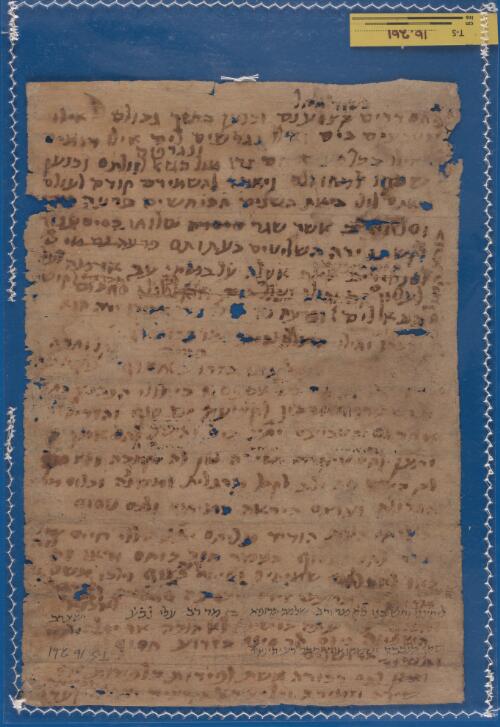
verso
- לזקיננו וחשובנו כק מר ורב שלמה הרופא בן מר רב עלי נבע
- הזקן הנכבד ישמרו צור ומכל רע יהי נצור ישע רב
verso
To our elder and our noted one, the honorable, holy, our master and teacher Solomon the doctor, son of the master R. Eli—his rest be in the garden of Eden—the respected elder. The Rock keep him, and may he be protected from all harm. A great deliverance!
