Letter: ENA 3765.10 + T-S 18J4.16
Letter ENA 3765.10 + T-S 18J4.16What's in the PGP
- Image
- 1 Transcription
- 1 Translation
Description
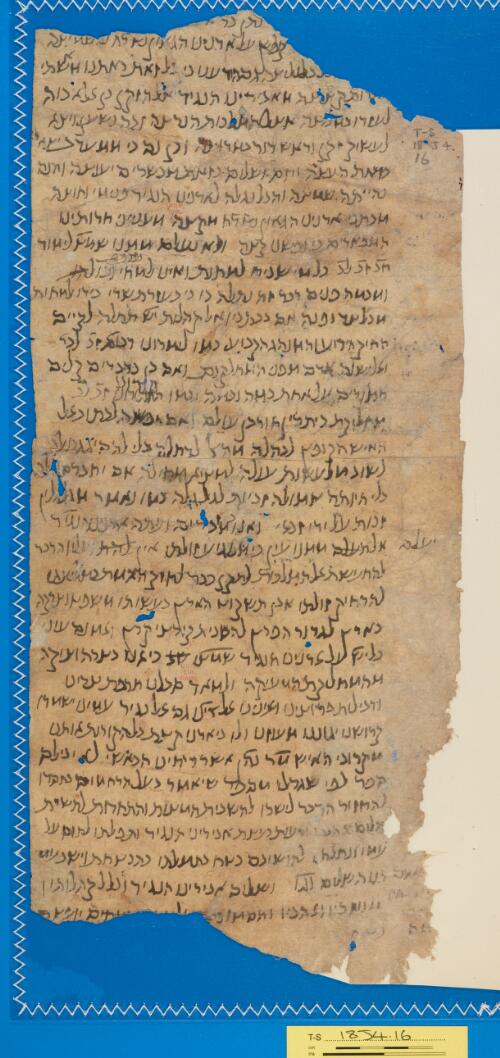
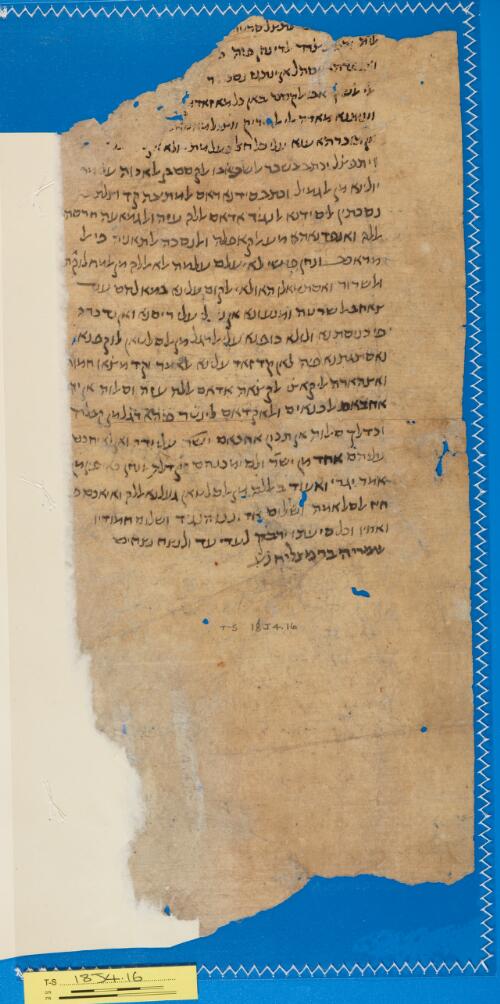
Letter from Shemarya b. Maṣliaḥ, in Fustat, to the Nagid Yaʿaqov b. ʿAmram, in Qayrawān. Dating: probably spring or summer of 1039 CE, and in any case 1038–42 CE, the period of conflict between Natan b. Avraham and Shelomo b. Yehuda over the gaʾonate in Palestine. The letter drafts on both recto and verso are about that conflict and the question of the loyalties of the community of Qayrawān. Signed by Shemarya but from a group of people; Shemarya's signature is in a different hand from the letter itself, and according to Gil, the scribe is Ghālib b. Moshe ha-Kohen, the son-in-law of Efrayim b. Shemarya. Both Gil and Cohen assume that additional leaders of the Fustat community were planning to sign the letter. This letter covers some of the same ground as the letter on verso; we additionally learn that the support that Natan b. Avraham claimed to have secured in the Maghreb came from the elders of Qayrawān. Jacob Mann published T-S 18J4.16, and Mark Cohen discovered the join with ENA 3765.10 and the significance of this pair of letters. (Information from Goitein, Cohen, Gil, and CUDL.)
Tags
Editor: Gil, Moshe
Translator: Cohen, Mark R. (in English)
ENA 3765.10 1

A: ENA 3765, f. 10r B: TS 18 J 4.10v ed. Gil, Palestine, Pt. 2, pp.332-335 (Doc. #192) C.B. 02-03-88 (p) Rough draft of a letter written by Ghalib Ha-Kohen b. Moses from Fustat, to Jacob Ha-Nagid b. Amram in Qayrawan, probably summer of 1039.
....
א
- פאוגב אלחאל פי[
- מא פעלה מע אהלנא [
- וכאטבה במא לא יגוז אן יכאטבה במתלה וגמע אליה גמא[עה]
- מן אלשבאב מן אשבאלה ולקב נפסה בראס אלמתיבה ואכד פי
- אלמבאינה ואלעצביה וכאתב לגמאעה ממן קד תצאהר אליהם
- במצר ואנצאף אליהם גמאעה מן אקארבהם וצארו מתחזבין
- ונחן מתעובין מעהם נותר אלסלאמה ודפע אלשרור והם מתמאדין
- עלי מא הם עליה מן טריק אלפ[תנה] והדא אלרגל אצלחה אללה ישנע
- באנה לם ינפצל ען אלקירואן אלא וקד ואקף גמאעה אלשיוך אדאם
- אללה עזהם עלי הדא אלדי קד טאהר אלאמה חרסהא אללה יפעלה
- וכל מן יסמע דלך ענהם ויעלמון מיל[הם] יערפהם באנהם גיר
- מותרין לשי מן דלך וגיר ראציין בה למא קד רכבה אללה תעאלי פיהם
- מן אלדין ואלכיר ומערפתהם בטריקה הדא אלסיד אלעאבד אלדי לם
- יערף לה קט זלה ולא לחק מ[נ]ה אחד קט אדיה ויחתג איצא באן
- ליס יגוז אן יקדם עלי אלריאסה אחד מן אהל אלגרב ואן ליס יגוז
- יקדם עלי הדא אלכרסי אלא מן הו [מן] אהל אלשאם וישנע בכל קביח
- וקד אחרם אלריס אדאם אללה עזה הדא אלרגל וכתב בחרמה
- אלי סאיר אלבלאד בחסב מא וגב ענדה והו מע דלך לם ינכסר ולם
- ירתדע וקד סאלנא סידנא אלנגיד אדאם אללה עלוה אן יכתב אלי
- גמאעה אהל הדא אלבלד ואלשאם מנה חרסה אללה ומן גמאעה אל
- שיוך באן יעלמוהם בטלאן מא אדעאה הדא אלרגל לתזול אלשנאעה
- אלדי קד שנע בה עליהם מן נפוס אלנאס ויצח ענדהם דלך ונחן
- נסלה אדאם אללה עלוה אלתלטף פי אכד כתאב מן סידנא אמיר
- אלאמרא שרף אלדולה ות[א]ג אלמל[ה] אטאל אללה בקאה וכ[בת א]עדאה
- אלי חצרה אלוזיר אלא[גל] צפ[י] אמיר אלמומנין ו[כא]לצתה
- אדאם אללה עלאה וכבת אעדאה אן יסלה פי כרוג אמרה לא זאל
- עאליא אן יגרי אלרייס ראס אל[מ]תיבה עלי רסמה ואן לא ימכן הדא
- אלרגל ולא גירה מן אדיתה ואן לא יזאל ען ריאסתה ויכון דלך בכל
- חאל יתמכן מן [ענ]דה פאלכתאב יכתב [אי]צא אלי מולאי אלשיך
- אבו אלקסם ע[לי] אבן עבד אלעזיז אלאכ[וה] אדאם אללה עזה ירסם
- לה אן יתולא איצא אלכתאב ואלמע[ונ]ה לנא פי מא רפענא אליה
- וקד תקד[ם] מנא אלמסלה לס[ידנא אלנגיד] אדאם אללה חראסתה
- פי אלכתב אלמתקדמה [דכרה]א וסאלנאה אלמבאדרה באנפאדהא
_____________________
- מע פיג קאצד : אל[ינא] פתצל סרעה : ותכון לנא בהא מעונה עלי מא יחתאג
ב ____________: __:
- אליה ודפע אלצרר אלדי נחן פיה פ:אן כאן קד תפצל במא סאלנאה
- ואנפדהא וסהל אן ינתגז נסכה תא:נ[י]ה וינפדהא מע קאפלה אלחאג
_____:
- אלי אלשיך אבו אלקסם באן כלמא זאדו : דלך כאן לנא בה מנפעה
- ועיוננא מאדה אלי אלטריק לוצול מא : סאלנא מן דלך פאללה אללה
____________:
- אן תוכרהא ענא עלי כל חאל פעל מתי ולא [ ] מ:א אללה
- ויתפצל יכתב בשכר אלשיך אבו אלקסם בן אלאכוה ע:לי מא
______________________:
- יולינא מן אלגמיל וכתב סידנא ראס אלמתיבה קד וצלת פי
- נסכתין אלי סידנא אלנגיד אדאם אללה עזה ואלגמאעה חרסהא
- אללה ואנפדנאהא מע אלקאפלה ואלנסכה אלתאניה פי אל
- מראכב ונחן פי שי לא יעלם עלמה אלא אללה מן אלמחלוקת
- ואלשרור ואסתטאלו האולאי אלקום עלינא במא להם ענד
- צאחב אלשרטה ומנעונא אן נצלי עלי ריסנא ואן נדכרה
- פי כניסתנא ולולא כופנא עלי אלרגל מן אלסלטאן לוקפנא
- ואסתגתנא פיה לאן קד זאד עלינא אלאמר וקד מצאו חמוה
- ואצהארה אלי קאצי אלקצאה אדאם אללה עזה וסאלוה אן יד[בר]
- אחבאס אלכנאיס ואלאקדאס לינטר פיהא רגל מן קבלה
- וכדלך סאלוה אן תכון אחכאם ישר עלי ידה ואן לא יחכם
- עליהם אחד מן ישר ולם ימכנהם מן דלך ונחן כאיפין מן
- אמר יגרי ואעוד באללה מן אלסלטאן געלנא אללה ואיאכם פ[י]
- חיז אלסלאמה ושלום אדוננו הנגיד ושלום חמודיו
- ואחיו וכל סיעתו ירבה לעדי עד ולנצח נצחים
- שמריה בר מצליח נע
[ . . . ] He spoke to him in a manner the likes of which are not [per]mitted, and gathered about him a group of young men like himself [and] assumed the title Head of [the] Yeshiva. Then he began to foster disunity and clannish partisanship, sending letters to some relatives of his by marriage in Fustat. The latter, in turn, were joined by a number of their own relatives, and together they formed a faction.
Though we are irked (?) by them, we prefer peace and the avoidance of conflict, but they persist in creating disc[or]d. This person—may God improve his ways—claims th[a]t before leaving Qayrawan he had secured the agreement of a group of [t]he elders—may God perpetuate their strength—concerning what he has publicly announced to the nation—may God protect it—that he would do.
However, all who hea[r] this ab[o]ut them, knowing . . . , tell them that they would not agree to any of this, nor would they accept it, because they have been instilled by God—may He be exalted—with religiosity and goodness, and because they know the manner of this worshipful lord, who has never been known to err or to cause anybody harm. He argues also that it is not permissible for any westerner to serve in the Heads[hip] and that it is only permissible for a man from the Holy Land to sit on this throne. He has been spreading this about in an extremely ugl[y] manner.
The Head—may God perpetuate his [strengt]h—pronounced a ban over this person, including in it directives to all of the countries concerning what must be done in his case. In spite of this, he has not ceased nor been curbed. We had asked our lord the Nag[i]d—may God perpetuate his exaltedness—to write a letter to certain people in this city and in the Holy Land from himself—may God [protect] him—and from the group of elders, informing them of the invalidity of this person’s claim, so that people will cease believing what he has been spreading about, and become convinced. We now ask him—may God perpetuate his exaltedness—kindly to secure a letter from our lord the Supreme Commander Sharaf al-Dawla, wa-T[ā]j al-Mill[a] (“Nobility of the Dynasty and Crown of the Community”) may God lengthen his life and cr[u]sh his enemies—to his Presence the most splendid vizier Ṣaf[iyy] Am[ī]r al-Mu’minīn wa-[Khā]liṣathu (“Sincere and Devoted Friend of the Commander of the Faithful” [sc. the Caliph])—may God perpetuate his exaltedness and cr[u]sh his enemies—requesting that the latter—may he never cease in his exaltedness—issue an order to the effect that the Rayyis, the Head of the [Ye]sh[iv]a, be allowed to continue in office without this or any other person harming him, and to the effect that he should not be removed from his incumbency in the H[ea]dship. This should be put in the strongest possible terms in [hi]s letter, as we[ll as in a lette]r to my master the elder, Abu ’l-Qāsim [ . . . ] ‘Abd al-‘Azī[z] al-Ukh[uwwa]—may God perpetuate his strength—prescribing that he follow through also on the [l]etter and the assistance to [u]s, concerning that about which we informed him.
We have previously sent a request to our lo[rd the Nagi]d—may God per[p]etuate his protection, contained in [the] letters m[entioned abov]e, as[king] him to send them quickly with a courier bound for [us (?)]. May they arrive quickly and provide us the assistance which is needed and u[n]do the harm caused by this state of affairs. On the other hand, if he has already been so kind as to grant our request and has sent them, let him quickly execute [another (?)] one and send it with the pilgrim caravan to the elder, Abu ’l-Qāsim, to the effect that the more intensely they act [o]n this, the (more) benefit we will derive.
Our eyes are looking at the road (?) anticipating the arrival of what we requested concerning this. By God, if you delay them from us under any circumstances you shall know . . . .
Please write thanking the elder, Abu ’l-Qāsim b. al-Ukhuwwa, for the favor he is doing us. Letters of our lord the Head of the Yeshiva arrived in two copies for our lord the Nagid—may God perpetuate his strength—and for the community—may God protect it.
We forwarded them, (one) with the caravan and the other in the ships. We, on our part, are in a situation, as God only knows, of controversy and conflict. These people have gotten the better of us by bribing the chief of police and preventing us from praying for our Head and from mentioning his name in our synagogue. If we were not afraid of what the Sultan might do to this person, we would certainly appeal for his help. His father-in-law and brothers-in-law have gone to the Chief Qāḍi—may God perpetuate his strength—and have suggested that he [assume jurisdiction over (?)] the pious foundations of the synagogues and over the community chest by having someone administer them on his behalf.
Furthermore, they suggested to him that all court cases between Jews be put under his control, and that no Jew be allowed to have jurisdiction over them. However, they were unsuccessful in this attempt. We are now fearful of what, God forbid, the Sultan may do. May God grant us and you peace and security, Peace to our lord the Nagid and peace to his sons and brothers, and to all his adherents. May he increase for ever and ever and for all eternity.
[Signed:] Shemarya b. Maṣliaḥ—may he r(est in) E(den).
T-S 18J4.16 1v
ENA 3765.10 2

T-S 18J4.16 1r