Legal document: T-S 18J1.4
Legal document T-S 18J1.4What's in the PGP
- Image
- 1 Transcription
- 1 Translation
Description
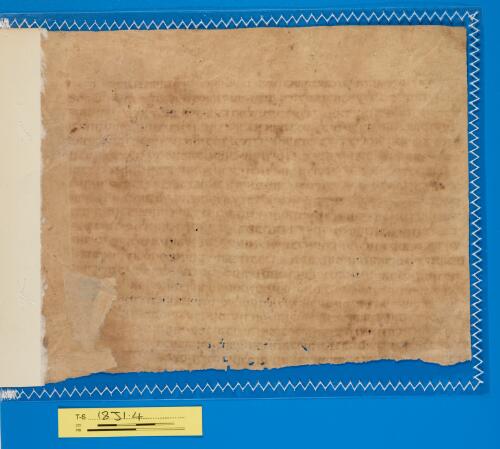
Will in Hebrew, magnificently written. Location: unknown. Dated: Sunday, 18 Ḥeshvan 1318 Seleucid = 13 October 1006 CE. In which a rich man, Maṣliaḥ b. al-Ḥasan known as Ibn al-Ḍabāb, gives his second wife and the mother of three of his children, Raḥel, 200 dinars if she does not marry again, but only 50 dinars if she does get married. He also empowers the elder son from his first marriage, Shemarya, to give his younger brother Abū l-Surrī Yefet his share in the estate only when he, the executor--not the courts-- is satisfied that the boy is ready for the responsibility. Shemarya is also to look after his two sisters Jamīl and Qurrat al-ʿAyn. In the bottom preserved line of the document, mentions a man named Abū Maymūn Wahb b. Suqayr, who appears also in T-S 12.239 (PGPID 1636). (Information in part from Mediterranean Society, III, pp. 251, 283, 411, 481)
Tags
Editor: Goitein, S. D.
Translators: Ashur, Amir; Outhwaite, Ben (in English)
T-S 18J1.4 1r
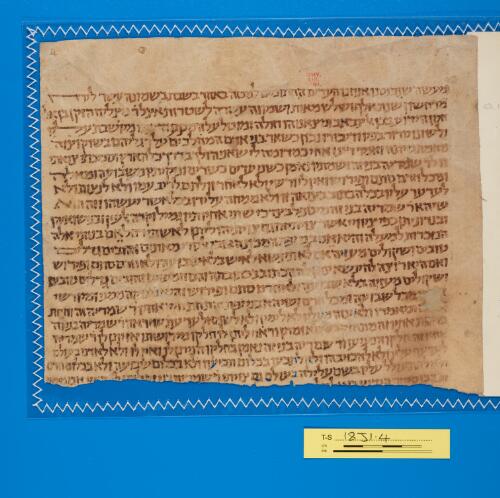
- מעשה שנכנסנו אנחנו העדים החתומים למטה באחד בשבת בשמונה עשר לירח
- מרחשון שנת אלף ושלש מאות ושמונה עשרה לשטרות אצל ר מצליח הזקן בן אל
- חסן הידוע בן אלצבאב ומצאנוהו חולה ומוטל על המטה ודעתו מיושבת עליו
- ולשונו סדור בפיו ודיבורו נכון כשאר בני אדם המהלכים על רגליהם בשוק וצוה
- מחמת מיתה ואמר דעו אחי כמדומה לי שאני הולך בדרך כל הארץ וסמכתי צואתי
- זו לר שמריה בני זה ושמתיו נאמן כשני עדים כשרים וניקיתיו משבועה ומאלה
- ומכל חרם סתם ופירוש ואין ליורשי ולא לאחר זולתם לריב עמו ולא לנצות ולא
- לערער עליו בכל הכתוב בצואה זו ולא ממחה על ידו בכל אשר יעשהו וזה הוא
- שיהא ר שמריה בני זה מיטפל בצרכי שתי אחיותיו גמיל וקרה אלעין ובנישואיהן
- ובנדוניתן כפי ציוויי אשר צויתיהו גם צויתיהו ליתן לאשתי רחל אם בנותי אלה
- הנזכרות למעלה והיא אם בני יפת המכונה אבו אלסרי מאתים זהובים גדלים
- טובים ושקולים מעזיה אם לא תינשא לאיש בלא שבועה ולא חרם סתם ופירוש
- ואם היא רוצה להינשא ינתן לה הכתוב בכתובתה והם חמשים זהובים גדלים טובים
- ושקולים מעזיה בלא שבועה ולא חרם סתם ופירוש והיא מנוקה ממני ומיורשי
- אחר]י מכל שבועה ומכל חרם ושיהא בני יפת זה תחת חיק אחיו ר שמריה זה ותחת
- ציויו] ומאמרו ולא יטה מעליו לא לימין ולא לשמאל עד שיראה ר שמריה בני זה
- מיפת אחיו זה מתחזק במשא ומתן וראוי ליתן לו חלקו מירושתו אז יתן לו ר שמריה
- אחיו זה חלקו המגיעו ור שמריה בני זה נאמן בחלקו הניתן לו ואין לו ולא לאדם בעולם
- לערער עליו ולא להכזיבהו ולא לתבעו בכלום תביעה ולא בכלום שבועה ולא בכלום חרם
- ולא להתעולל עליו בשם עלילה בעולם גם צויתי ר שמריה בני זה ל. . .ל. . .עי אבו מימו[ן
- והב בן סקיר הידוע בן הלאל [. . . . . . . . . . . . . . . . . . . . . . . . . . . . . . . . . . . .
Translated by Amir Ashur and Benjamin M. Outhwaite.
It happened that we, the witnesses who have signed below, on Sunday, 18th of Marḥeshvan, of the year 1318 of the Era of Documents [1006 CE], entered the home of Matsliaḥ the elder, son of al-Ḥasan, who is known as Ibn al-Ṣabāb, and we found him ill, lying on the bed, with his mind settled and his tongue and speech ordered like that of other people who might go about their business in the marketplace. And he instructed us with respect to his [impending] death, saying:
“Know, my brothers, it is apparent to me that I am about to go the way of all the earth, and I have authorized this, my will, for R. Shemariah, my son, and made him a trustee, equivalent to two reliable witnesses, and I hereby release him from any oath or covenant, general ban or explicit pronouncement, and none of my heirs or any others should dispute with him, nor contest or argue against him concerning all that is written in this will, and no one should interfere in anything he shall do. And this is what my son, this R. Shemariah, should do: he should take care of his two sisters, Jamīl and Qurrat al-‘Ayn, and their marriages and dowries, in accordance with the instructions I have given him. And I have also instructed him to give my wife Rachel—the mother of these aforementioned daughters of mine, who is the mother of my son Japheth, known as Abū ’l-Surrī—200 gold mu‘iziyya [Fātimid dinar] coins, large, [in] good [shape], and weighed, if she does not marry another man, without an oath, general ban, or explicit pronouncement. And if she wants to get married, then she will be given the amount stated in her ketubah, that is 50 golden mu‘iziyya coins, good and weighed, without an oath, general ban, or explicit pronouncement, and she is made exempt by me and by my heirs after my death, from any oath or ban. And my son, this Japheth, shall be under the jurisdiction of his brother, this R. Shemariah, and under his instruction and orders; he should not deviate from him, either to the right nor to the left, until my son, this Shemariah, sees in Japheth his brother that he is able to conduct negotiations, and that it is fitting to give him his share of the inheritance. Then R. Shemariah, his brother, should give him his share as he deserves. And my son, this R. Shemariah, is a trustee in the share that is given to him, and neither he, nor any other person, is permitted to dispute with him, deceive him, or pursue a claim against him, nor an oath nor a ban, nor subject him to any mistreatment in the world. I’ve also instructed this R. Shemariah, my son, to . . . Abū Maymūn . . . Wahab ibn Sukayr, known as [ibn H]ilāl.”
T-S 18J1.4 1v