Letter: T-S 12.239
Letter T-S 12.239What's in the PGP
- Image
- 1 Transcription
Description
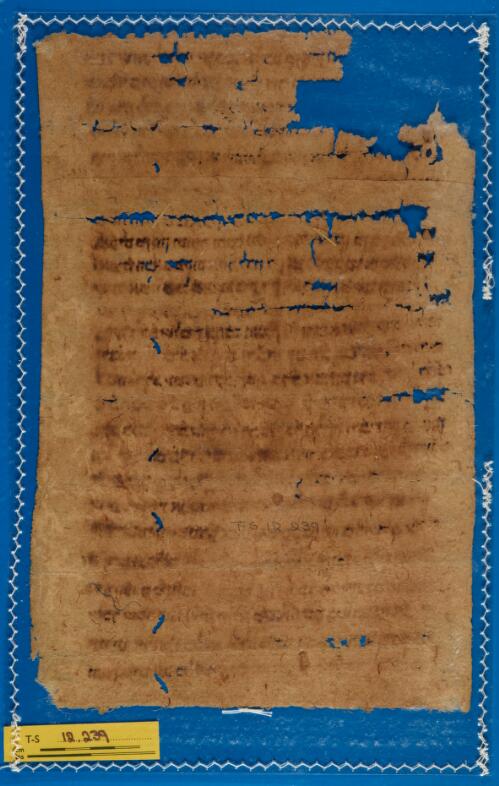
Communal letter likely originating from Jerusalem. In which the sender states that he has appointed the cantor Moshe b. Khalaf to a position of authority including the exclusive right to draw up legal deeds in an unidentified small Jewish community somewhere in the Levant. Sixteen other men are named as his associates in court and council: - Wahb b. Shelomo - Aharon b. Shelomo - Moshe b. Avraham - Haysham and Avraham and Saʿadya the sons of ʿAmram - Yosef b. Avraham - Yisraʾel b. Noaḥ - Ḥabīb b. Ḥasan - Yisraʾel b. Saʿadya - Efrayim and Wahb the sons of Suqayr (this Wahb appears also in T-S 18J1.4 (PGPID 3521)) - Hillel b. Ḥadhaqa - Yiṣḥaq b. Ḥasan - Yisraʾel b. David ha-Rofeʾ - David b. Barhān Goitein identified the sender as the gaʾon of the yeshiva in Jerusalem, based on the fact that he has authority over this provincial town and because he states he will draw up a document of excommunication for anyone who opposes his appointee "in Jerusalem and all of Palestine and Syria" (ll. 20–21). Goitein does not offer an identification for the locality concerned. He notes that it must be small, because there is no ḥaver or judge, only a cantor. He also notes that several of the names (e.g., Haysham and Noaḥ and Ḥadhaqa) are not attested or only very rarely attested in the Geniza. Goitein dates the document to ca. late 10th or early 11th century, based in part on the appearance of Wahb b. Suqayr in a document from 1006 CE. When Gil published this document, he identified the handwriting as belonging to the same scribe who wrote T-S 13J35.1 + T-S 20.94 (PGPID 1133), whom he had identified as Yehoshuaʿ b. Yaʾir ha-Kohen of Tiberias active in the 1020s (though Frenkel has argued that this Yehoshuaʿ was Yehoshuaʿ al-Lādhiqī of al-Raqqa active in the 1030s). In any case, the handwriting comparison does not seem definitive. See also T-S G2.24 (PGPID 23046), identified by Alan Elbaum in August 2025.
Tags
Editor: Gil, Moshe
T-S 12.239 1r
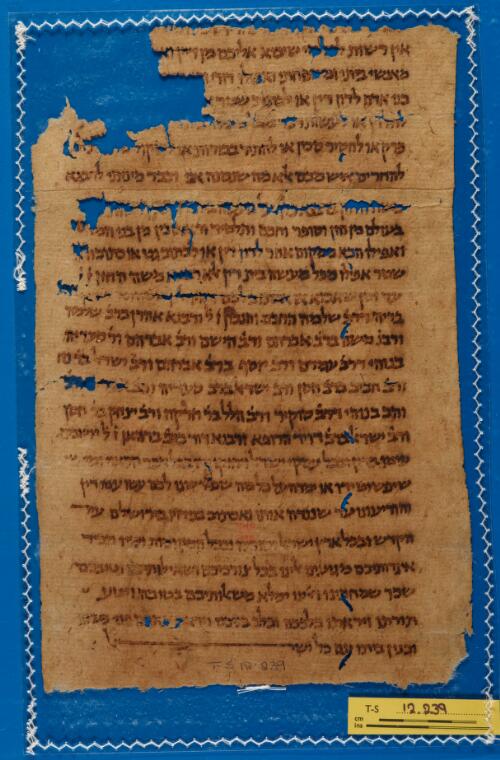
- אין רשות ל[כל] מי שיבוא אליכם מן דיין וא[דם
- מאנשי ביתי ומשפחתי ואפילו דודי ו[
- בני אדם לדון דין או לכתוב שטר א[
- לחלוץ או לעשות דבר מכל מעש[י] בית ד[ין
- פרק או להסיר סכין או להתיר בכורות או לשקו[ל
- להחרים איש מכם אלא מה שנמנה אני וכבר מיניתי לרבנא
- משה החזן בר רבנא כלף על מעשה בית דין ואין רשות לאדם
- בעולם בין חזן וסופר וחכם ותלמיד וראש בין מן בני המדינה
- ואפילו הבא ממקום אחר לדון דין או לכתוב גט או כתובה [או]
- שטר אפילו מכל מעשה בית דין אלא רב[נ]א משה החזן זל
- עד זמן שאבוא או אכתוב לכם ויהיו [ ]רבנא והב
- בריה דרב שלמה החכם והנבון זל ורבנא אהרן ברב שלמה
- ורבנ משה ברב אברהם ורב הישם ורב אברהם ור סעדיה
- בנוהי דרב עמרם ורב יוסף ברב אברהם ורב ישראל בר נח
- ורב חביב ברב חסן ורב ישראל ברב סעדיה ורב אפר[ים ורב] (?)
- והב בנוהי דרב סוקיר ורב הלל בר חדקה ורב יצחק בר חסן
- ורב ישראל ברב דויד הרופא ורבנא דוד ברב ברהאן זל יושבים
- עימו בדין ובכל עסקי ישראל ויחזקו ידו בכל דבר הראוי ומי
- שיפשוט ידו או ימרה על כל מה שפירשנו לכם עשו עמו דין
- והודיעונו עד שננדה אותו ואכתוב בנידויו בירושלים עיר
- הקדש ובכל ארץ ישראל וסוריה ובכל המקומות ויהיו תמיד
- איגרותיכם מגיעים אלינו בכל צורכיכם ושאילותיכם וטובכם
- שכר שמחתינו ואינו ימלא משלאותיכם בטובה ויטע
- תורתו ויראתו בלבכם ובלב בניכם ויראה אתכם פני משיחו
- ובנין ביתו עם כל ישראל
T-S 12.239 1v