Letter: T-S 10J5.6 + T-S 20.113
Letter T-S 10J5.6 + T-S 20.113What's in the PGP
- Image
- 1 Transcription
- 2 Translations
Description
Letter from the Qaraite Jews of Ashqelon to the Qaraites and Rabbanites of Fustat. Dating: Summer 1100 CE. The letter deals with the ransoming of Qaraite captives from Jerusalem following the Crusader conquest of the city. (Qaraites represented a large percentage of the small number of Jews who still lived in Jerusalem after the Seljuk conquest[s] in the 1070s.) The letter also explains that the fortified city of Ashqelon had not yet fallen, but the residents are struggling to cope with an influx of refugees and the need to make large payments to the Crusaders to ransom back Jewish captives - men, women and children - as well as books and scrolls pillaged from the synagogues of the Holy Land. Despite the terrible circumstances, they take solace in the fact that that the Crusaders appeared not to have mistreated the women. The writers report that they had received the suftaja (bill of exchange), at least the second substantial donation from the Jews of Fustat to the campaign to redeem captives and books. This letter is a request for further donations. The community in Ashqelon had spent over 500 dinars; ransomed over 40 captives; continues to bear the high expenses of caring for the 20 redeemed captives who remain in Ashqelon; and is now in debt for more than 200 dinars. The writers also mention Jews who had escaped from Jerusalem on their own, and others who had been given safe-conduct with the wālī. Of the refugees who arrived in Ashkelon, many had died of the epidemic they encountered there: "The attacks of these illnesses (amrāḍ), the falling of that plague (wabā'), that pest (fanā'), that disaster (balā')" (recto, lines 17–19); later, describing how the refugees perished, "Some of them arrived here healthy, and the climate turned against them (ikhtalafa ʿalayim al-hawā'), and they arrived at the height of that plague (wa-waṣalū fī ʿunfuwān dhālik al-wabā'), and many of them died" (recto, lines 42–44); then, twice more, the writers emphasize their great expenses caring for those who have survived but are still sick, who need not only food and clothing but medicines and syrups (recto, lines 53–55 and right margin 19–20). There are notes by the writers and forwarders of the letter in the right margin on verso, including Yehayyahu ha-Kohen b. Maṣliaḥ, David b. Shelomo and Ḥanina b. Manṣūr b. ʿUbayd. See DK 242 + T-S AS 146.3 for a letter written one year earlier from the Rabbanites of Fustat to the Rabbanites of Ashqelon, also having to do with the campaign for the ransoming of captives. (Information CUDL and from Goldman, "Arabic-Speaking Jews of Crusader Syria" (PhD diss., 2018), 49–58. See also Goitein, Med Soc 5:537; Goitein, "New Sources on the Fate of the Jews during the Crusaders' Conquest of Jerusalem" (Heb.) Zion, 17 (1952), 136; Goitein, Palestinian Jewry, pp. 241-242; and Goitein's notes attached to Bodl. MS Heb d 11/7 (page 9f). ASE/MR
Tags
Editor: Gil, Moshe
Translator: Goitein, S. D. (in English)
T-S 10J5.6 1v
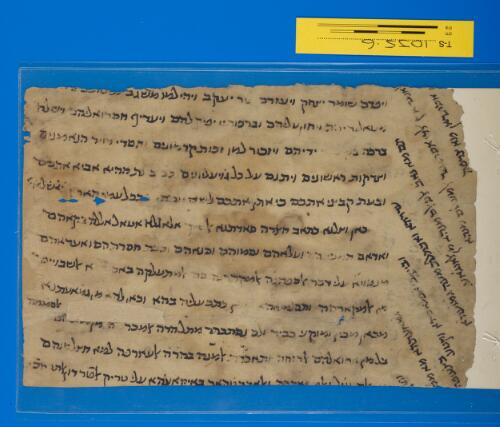
Recto
- ויפדם שומר יצחק ויעזרם צור יעקב ויהי למו משגב [. . . . . וימלא]
- משאלותיהם ויחון עליהם וברכותיו יפיק להם ויעדיף חסדו אליהם וישלח
- ברכה במעשי ידיהם ויזכור למו זכות קדמונים וחסדי דויד הנאמנים
- וצדקות ראשונים ויתנם על כל גוי עליונים ככ בעת ההיא אביא אתכם
- ובעת קבצי אתכם כי אתן אתכם לשם ולתהלה בכל עמי הארץ באשלאיי
- כאן וצלנא כתאב חצרה סאדתנא אלשיוך אלאגלא אטאל אללה בקאהם
- ואדאם תמכינהם ועלאהם וסמוהם וסנאהם וכבת חסדתהם ואעדאהם
- מנטויא עלי דכר אלספתגה אלמקתרנה בה אלמתעלקה באכותנא אלשבויים
- מן אלמקאדסה ותסלמנאהא ממן כתב עליה בהא וכאן להא מן גמאעתנא
- מכאן מכין ומוקע כביר ולם נסתכתר מתל הדה אלמכרמה מן [. . .]הם אלסמחה
- בל מן אחואלהם אלרזחה ותאכדת אלמנה בהדה אלעארפה למא חצל מנהם
- מן אלתעגיל ואלמבאדרה ואלאסתטהאר באיקאעיהא עלי טריק אלפור דון אלתראכי
T-S 20.113 1r
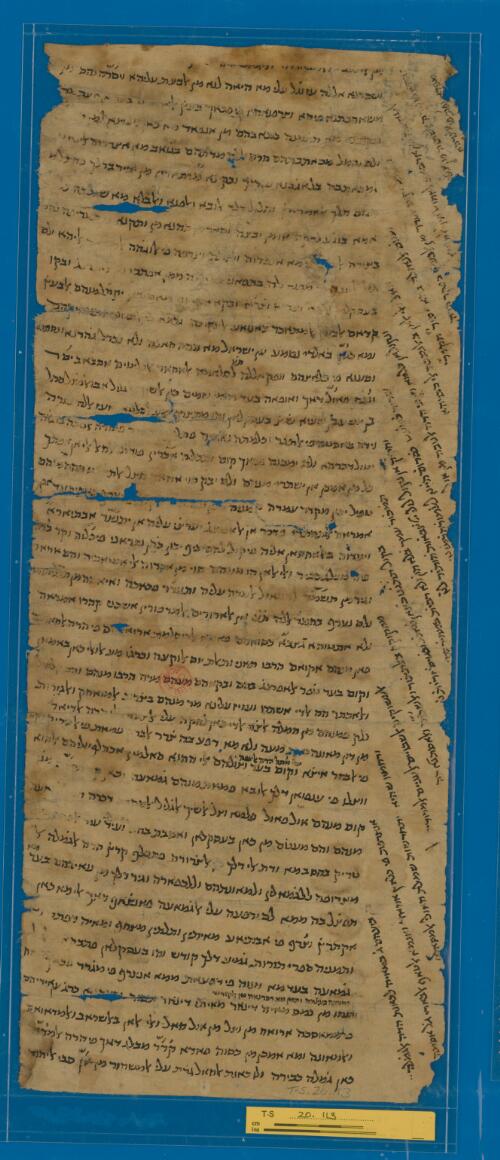
Recto
- ושכרנא אללה עז וגל עלי מא היאה לנא מן אלבעת עליהא ויסרה להם מן
- משארכתנא פיהא וצרפנאהא פי פכאך בעץ אלאסירים בעד אן אעתמד[נא עלי]
- מקתצא מא תצמנה כתאבהם מן אנפאד מא כאן ענדנא למן ס[בק פכאכה ?]
- ולם נהמל מכאתבתהם חרס אללה מדתהם בגואב מא אצדרוה אלינא מ[ן]
- אלמכאתבה בל אגבנא ען דלך ובקינא מרתאדין מן יסיר בדלך פחצל מן
- הגום תלך אלאמראץ וחלול דלך אלובא ואלפנא ואלבלא מא שגל בה כל[נא]
- אמא בוגע לחקה או מן יכצה וסאר מן ההנא מן ותקנא פי תעריפה להם
- בצורה אל[חאל] פימא אנפדוה ווצולה וצרפה פי אלוגהה (!) אלמשאר אליהא ולם
- תזל אלאכבאר מתואצלה בתפאני גמאעה ממן אפתכו מן אלאפרנג ובקו
- בעסקלאן גועא ועריא וצרא ובקא אקואם מאסורין יקתל מנהם אלבעץ
- קדאם אלבעץ אלמתאכר באנואע אלעקובה גרצא פי אלתשפי לתמחיקהם
- ומא כנא באלדי נסמע ען ישראל מא הדה חאלה ולא נבדל גהדנא ונסתלם
- וסענא פי כלאצהם וופק אללה //תע// לסלאמה אלאחאד אלפליטים אסבאב יסר
- ונגח פאול דאך ואופאה בעד רחמי שמים כון אלשיך אלגליל אבו אלפצל סהל
- בן יושע בן שעיא שצ בעסקלאן והו מתצרף מע אלסלטאן אעז אללה נצרה
- וידה באסטה פי אלתגר וכלמתה נאפדה פתלטף ותסדר פי הדה אלנובה בוגוה
- יטול דכרהא ולם ימכנה פכאך קים ותכליה אכרין פודת אלחאל אלי אן אפתך
- כל מן אמכן אן ישתרי מנהם ולם יבק סוי אחאד חצל אלתצבט בהם מנהם
- טפיל יכון מקדר עמרה תמניה סנין יכון עשרה . . . אלמערוף באבי סעד אבן
- אמראה אלתסתרי פדכר אן אלאפרנג יערצו עליה אן יתנצר אכתיארא
- וועדוה באלאחסאן אליה פיקול להם כיף יכון כהן נצראני פיכלוה וקד בדל
- פיה מבלג כביר ואלי אלאן הו מעהם סוי מן אכדוה אלי אנטאכיה והם אחאד
- וגיר מן תשמד לתטאול אלמדה עליה ותעדר פכאכה ואיאסה מן תכליתהם
- ולם נערף בחמד אללה תע אן אלארורים אלמדכורין אשכנז קהרו אמראה
- ולא אתטוהא גצבא כסואהם פאמא אלדי סלמת ארואחהם פי הדה אלחאדתה
- פאן מנהם אקואם הרבו תאני ותאלת יום אלוקעה וכרגו מע אלואלי כאן באמאן
- וקום בעד טפר אלאפרנג בהם ובקאהם מעהם מדה הרבו מנהם והם קלאיל
- ואלאכתר הם אלדי אשתרו וזיז עלינא מר מנהם בצרוב אלמואחק ואלגזרות
- כלק פמנהם מן חמלה אלצר אלדי כאן לחקה עלי אלצעד אלי הדה אלדיאר
- מן דון מאונה כאנת מעה ולא מא דפע בה צרר אלברד פמאת פי אלטריק וקום
- פי אלבחר איצא //עלי מתל הדה אלצפה// וקום בעד וצולהם אלי ההנא סאלמין אכתלף עליהם אלהוא
- ווצלו פי ענפואן דלך אלובא פמאת מנהם גמאעה וכאן קד תקדם מגי
- קום מנהם אול פאול פלמא וצל אלשיך אלגליל אלמקדם דכרה חמל [גמ]אעה
- מנהם והם מעטם מן כאן בעסקלאן ואסבת בהם ועיד עיד אלפסח פי אל
- טריק בחסבמא ודת אלי דלך [מ]ן אלצרורה פתכלף קרץ הדה אלגמלה אל
- מצרופה ללגמאלין ולמאונתהם וללכפארה וגיר דלך מן נואיבהם בעד מא
- תפצל בה ממא לם ירפעה עלי אלגמאעה פאנצאף דאך אלי מא כאן
- אקתרץ וצרף פי אבתיאע מאיתין ותלתין מצחף ומאיה דפתר וכ
- ותמניה ספרי תורות גמיע דלך קודש והו בעסקלאן פתבקא עלי אל
- גמאעה בעד מא וזנוה פי דפעאת ממא אנצרף פי מגרד פכאך אלארואח
- והו נחו מן כמס מאיה דינאר //ומאונה בעצהא ותמן מא דכרנאה מן אלקודש// מאיתי דינאר וכסור ובעד מא כרג ען אידיהם
- פי ממאסכה ארואח מן וצל מן אול חאל ואלי אלאן באלשראב ואלמדאואה
- ואלמאונה ומא אמכן מן כסוה פאדא קרר מבלג דאך פי הדה אלמדה
- כאן גמלה כבירה ולו כאנת אלחאל גרת עלי אלמשהור מן אן סבי אליהוד
T-S 20.113, right margin
- מן ביעהם ג במאיה לכאנת הדה אלגמלה
- אנצרפת פי כלאץ אחאד ואנמא אלטאף אלבארי גל אסמה
- ורחמיו שהיא (!) מתחדשות (!) שמלת האולי אלמסאכין
- אלעשוקים אלשבויים אלעניים אלמרודים אל
- מחקוקין באלתצור ואלשכיה ואלאסתגאתה
- בקול תתננו כצאן מאכל ובגוים זריתם
- תמכור עמך בלא הון ולא רבית במחיר[י]הם
- וחקיק אן נקול לולי יי צבאות הותיר לנו
- שריד כמעט כסדום היינו לעמורה דמינו
- ונקול אן כלמא נזן פי הדה אלנובה מן אול
- חאל ואלי אלאן באלנסבה אלי כברהא
- ועטם אלנאזלה בהא יסיר חקיר
- ואנמא יקום אלעדר מן אלבעץ בפקר הדה
- אלטאיפה מן ארבאב אלאחואל ודוי אלאמואל
T-S 10J5.6 + T-S 20.113, right margin
- ומן [. . .] פי הדה אלשתוה מן צלאח
- גמאעתהא מא מס[. . .] מנהא ופת פי עצדהא
T-S 10J5.6, right margin
- וביין פי אמלאכהא וקטע בצעיפה[א]
- עדדהא ואכתלת מעה גמועהא
- תם מא נאב אלסאלם מנהא מן אלאוגע
- [וא]לאמראץ אלדי אסתנפר אלמעטם מנהא
- ] אסתדאן מא צרפה
T-S 20.113, recto
- We thank the Most High who gave us the opportunity of fulfilling this pious deed, and granted to you to take a
- share in it with us. We spent the money for the ransom of some of the captives, after due consideration
- of the instructions contained in your letter, that is, we send what was available to those who [had already been ransomed(?)].
- We did not fail to reply to what you had written us,
- and indeed we answered, but we were seeking a man who would bring our reply to you. Afterwards it happened that these illnesses came upon us;
- plague, pestilence, and leprosy, which filled our minds with anxiety, that
- we ourselves or some of our relatives might be stricken with disease. A man whom we trust went from here and must have explained to you
- the position with respect to the sums you had sent: that they reached us safely and that they were spent in the manner indicated [in your letter].
- News still reaches us that among those who were redeemed from the Franks and remained
- in Ascalon some are in danger of dying of want. Others remained in captivity, and yet others were killed
- before the eyes of the rest, who themselves were killed afterwards with all manner of tortures ; [for the enemy murdered them] in order to give vent to his anger on them.
- We did not hear of a single man of Israel who was in such plight without exerting ourselves to do all that
- was in our power to save him. The Most High has granted opportunities of relief and deliverance to individual fugitives,
- of which the first and most perfect instance – after the compassion of Heaven – has been the presence in Ascalon of the honourable shaykh 'Abu' I-Fadl Sahl
- son of Yusha' son of Shay'a (may God preserve him), an agent of the Sultan (may God bestow glory upon his victories),
- whose influence is great in Alexandria where his word is very much heeded. He arranged matters wisely and took great pain in securing the ransom ;
- but it would require a lengthy discourse to explain how he did it. But he could only ransom some of the people and had to leave the others. In the end,
- all those who could be ransomed from them [the Franks] were liberated, and only a few whom they kept remained in their hands, including
- a boy of about eight years of age, and a man, known as [?] the son of
- the Tustari's wife. It is reported that the Franks urged the latter to embrace the Christian faith of his own free will
- and promised to treat him well, but he told them, how could he become a Christian priest and be left in peace by them [the Jews], who had disbursed
- on his behalf a great sum. Until this day these captives remain in their [Franks] hands; as well as those who were taken to Antioch, but these are few;
- and not counting those who abjured their faith because they lost patience as it was not possible to ransom them, and because they despaired of being permitted to go free.
- We were not informed, praise be to the Most High, that the accursed ones who are called 'Ashkenazim (Germans) violated
- or raped women, as did the others. Now, among those who have reached safety
- are some who escaped on the second and third days following the battle and left with the governor who was granted safe conduct;
- and others who, after having being caught by the Franks, remained in their hands for some time and escaped in the end ; these are but few.
- The majority consists of those who were ransomed. To our sorrow, some of them ended their lives under all kind of suffering and affliction.
- The privations which they had to endure caused some of them to leave for this country
- without food or protection against the cold, and they died on the way.
- –32. Others in a similar way perished at sea; and yet others, after having arrived here safely, became exposed to a " change of air "; they came at the height of the plague, and a number of them died. We had, at the time, reported the arrival
- of each group. And when the aforementioned honoured shaykh arrived, he brought a group
- of them, i.e., the bulk of those who had reached Ascalon; he spent the Sabbath and celebrated Passover with them
- on the way in the manner as is required by such circumstances. He contracted a private loan for the sum
- that he had to pay the camel drivers and for their maintenance on the way, as well as the caravan guards and for other expenses, after
- having already spent other sums of money, which he did not charge to the community. All this is in addition to the money that
- was borrowed and spent in order to buy back two hundred and thirty volumes, a hundred codices
- and eight Torah Scrolls. All these are communal property and are now in Ascalon.
- The community, after having disbursed about five hundred dinars for the actual ransom of the individuals, for maintenance of some of them and for the ransom, as mentioned above, of the sacred books
- remained indebted for the sum of two hundred dinars. This is in addition to what has been spent
- on behalf of those who have been arriving from the beginning until now, on water and other drinks, medical treatment,
- maintenance and, in so far as possible, clothing. If it could be calculated how much this has cost over such a long period,
- the sum would indeed be great. Had the accepted practice been followed, that is, of selling three Jewish captives
T-S 20.113, right margin
- for a hundred [dinars], the whole available sum would have been spent
- for the ransom of only a few. However, the grace of the Lord, may His name be exalted,
- and His ever-ready mercy, has been bestowed upon these wretched people,
- the oppressed, the captives, the poor and indigent,
- who may, indeed, groan, lament, and cry out
- as it is written [Ps. xliv, 12-13]: " Thou hast given us like sheep appointed for meat, and hast scattered us among the heathen.
- Thou sellest Thy people for nought and dost not increase Thy wealth by their price."
- And we ourselves may say [Is. i, 9]: " Except the Lord of Hosts had left unto us
- a very small remnant, we should have been as Sodom, and we should have been like unto Gomorrah."
- We declare that all the silver which we have weighed [i.e., the money we have spent] in this catastrophe, from the beginning
- until now is but light and insignificant in relation to its magnitude
- and the greatness of the sorrow it has entailed.
- Some adduce as an excuse the impoverishment of
- this class of financial magnates and property holders
- . . . and (?) the harshness of the winter season
- . . . and . . . enfeebled it.
And news does not cease arriving that some of those who were redeemed from the Franks and have stayed in Ascalon are starving, naked, and destitute. Others remain as prisoners, while others were killed in front of the rest with all kinds of torture, in their lust for extermination. And we cannot hear of anyone of Israel in such a plight that we do not make every exertion or strive with all our might for their deliverance.
God—may He be exalted—has granted a few of the refugees ease and favor—thanks to the mercy of Heaven—of which the first and greatest fact is that Abū ’l-Faḍl Sahl ibn Yusha‘ ibn Shay‘a—may God preserve him—is in Ascalon, and he has connections with the sultan—may God bless his victory—and his influence is great in the port city [Alexandria], where his word carries weight. He maneuvered within this calamity wisely, but it will take time to explain how he did it.
He could not ransom some and leave others, but eventually he was able to ransom everyone he could buy, and only a few remained, including a boy of about eight or ten years of age, known as Abū Sa‘d, the son of al-Tustarī’s wife. It was said that the Franks proposed he convert to the Christian faith of his own free will, promising to treat him well, but he said to them, “How can a kohen [priest] become a Christian?!,” and they left him alone. And we have already spent a large sum of money on him, but he is still there along with the rest of them, apart from those few who were taken to Antioch and those who renounced their religion, because they lost patience when it was not possible to ransom them and because they despaired of being permitted to go free. But we are not aware, thanks be to God—may He be exalted—that those aforementioned accursed Germans raped or violated any woman.
Also, some of those who preserved their lives escaped on the second and third days after the battle, together with the governor, who was granted safe conduct; and some others, who had been taken by the Franks and remained with them for a while, were able to escape, but these are only few. The majority are those who were ransomed.
And to our distress, some of them died under cruel punishment and persecution, while others, because of the force of the attack that overtook them, had to leave for this land without taking provisions with them nor protection against the effects of the cold, and they died on the journey. Others who went by sea died in the same way, and others, after having arrived here safely, experienced the change of climate and arrived at the peak of the plague, and a number of them died. But some people had already arrived here, one by one.
And when the aforementioned distinguished sheikh arrived, he took a group of them—most of those who had been in Ascalon—and he spent the Sabbath and celebrated the festival of Passover with them on the way, insofar as the circumstances allowed. He also took out a loan in his own name for the cost of the camel drivers, their provisions, and the guards, and for all the other expenses, and this in addition to what he had already paid out and not charged to the community. And added to this is what was borrowed and spent in order to buy back 230 codices of the Bible, one hundred unbound books, and eight Torah scrolls. All these belong to the community’s pious foundation and are now in Ascalon. And about two hundred dinars remain as a debt on the community, even after what they have already paid out in various payments: the expense only of the ransom of human lives and maintaining some of them, and the cost of the aforementioned communal property—totaling five hundred dinars.
And all this is in addition to what has been spent on preserving the lives of those who have arrived from the beginning until now—on medicines, medical treatment, provisions, and, insofar as possible, clothing. If it could be calculated how much this has cost over the whole period, the total would be great. Were the situation widely known to the public, that the usual custom is that the ransom of three Jewish prisoners costs one hundred dinars, then this whole sum would have been spent only on the ransoming of a very few!
T-S 20.113 1v
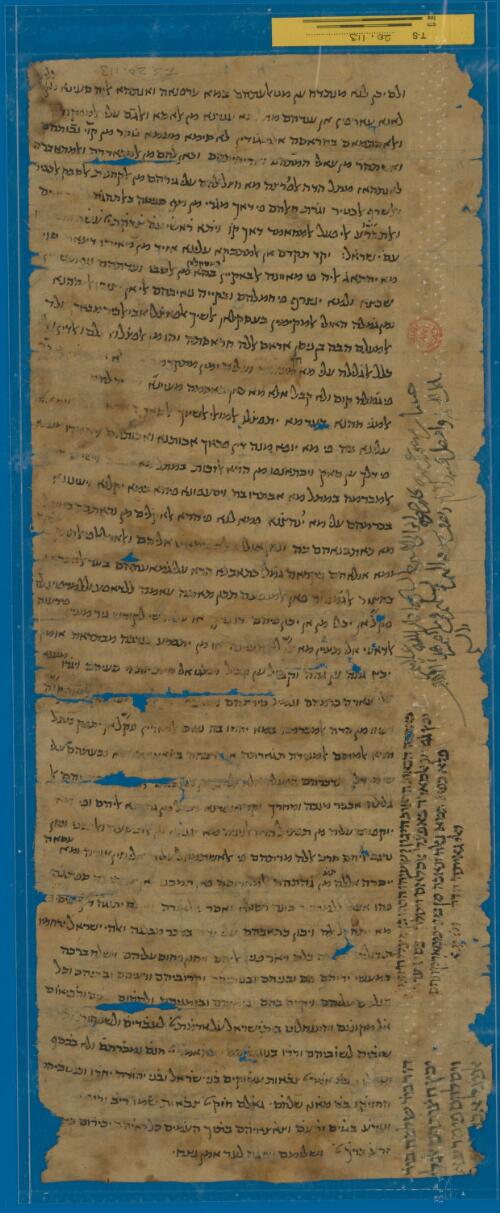
Verso
- ולם יכן לנא מנתדח ען מטאלעתהם במא ערפנאה ואנתהא אליה סעינא מן דלך
- לאנא עארפין אן ענדהם מתל מא ענדנא מן אלאסא ואלגם עלי אלמפקודין
- ואלאהתמאם בחראסה אלמוגודין לא סימא מע מא טהר מן קוי נכותהם
- ואשתהר מן עאלי המתהם ואריחיתהם וכאן להם מן אלמבאדרה ואלמתאברה
- לאנתהאז מתל הדה אלפרצה מא חצל להם עלי גירהם מן אלקהלות אלסבק אלכביר
- ואלשרף אלכטיר וגרת חאלהם פי דאך מגרי מן וצף סבטה באלתהגם ללמכארם
- ואלתסרע אלי פעל אלמחאמד דאך קו ויתא ראשי עם צדקת יי עשה ומשפטיו
- עם ישראל: וקד תקדם אן אלמתבקא עלינא אזיד מן מאיתי דינאר סוי
- מא יחתאג אליה פי מאוונה אלבאקיין [[בהא]] //בעסקלאן// מן אלסבי ועדתהם ניף ועשרין
- שכצא ולמא ינצרף פי חמלהם ובקייה נואיבהם אלי אן יצירו אלי ההנא
- ומן גמלה האולי אלמקימין בעסקלאן אלשיך אלפאצל אבי אלכיר מבארך ולד
- אלמעלם הבה בן ניסן אדאם אללה חראסתה והו מן אלפצל ואלעלם ואלדין ואל
- כלל אלגלילה עלי מא //הו// משהור ועליה ימין מתקדמה אנה לא יאכד שי מן [אלצ]ב[ו]ר
- פי גמלה קום ולא קבל אלא מא כאן באסמה מעיינא ויראד להם [. . . . . .]
- אלמגי ההנא בעד מה יתפצלו אלמואלי אלשיוך אלסאדה אדאם אללה נעמאהם
- עלינא בה פי מא יופא מנה דין פכאך אכותנא ואכותהם וישמרו מענא
- פי דלך ען סאק ויסתאנפו מן הדא אלזכות במתל מא אנפוה וישתם [. . .]
- אלמכרמה במתל מא אבתדו בה ויסעפונא פיהא במא יקלנא ויעינונא
- בכרמהם עלי מא ינהצנא פמא לנא פי הדא אלאקלים מן נכאתבה במתל
- מא כאתבנאהם בה ונחן אולי באלאנבסאט אליהם ואלאדלאל פי אלתתק[ל] עליהם
- ומא אולאהם בקראה גמל כתאבנא הדא עלי גמאעתהם בעד אלאכראג
- בחצור אלגמהור פאן אלמנפעה תכון תאמה עאמה ללדאפע ללמדפוע לה
- פקל אן יכלו מן אן יכון פיהם דו נדר או עליה שי לקודש גיר מעיין פידעוה
- אלדאעי אלי תעיין מא ען לה תעיינה או מן יתברע בנדבה מבתדאה או מן
- יכץ גהה ען גהה וקביל ען קביל ויבלגו אלי חית ינתהי סעיהם ויגרו מענא
- עלי עאדה כרמהם וגמיל סירתהם ויסתברכו מן אל[די יעטי] אלצעיף קוה
- ויפיזו מן הדה אלמכרמה במא יחוזו בה נעים אלדארין פקל אן יתפק מתל
- הדא אלמוסם אלמפידה תגארתה אלמרבחה בצאעתה ומא נבעתהם עלי
- שי מן דלך לנדכרהם בפעלה אלא [. . . . . . . . . . .]הם אל
- גלילה אכבר מנבה ומחרך וקד אנפדנא רסול מן גהתנא אליהם ופי מא
- יוקפהם עליה מן תפציל הדה אלנובה מא יגנינא מן אלתוסעה ואלבסט ונחן
- נרגב אליהם חרס אללה מדתהם פי אלאשתמאל עליה אלי חין עודה ומא עסאה
- ייסרה אללה //תע// מן גהתהם אלמחרוסה פאן תמכנו אן יכתבו בה ספתגה
- פהו אעפי ללמדכור כונה רסולא ואסרע לעודה ואן לם יתוגה דלך פיסים
- מא יתחצל אליה ויכון כתאבהם עלי ידה בדכר מבלגה ואלהי ישראל ברחמיו
- הגדולים ישמרם כלם ויאר פניו אליהם ויחון ויחוס עליהם וישלח ברכה
- במעשי ידיהם הם ובניהם ובנותיהם וקרוביהם ורעיהם ובתיהם וכל
- הנלוים עליהם ויקיים בהם בימיהם ובזמניהם ולקחום עמים והביאום
- אל מקומם והתנחלום בית ישראל על אדמת יי לעבדים ולשפחות והיו
- שובים לשוביהם ורדו בנוגשיהם כה אמר יי חנם נמכרתם ולא בכסף
- תגאלו כה אמר יי צבאות עשוקים בני ישראל ובני יהודה יחדו וכל שביהם
- החזיקו בם מאנו שלחם גאלם חזק יי צבאות שמו ריב יריב [את ריבם]
- ונודע בגוים זרעם וצאצאיהם בתוך העמים כל ראיהם יכירום כי [הם]
- זרע ברך יי ושלומם ישגה לעד אמן נצח
T-S 20.113, verso
- We could not refrain ourselves from reporting what we know and the outcome of what we have done in this juncture,
- for we are convinced that you, just like ourselves, regret and mourn for those who have died
- and strive for the preservation of those who are alive; especially since your determination to distinguish yourselves was clearly shown
- and the loftiness of your aspiration and generosity became apparent. You were the first and the most consistent
- in the fulfilment of this " good deed " which you were granted to perform, and which gained for you great superiority over the other communities
- as well as much honour. Thus, you may be, indeed, compared with that class of people to whom it was assigned to perform generous deeds
- and to strive to do praiseworthy acts, as it is written [Deut. xxxiii, 21]: " And he came with the heads of the people, he executed the justice of the Lord, and his judgments
- with Israel." We have already indicated that we remained in debt of over two hundred dinars, apart from the moneys that are
- required for the maintenance of the captives who remained in Ascalon they number more than twenty
- persons-for their transfer and other needs until they arrive here.
- Among those who are in Ascalon is the honoured elder 'Abi al-Khair Mubarak the son of
- the teacher Hiba b. Nisan (may God protect him for a long time). It is well known how much he is revered, wise,
- God-fearing, and endowed with high virtues; he is bound by an old vow not to benefit in anything from charity
- together with the whole of the community, but only from what is explicitly destined for him by name. [He should be enabled]
- to come here, after [you] our Lords, elders and masters – may God preserve your happiness–
- have graciously offered us the sum needed for cancelling the debt incurred for the ransom of our and your brethren. Gird now your loins together with us
- in this matter, and it will be accounted for you as a mark of merit in the future, as it has been in the past . ..
- the generous deed which you began, by helping us to lighten our burden and by assisting us
- with your generosity in order to put us back on our feet, for we have no one in this country to whom we could write
- as we are writing to you. It is proper that we should turn to you and cause you some disturbance.
- The main tenor of this letter ought to be read out to your [entire] community, after you have announced that
- everyone must attend [the meeting]. For the benefit will [thus] be complete and general, both to those who pay and to those who receive payment.
- For it is unlikely that there should lack among the public those who had made a vow, or those who had undertaken an obligation to perform "holy deeds" which have not yet been determined ; such should, then, be invited
- to contribute as much as may be seen fitting. Or there may be those who had previously intended to make contribution to charity, or others may wish
- to make a specific contribution to one cause rather than to another. In this manner you will achieve your purpose, and deal with us
- in your accustomed generosity and excellent manner . . .
- . . . and you will deserve, through this charitable act, to acquire " both worlds."
- Only rarely does such a juncture present itself, in which " commerce " is beneficial and " business " entirely profitable. We do not call your attention to
- such a matter in order to remind you of the duty of doing it, but . ..
- your own lofty [virtues] are the strongest urger and reminder. We dispatched a messenger to you and what
- he will tell you about the details of this misfortune exempts us from discoursing on it at a greater length. We
- beg of you, may God preserve you in long life, to deal with him kindly until he returns; and concerning that which
- God may cause him [to collect] amongst you-may God preserve you-if you could write out for him a bill of exchange,
- it would make things easier for him, since he is but a messenger, and speed up his return. If this cannot be done, arrange that an exact statement
- of how much has been collected be made, and have your letter sent through him [the messenger] and mention the sum in it. The God of Israel, etc....
[There follow nine lines with complimentary phrases in Hebrew.]
T-S 20.113, verso, right margin
- The writer of the above, the pained, sorrowful, and grieving Yesha'ya ha-Kohen b. Masliah the Enlightened
- sends respectful greetings to all the gentlemen, and begs them to accept his apology.
- They are not unaware of what he has gone through from the time he took leave of them until this day.
T-S 20.113, verso, right margin (bottom, cut off)
- David b. R. Shelomo b. R....
- sends his greeting to your excellencies
- and begs you to note ...
- al-Fadl Abu....
T-S 20.113, verso, right margin (in Arabic script)
- Hanina b. Mansur b. 'Ubayd (peace be on him) reserves for the venerable lords and masters, may God preserve their excellencies,
- the best greeting and most excellent salutation and attention; expresses his longing for them and begs them to take note of the contents of this letter. Peace.
T-S 10J5.6 1r
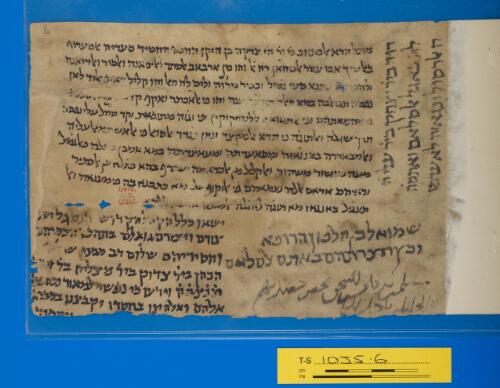
Verso
- מוצל הדא אלכתאב מ ור הז צדקה בן הזקן החכם החסיד סעדיה אלמערוף
- באלשיך אבו עמר אלטחאן רח אל והו מן ארבאב אלסתר ואלציאנה ואלכיר ואלדיאנה
- ולה פי גמאעתנא סעי גמיל וכביר מרוה וליס לה חאל והו קליל דאת אליד לאן
- נפסה תטאלבה במא חאלה תקצר ענה והו פי אלאכתר ואקף קד[אם] ג[מאע]תנא
- פי מהמאתהם ופי אלתטואף ללמחקוקין ופי וגוה מתובאת וקד סהל עלי נפסה
- תרך שגלה ואלתוגה פי הדא אלמקצד ונחן נגדד אלסואל פי אלאשתמאל עליה
- ואלמבאדרה באנגאזה ומסאעדתה ומעאצדתה במא אמכן פעלה פאלגמיל
- מעה מנשור משהור ואלקליל מן אלכראמה יעתרף בהא פצלא ען אלכתיר
- וראיהם אדאם אללה נעמאהם פי אלוקוף עלי מא כתבנא בה פי מענאה ואל
- תעגיל באנגאז מא תוגה לאגלה אלמדכור חרסה אללה
Verso, bottom right
- שמואל בן חלפון הרופא
- יכץ חצרתהם באתם אלסלאם
- מסלם בן ברכאת אסחק בן עזרה (?) יכץ חצרת (مسلم بن بركات بن اسحق يخص حضرتهم)
- אלגלילה באגל אלסלאם (الجليلة باجل السلام)
Verso, bottom left
- ישאו כלל הקהל הקדוש הנסגל ישמ[רם]
- צורם ויעזרם גואלם בתהלה חכמיהם
- וחסידיהם שלום רב ממני שלה
- הכהן ביר צדוק ביר מצליח בר זיט[א]
- תנצבה וידעו כי נפשי למאוד נכספת
- אלהם (!) ואלהינו בחסדו יקבצנו במהרה
- [. . . . . . . . . . . .] ויעמוד
Verso, right margin
- חנינא בן מנצור בן עזרה יכץ חצרת אלמואלי אלשיוך אלסאדה אדאם אללה עלאהם
- באגל אלסלם ואפצל תחיה ואלסלאם ויצף שוקה אליהם ויסלהם פי מא יתצמנה הדא אלכתאב ואלסלם
- حنينا بن منصور بن عزرة يخدم حضرة الموالي الشيوخ السادة ادام الله علاهم
- باجل السلم وافضل تحية واكرام ويصف شوقه اليهم ويسلهم في ما يتضمنه هذا الكتاب والسلم
T-S 20.113 verso, right margin
- כאתבה הכאוב הדאוב היגון ישעיהו הכהן בן מצליח המל[מד]
- יכץ גמיע אלסאדה באפצל אלסלאם ויסלהם בסט עדרה
- פלא כפא במא נאלה ונאבה מן בעד מפארקתהם
- ואלי גאיתה הדה וש יג א
T-S 20.113 + T-S 10J5.6 verso
- דוד ביר שלמה ביר | דוד ביר יצחק ביר עלי ה
- יכץ חצרתהם אלגלי|לה באגל אלסלאם ואתמה
- ויסלהם פי מראע|ה אלרסול ונגאזה לא עדמו
- אלפצל אב[דא
