Scholarship on Letter: T-S 13J9.4
Letter T-S 13J9.4- Bibliographic citation
- José Martínez Delgado and Amir Ashur, "A Previously Unpublished Letter of Introduction by an Andalusi Karaite (T-S 8J41.7),"Miscelánea De Estudios Árabes Y Hebraicos. Sección Hebreo 70 (n.p., 2021), 193-207.
- Relation to document
- Digital Translation
- Bibliographic citation
- S. D. Goitein, unpublished index cards (1950–85), #10254. Princeton Geniza Lab, Princeton University.
- Relation to document
- Discussion
- Bibliographic citation
- Moshe Gil, Palestine During the First Muslim Period (634–1099) (in Hebrew) (Tel Aviv University, 1983), vol. 3.
- Location in source
- #457
- Relation to document
- Digital Edition
- Edition
- Bibliographic citation
- S. D. Goitein's unpublished edition (1950–85).
- Location in source
- Relation to document
- Edition
Image
Transcription
Translation
Editor: Gil, Moshe
Translators: Delgado, José Martínez; Ashur, Amir (in English)
T-S 13J9.4 1r
°
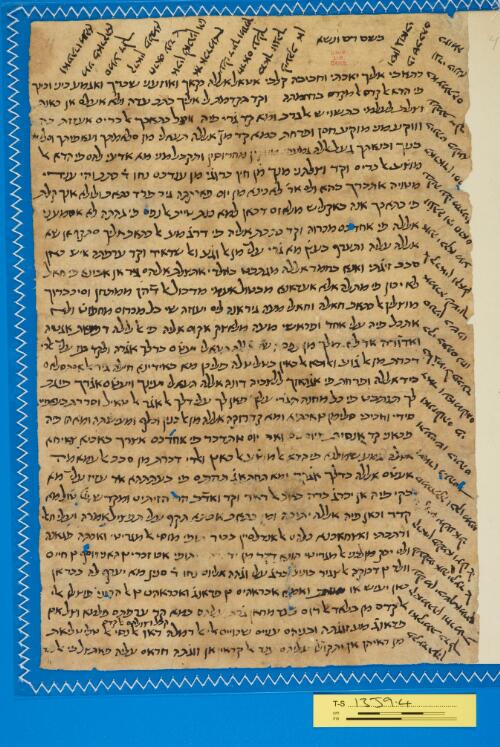
Moshe Gil, Palestine During the First Muslim Period (634–1099) (in Hebrew) (Tel Aviv University, 1983), vol. 3.
- בשם רם ונשא
- כתאבי אליך יאכתי וחביבה קלבי אטאל אללה בקאך ואוזעני שכרך ואגמע ביני ובינך
- פי הדא אלקדס אלמקדס ברחמתה וקד תקדמת לי אליך כתב עדה ולא אעלם אן כנאת
- וצלת לעלמי בתשויש אלגרב ומא קד גרי פיה ווצל כתאבך אלכרים אעזזת בה
- וווקע מני מוקע חסן ופרחת במא קד מן אללה תעאלי מן סלאמתך ועאפיתך וסלאמה
- בניך ובנאתך געל אללה גמעהם מווקין מחרוסין ותקבל מני מא אדעי להם פי הדא אל
- מוצע אלכרים וקד וצלתני מנך מן חין כרוגי מן ענדכם נחו ד כתב והי ענדי
- מטויה אתברך בהא ולם אר לאכינא מן יום פארקתה גיר פרד כתאב ולולא אנך קלת
- פי כתאבך אנה באקליש מלאזם דכאן למא כנת טייב אלנפס פי גהתה לא אסמעני
- אללה פי אחדהם מכרוה וקד כתבת אליה פי דרג מע אלכתאב אליך סתקף אן שא
- אללה עליה ותערף בעץ מא גרא עלי מן אלוגע ואלשדאיד וקד ערפתה איש כאן
- סבב זיגתי ואנא בחמד אללה מגתבט באלדי אתצלת אליהם גיר אן אבינא פי חאל
- לא יכון פי מתלה אלא אעדאנא מבטול אעמי מדכול אלדהן ממתחן וסיכברוך
- מוצלין אלכתאב חאלה וחאלי מעה גיר אנה ליס יעוזה שי בל מכרום מחפוט ולא
- אתכל פיה עלי אחד ופראשי מעה מלאצק אקום אליה פי אללילה דפעאת אגטיה
- ואדורה אד לא ימלך מן נפסה שי אללה תעאלי יעטם בדלך אגרה ולקד עז עלי אלדי
- דכרת מן אלגוע ואלובא אלכאין בטליטלה פליכן מא באידינא חילה גיר אלאסתסלם
- ביד אללה ופרחת פי אגהאזך ללצביה דונה אללה תעאלי יעינך ויעטם אגרך פיגב
- לך תגתבט פי כל מחנה תגרי עליך פאן לך עלי דלך אלאגר אלטאיל וסררת בעאפיה
- סידי וחביבי סלימן בן אכתנא ומא קד רזקה אללה מן אלבנין וכלף ומעישתה ומא הו פיה
- פכאני קד אנסית ציותכם ואי יום אתדכר פי אחדכם אצרך באכיא צאיחא
- אטלב לגמע שמלנא פי הדא אלמוצע אלכאץ ואלדי דכרת מן סבב אלעמאמה
- אעטם אללה בדלך אגרך ומא תחתאג תהתם פי בעתתהא אד עזיז עלי מא
- יבקי פיה אן יכרג ברה באב אלדאר וקד ואדב הר הזיתים ומקדש יי טולמא
- קדר וכאן פיה אללה יתיבה ומן כתאב אכינא תקף עלי תפציל אמרה ועלי חאלי
- ורתבתי ואצחאבנא כלהם אלאנדלסיין בכיר תופי מוסי אלמגריטי ואכתה פגאנה
- ולם יבק [[מן]] לבני אלמגריטי הונא דכר מן ידכרה ותופי אבו זכרי בן האני ויוסף בן חיים
- וולד בן דבוקה אלצגיר בוניאל כרג עלי וגהה אליום נחו ד סנין מא יערף לה כבר אן
- כאן יעיש או מאת ואמא אבראהים בן פדאנג ואבראהים בן אלהרוני פוצלו אלי
- אלקדס מן בלאד אלרום בעד מחאן גרת עליהם כמא קד ערפתם פלמא וצל אבן
- פדאנג מע זוגתה ובניהם עניים שכויים אלי אלרמלה //קבל וצולהם אלקדס// ראו אלנסי אלטליטליאת
- מן ראיהן אן יתקולו עליהם ענד אלקראין אן זוגתה חראם עליה פאתצל בי אלכבר
Right Margin:
- פקצדתהן
- > ואקימת בדלך
- קיאמתהן וחרמת
- עלי מן יכשף אמרהם
- לעלמי אנה יקצד אל
- קראין פלמא וצלו אלי
- אלקדס טלעו אלי
- סמרתקה ובקו מעהם
- וצארו מנהם
- ותעיישו בינהם
- ואנזלוהם פי
- דאר ועאמלוהם
- באלגמיל פבעד
- בקי בינהם נחו
- סנתין כשפו
- אמרה לשיוך
- אלקראין וקאלו
- אנה יבקא מע
- זוגתה והי חראם
- עליה עלי מדהבהם
- פאראדו יפר[קו]
- בינהם פלמא
- עלמת דלך
- כאצמתהם
- וגרי ביננא
- כצומה
Upper Margin:
- פי סבבהם
- וכאן גואבי
- ליעקב אן
- כדאק זוגתך
- חראם עליך
- עלי דינך ומדהבך
- אד אכדמא
- אכין לאכתין והו
- חראם ענד אל
- קראין פלמא
- סמע דלך
- מני פארקהא
- ואפתרז מנהא
José Martínez Delgado and Amir Ashur, "A Previously Unpublished Letter of Introduction by an Andalusi Karaite (T-S 8J41.7)," Miscelánea De Estudios Árabes Y Hebraicos. Sección Hebreo 70 (n.p., 2021), 193-207.
Recto
- Regarding Ibrāhīm b. Fadānj and Ibrāhīm b. al-Harūnī, they arrived in
- Jerusalem from the Christian lands (bilād al-rūm: Byzantium) after the suffering they endured, as you know. When Ibn
- Fadānj arrived in Ramla with his wife and children, poor captives, before reaching Jerusalem the people of Toledo had
- the bright idea of reporting them to the Karaites because his wife was forbidden to him. As soon as I received news of this
Right Margin
- I contacted them
- which caused
- a stir amongst them and I curse
- whoever had spread word of this affair
- because I knew that it would reach the
- Karaites. When they got to
- Jerusalem they went up to
- Samareitike and stayed with them,
- they became one of them,
- they lived amongst them,
- they were taken into
- a home and treated
- well. After
- they had stayed with them for
- about two years they spread
- word of the affair to the Karaite
- authorities, asserting
- that he was staying with
- his wife which was forbidden
- according to their doctrines.
- They intended to separate
- the two of them and as soon as
- I found out about it
- I lodged a complaint
- and, amongst us, this created
- a controversy
T-S 13J9.4 1v
°
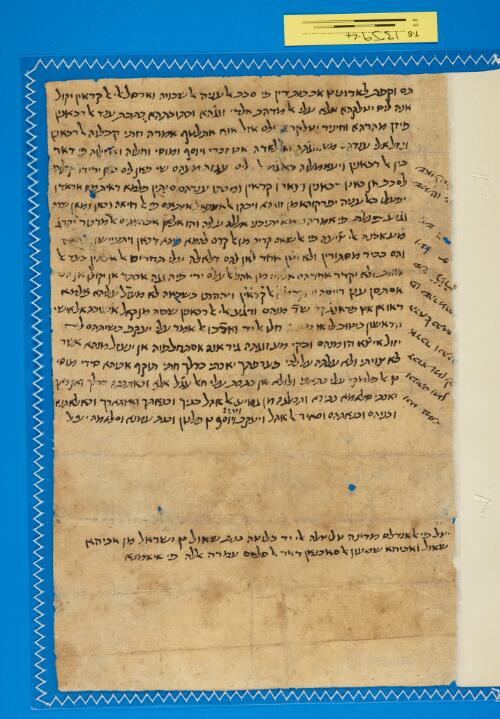
Verso:
- תם וקפת לאדונינו אב בית דין פי סבב אלעניה אלשכויה וארסל אלי אלקראין יקול
- אנה ליס יטלקהא אלא עלי אלמדהב אלדי זוגהא וכתובתהא כתבת ענד אלרבאנין
- פיזן מהרהא וחיניד יטלקהא ולם אזל אנא אתלטף אמרה חתי קבלוה אלרבאנין
- ונזל אלי ענדהם מע זוגתה ואולאדה אבו זכרי ויוסף ומוסי וחלוה ואנזלוה פי דאר
- בין אלרבאנין ויעאמלוה באלגמיל ליס עגזה מעהם שי פאן ליס כאן ירידו יקבלוהם
- לסבב אן כאנו רבאנין וצארו קראין ומכתו ענדהם סנתין פלמא ראית מא אראדו
- יפעלו באלעניה יפרקוהא מן זוגהא ויבקו אלאטפאל איתאם פי אלחיאה וכאן זמאן שדה
- וגוע פעלת פי אמרהם מא יתיבני אללה עליה והו אלאן אבראהים אלמדכור יכרג
- מע אבנה אלי ציעה פי אלשאם קריב מן אלקדס להמא פיהא דכאן ויתעיישו [פי]הא
- והם בכיר מסתורין ולא יטן אחד לאן להם דלאלה עלי תחרים אלאכתין בעד אל
- מות ולא יקדר אחדהם אליום מן אהל אלעלם ירי פיה וגה אכתר אן יקולו אן הכדי
- אסתסן ענן רייסהם וקדמון אלקראין ויבהתו בשבאה לא מעול עליהא פלמא
- ראו אן אבן פדאנג קד שד מנהם ורגע אלי אלרבאנין שביה מן קאל אשובה אל אישי
- הראשון כי טוב לי אז מ[עתה] חלו אליד ואדכו אלאמר עלי יעקב כשיתהם אלא
- יזול איצא הו מנהם ובקי מע זוגתה גיר אנה אסתחלפוה אן ינעזל מנהא אשר
- לא ציויתי ולא עלתה על לבי פערפתך יאכתי בדלך חתי תוקף אכוהא סידי מוסי
- בן אלפלמקי עלי כתאבי ולולא אן כתבת עלי חאל עגל אלא וכאתבתה בדלך ואקראך
- יאכתי סלאמא כבירא ותבאלגה מן גמיע אלאהל בניך ובנאתך ואצהארך וכאלאתנא
- ובניהם ובנאתהם וסאיר אלאהל ויעקב //ו....// ויוסף בן פלכון ובנת עמנא וסלאמה יעל
(right margin)
- ובנו עמנא
- ובניהם ומן
- דכרת ומן לם
- אדכר וכתבת
- הדא אלכתאב
- פי שהר מרחשון
- סנה תתיח
- ושלום
- ויש[ע] ר[ב]
- שמעון ביר
- שאול סט
(down)
- יצל פי אלאנדלס מדינה טליטלה אלי יד בלוטה בנת שאול בן ישראל מן אביהא
- שאול ואכיהא שמעון אלסאכנאן דאר אלסאלם עמרה אללה פי איאמנא
Verso
- I then updated our lord, the president of the court, about the poor captive woman and he sent a message to the Karaites that said
- that he could only divorce her according to the doctrine by which he had entered into marriage with her and that his marriage certificate had been issued by the rabbis.
- He would pay her dowry and then he would divorce her. I continued to follow the matter until the rabbis received him
- and he stayed with them along with his wife and children, Abū Zikrī, Yosef, Mūsā and Ḥalwa. They lodged in a house
- amongst the Rabbinites and they treated him well, they lacked for nothing and although they did not want to take them in
- because, as Rabbinites, they had become Karaites and had stayed with them for two years. When I saw what they wanted
- to do with the poor woman, to separate her from her husband, making the children orphans in the world, at a time of hardship
- and famine, I did for them what God will reward me for. Now he, the aforementioned Ibrāhīm, has gone
- with his son to a village in the Levant, near Jerusalem where they have a shop that provides them with sustenance.
- They are well, respected and nobody is of the opinion that there is evidence by which the two sisters are prohibited to him after
- death. To this day, none of their specialists can offer proof that there is another possibility in his case except to affirm that this
- was customary with Anan, their leader, and the ancient Karaites, without getting tangled up in thorn bushes that should not be torn up. When
- they saw that Ibn Fadānj fled from them and returned to the Rabbinites, similar to he who said: I return to my first
- husband because I was better then than now (Hosea 2:9), they slackened the rope and excused the matter of Jacob, fearing that
- he would leave them as well. He stayed with his wife, although they took testimony from him that he would separate from her, which
- I did not command nor did it enter my mind (Jeremiah 7:31). I am updating you about this, my sister, so that you show his brother, my lord Mūsā
- al-Falmiqī, my letter. If I were not writing in such an improvised manner, I would have written to tell him so.
