Letter: T-S 13J24.8
Letter T-S 13J24.8What's in the PGP
- Image
- 1 Transcription
- 1 Translation
Description
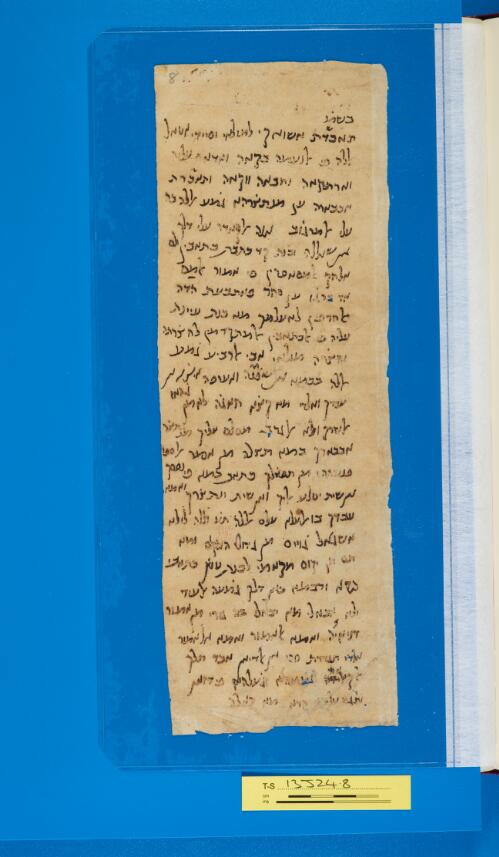
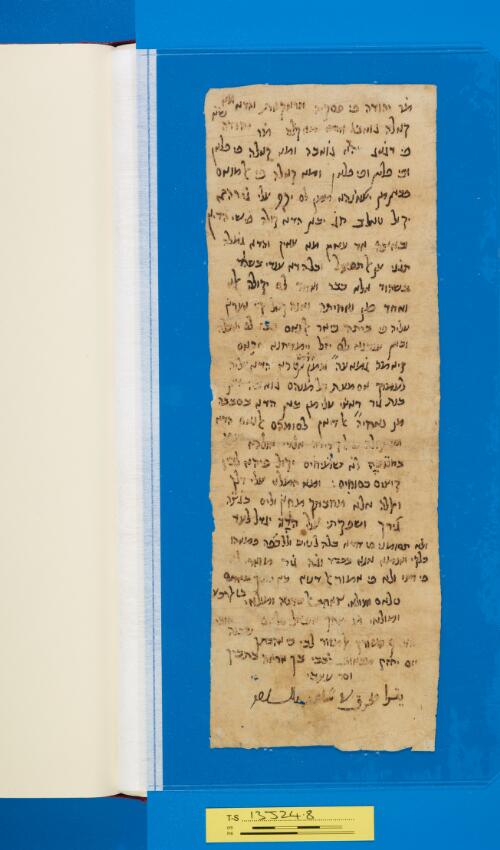
Letter from Abū l-ʿAlāʾ, in Alexandria, to Ḥalfon b. Netanel, in Fustat. Dating: 1141 CE. Abū l-ʿAlāʾ reports on quarrels and intrigues within the Alexandrian community regarding the visit of Yehuda ha-Levi and also includes information about the compilation of Yehuda ha-Levi's new poems in a dīwān. He adds a clandestine postscript in Arabic script, "Burn after reading." (Information from Frenkel.)
Tags
Editor: Frenkel, Miriam
Translator: Scheindlin, Raymond P. (in English)
T-S 13J24.8 1r
Recto
- בשמ
- תאכדת אשואקי למולאי וסיידי אטאל
- אללה פי אלנעמה בקאה ואדאם עלוה
- וארתקאה וחבאה ווקאה ותאכרת
- אכבארה ען מנתצרהא גמע אללה בה
- עלי אלמרגוב אנה אלקאדר עלי דלך
- אן שאללה וכנת קד כתבת כתאבין ולם
- אלחק אלמסאפרין פי אמור אלמס
- אד כרגו ען סחר פאתבעת הדה
- אלחרפין לאעלמך מא כנת עיינת
- עליה פי אלכתאבין אלמתקדמין לחצרתה
- וחצרה מולאי אבי אלרביע גמע
- אללה בכמא אן שאללה ואערפה איצא אן
- עבדך ואלדי מא קצא חאגה לא מן גהאז
- אלשרק ולא אלגרב מסלם עליך מנתצר
- אכבארך במא תצלה מן אמר אלספר
- פנשתהי מן תפצלך כתאב במא פי נפסך
- אן שית יטלע אליך ואן שית ינתצרך ואמא
- עבדך בו אלעלא עלם אללה תע ואללה לולא
- אשגאל גויים מן גדולי המקום ומא
- תם מן יקום מקאמי לכנת עוץ כתאבי
- הדא ורבמא כאן דלך גמעה אלעיד
- ולא אבאלי מא יבאלי בה גירי מן אמור
- דניאיה ואמא אלאמור ואמא אלאמור
- אלדי תגדדת פהי אן אלדיאן אכד תלך
- אלקצ[[ידה]]/איד/ גמיעהא וגעלהא פי דיואן
- ות/ר/גם עליהא הדא מא קאלה
In Your Name.
My longing for my master—may God grant you long days of happiness, make your high rank and greatness endure, protect you and keep you!—has intensified. News of you was delayed longer than expected. May God bring me together with you as is desired, for He is the One Who is capable of doing so, if He be willing.
I had already written two letters about the tax but could not reach the travelers in time with this third, for they left at dawn, so I am sending these few lines after them to inform your honor and his honor, my master Abū l-Rabī‘—may God bring us all together, if He be willing!—what I had explained in the previous two letters. I also want to let you know that your servant my father has not purchased any provisions, whether of east or of west. He greets you and awaits word from you regarding the journey. We long for you to be so good as to write us about your intentions. If you wish, he will come up to you, and if you wish, he will wait for you here.
As for me, your servant Abū l-‘Alā, I swear and God knows that if I were not tied up with Gentiles (in fact, with some of the most prominent of this city) and if there were someone here who could take my place, I would substitute myself for this letter. Perhaps that will be during the week of Passover, for I do not care about the kind of worldly things that others do.
As for the news here: the judge took all the poems and made them into a dīwān, with headings such as, “This is the poem that
T-S 13J24.8 1v
Verso
- מר יהודה פי פסקיה וזראקאת והדא מא
- קאלה גואבה והדא מא קאלה מר יהודה שץ
- פי דגאג וה/ד/א גואבה ומא קאלה פי פלאן
- ופי פלאן ופי פלאן ומא קאלה פי אלמנאם
- פכאן מן יעא/י/נהא ממן לם יקף עלי גירהא
- יקול טאלב חג יכון הדא קולה פי שי הדיאן
- וכאצה אד עאין מא עאין והדא גמלה
- תגני ען אלתפציל וכל הדא ענדי בשה/ו/ד
- בשהוד אלא כבר ואחד לם יקולה אלא
- ואחד מן נאחיתה ואנה קאל קד אערץ
- עליה פי ביתה כיאר אלנאס כבז לם יאכלה
- וכאן ענדנא לם יזל וימדחנא פקאם
- קיאמה גמאעה ממן //אצמר// אן טרא הדא עליה
- לעמרך אסמעת כל מנהם גואבה ואן
- כנת גיר ראצי עלי מן כאן הדא בסבבה
- מן נאחיה אלדיאן לסומהם אלנאס הדא
- ופי קולה פי אלקצידה אלדי אולהא סעפי
- בחנוכה לא שמחים יקול פיהא לבין
- קוצים כסוחים: ומא חמלני עלי דלך
- ואללה אלא מחבתך מחץ וליס בגצה
- גירך ושפקתי עלי ה/ו/דה יגדל לעד
- ולא תסומני פי הדא כלה לטיש וללכפה פמא הו
- כלקי ואנמא אנא בפרד וגה גיר מוארי לא
- פי דיני ולא פי אמור אלדניא כץ נפסך באתם
- סלאם ומולאי צאחב אלשרטה ומולאי בו אלרביע
- ומולאי מ יצחק אפצל סלאם
- הוסיף מזורך אל מזור לבי כי אהבתך שכנה חובי
- יום יחזק מכאוב לבבי בך אראה כתביך
- וסר עצבי
- يقرا ويحرق في ساعته والسلام
Verso
Master Judah recited about a pool and a fountain” and “This is what he said in reply”; “This is what Master Judah (may his Rock protect him) recited about chickens” and “This is his reply”; and what he said about this, that, and the other person, and “What he said in a dream.” People who saw them [the poems] and hadn’t seen that sort of thing were saying, “How can a man who has declared himself a pilgrim be speaking such nonsense?”—especially when he saw what he saw. I was told these things by several witnesses. One incident was only reported by a single person of the judge’s circle, according to whom he [Ibn al-‘Ammānī] said, “One of the top men of the community offered Halevi bread in his house, and he refused to eat it; but he has been with us and does not stop writing panegyrics about us.” This caused a great uproar among people who were angered that this had happened to him. I swear, I gave everyone the answer that he deserved, though I am really displeased with the one in the circle of the judge who was the cause of all this because he caused people embarrassment.
In addition, [he was criticized for] the phrase “thorn-bush cuttings” in his poem with the first line “Unhappy Are My Thoughts This Hanukkah.” . . . The only thing that led me to mention this, by God, is pure friendship for you, not anger at anyone else, and my caring for your dignity (may it ever be great!). Do not task me with thoughtlessness or frivolity. This is not my nature. I have only one face and I do not conceal a thing, either in religious or worldly affairs.
Special greetings to you for your best welfare. Also the best of greetings to my master the Ṣāhib al-Shurṭa, my master Abū l-Rabi‘, and my master Isaac.
Put your healing on my heart’s wound, for your love lives deep inside me. When I’m sad because you’re absent, looking at your writing heals me.
[In Arabic characters:] Read and burn immediately. Peace.
