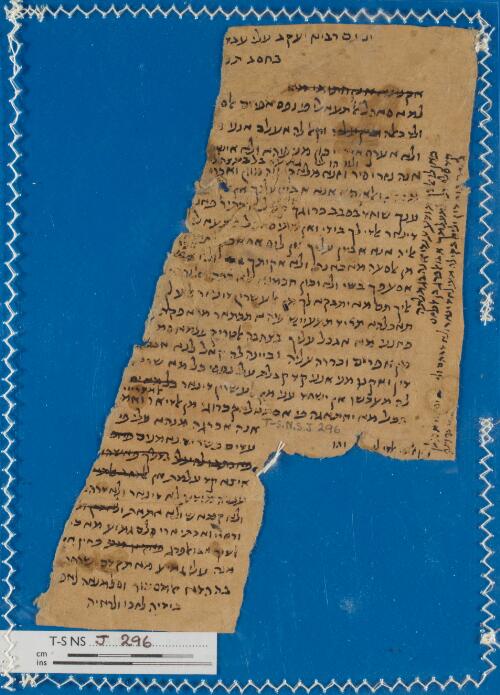
List or table: T-S Misc.28.51 + T-S NS J296
List or table T-S Misc.28.51 + T-S NS J296What's in the PGP
- Image
- 1 Transcription
Description
Inventory of the two Rabbanite synagogues in Fustat, including silver vessels and expensive fabrics and carpets that were given to Maḥfūẓ, the beadle of the Shāmī synagogue. Signed by Ḥiyyā b. Yiṣḥaq. Dated: Av 1470 Seleucid (July-August 1159 CE(. The right side of this document is T-S Misc.28.51 and the left side is T-S NS J296. This was previous described as "Responsum of a Babylonian Gaon" on PGP. Handwriting may be that of Meʾir b. Hillel b. Ṣadoq. Information from Med. Soc. and from Amir Ashur From Goitein's passage on this document in Mediterranean Society, IV, pp. 124–25: "The flexibility of terms for what we call carpet reflects the variety of uses for the same textile. This is beautifully illustrated by comparing two inventories of the synagogues of the Palestinians and Iraqians in Fustat from the years 1159 [this document] and 1201 [Moss. IX,163 (PGPID 2757)] with two others from the eleventh century. In the later documents a section is devoted to the anmāṭ, the term from which anmāṭī, carpet dealer, is derived. The passage in the 1159 inventory says: "The anmāṭ for the two synagogues: Three for the Tora scrolls, decorated with gold threads 'mixed' with niello; one smaller one, of the same type, for the scroll of the readings from the Prophets; two red ones 'mixed' with gold threads; twenty-two namaṭs made of brocade and siglaton; one for rotation; 110 and nine others, partly old and partly worn-out; a piece of cotton woven with cotton, twenty cubits long." The twenty-two namats were the carpets covering the floor of the synagogues, as proved by comparison with an inventory from the year 1075, where mats of different descriptions do the same service (see below). The two red namaṭs decorated with gold threads formed the hangings on the holy arks in the two synagogues, described as "curtains" in the eleventh-century documents. Finally, the namaṭs for the Tora scrolls (not "worn" by them, as is customary today, but put over them as a cover when they were taken out of the ark) were artistically decorated but otherwise of the same material (brocade or siglaton) as the floor carpets and were therefore called by the same name. "The inventory from which the translated passage is taken was written in 1159, when a new beadle took over. We may assume that it was made also because some or many of the possessions of the synagogues had been lost during the terrible period of internecine wars and anarchy experienced by Egypt in the 1150s. The assumption is even safer with regard to the list of the anmāṭ found in the two synagogues in October 1201. A low Nile caused famine, followed by epidemics and a complete breakdown of the public order. It is possible that the inventory, of which only the part on the anmāṭ is completely preserved, was compiled before everything was hidden away in a safe place. "The list has some interest for our purpose. Each textile is called namaṭ and is defined by its dominant color (red, three times, orange, twice, wine-colored, yellow, black, and so on) or by its make, ʿaṭṭābī, tabby, listed five times. Six of the twenty-four pieces were decorated with gold threads or "mixed" (gold and other threads), which means that they served as covers or hangings. Of the namaṭs covering the floor one is described as "made in the House," namely, the Carpet House of Fustat, that is, locally manufactured, and not imported as most others, and another as "a physician's carpet," namat tabibī."
Editor: Goitein, S. D.
T-S Misc.28.51 1v
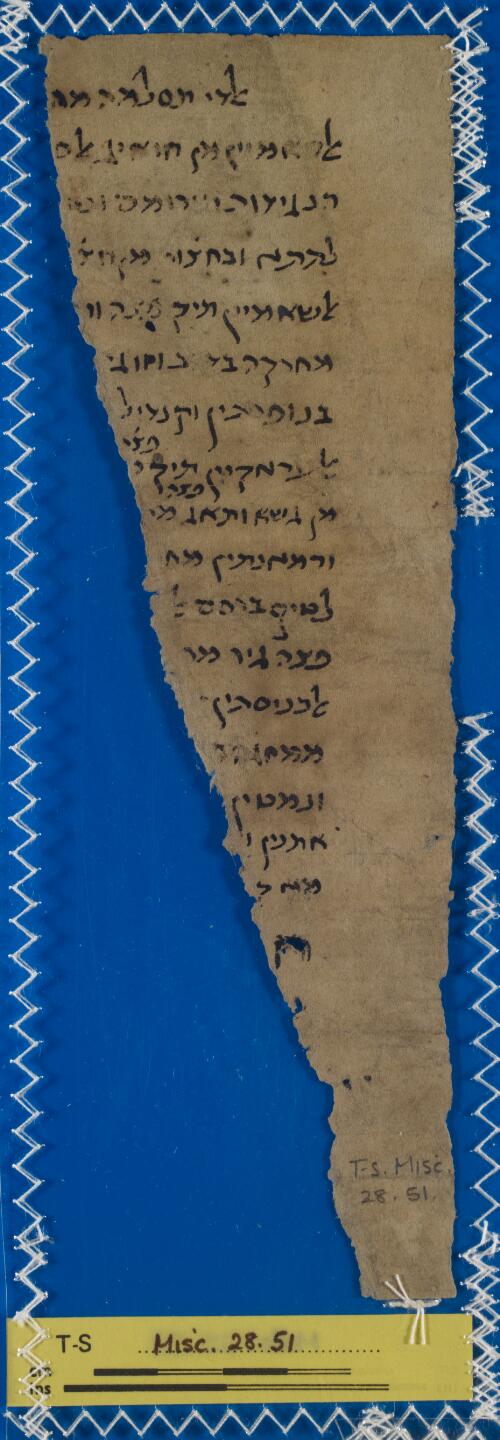
T-S Misc.28.51v + T-S NS J296r
- אלדי תסלמה מח]פוט שמש כניסה
- אלשאמיין מן חואיג אלס]פרים אלמכרמה באמר הדרת
- הנגידות תרומם ובח]צורנא אנו בית דין דחתימין
- לתתא ובחצור מן חצ]ר מן אלזקנים תסלם לכניסה
- אלשאמיין תיק פצה ור]אג פצה מחרק בדהב וזוג רמאמין
- מחרקה בדהב וזוג] רמאמין מגרייה בסואד אחדהם
- בנופרתין וקנדיל] פצה וסלסלה פצה ותסלם לכניסה
- אלעראקיין תיק פצ]ה עלי כשב ותיק תאני פצה כאלצה
- מן גשא ותאג פצה מח]רק בדהב ותאג תאני פצה מגרי סואד
- ורמאנתין מח]רקה בדהב וזוגין רמאמין פצה מגריה סואד וזוג
- לטיף ברסם אל]אפטארה וקנדיל פצה מחרק בדהב וקנדיל תאני
- פצה גיר מח]רק וסלסלתין פצה ומן אלאנמאט ברסם
- אלכניסתין [[נ]מט ממזג]] תלתה אנמאט ללאספאר מדהבה
- ממזגה ב]סואד וואחד לטיף מן נמודגהם ברסם אלאפטארה
- ונמטין] חמר ממזגה בדהב (ונמט:desare) ואנמאט דיבאג וסקלאטון
- אתנין ו]עשרין ונמט לדור ותסעה דיבאג פיהם קדם ופיהם
- מא ק]ד תקרץ ושקה קטן פי קטן טול עשרין דראע
(Signatures) (The left side is torn from here to the end of the page)
- חי)יא בר יצחק נ"ע
- י)עקב הכהן בר יוסף
- וכאן תסלים גמיע דלך בחצרתנא
- אב אתע לשטרות
T-S NS J296 1r
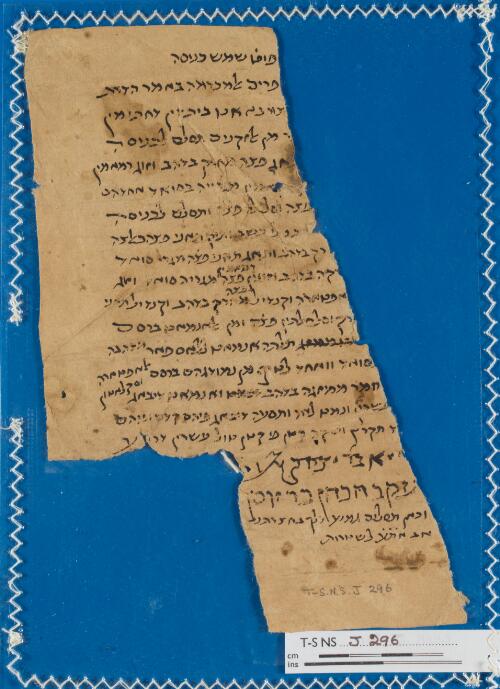
T-S Misc.28.51 1r
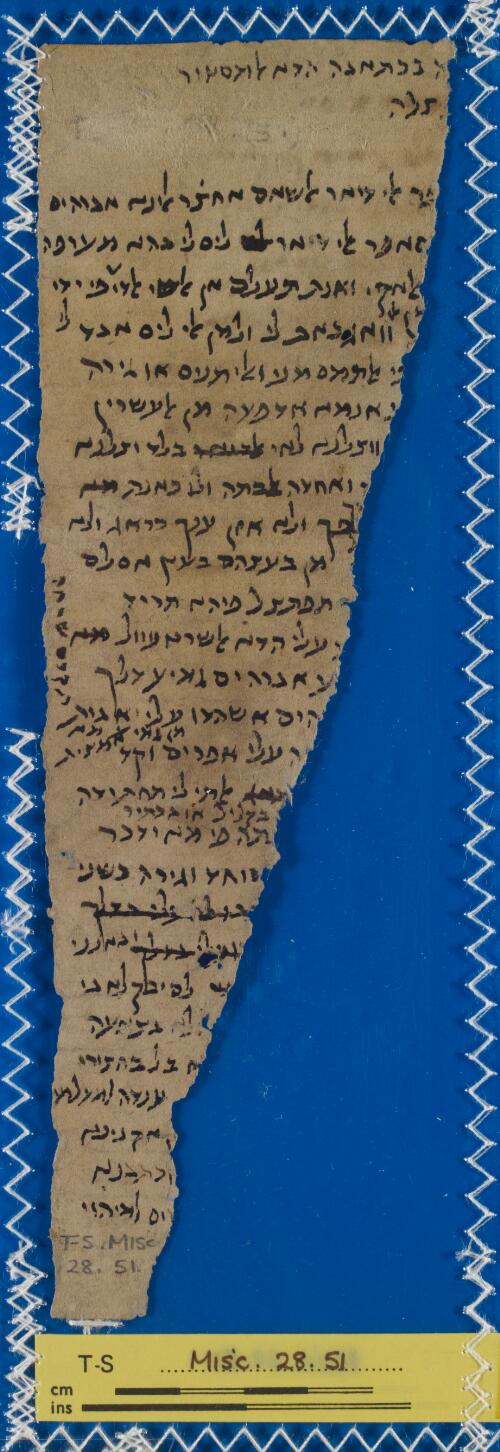
TS Misc Box 28, fol. 51 verso
- בכתאבה הדא אלמסטור
- קבל אן תסא]פר אלי דיאר אלשאם אחצר אלינא אברהים
- אנא מסאפר אלי דיאר ליס לי בהא מערפה
- ואנת תעלם מן אלשי אלדי פי ידי
T-S NS J296 1v