رسالة: T-S 24.46
رسالة T-S 24.46What's in the PGP
- صورة
- 1 Translation
الوصف
Letter to Yaʿir b. Elʿazar (b. Yaʾir ha-Shofeṭ), opening with biblical citations such as Psalms 20:2–5 and 128:5–6, followed by a lengthy Hebrew introduction. He wants work as a teacher or in business. He refused to accept a gift of money by Abū l-Faraj al-Ṣayrafī, but after having had losses in a transaction of mercury and being without work since his arrival in Fustat a year and three months prior, he needs help, especially as the holidays are drawing near. (Information from CUDL and Goitein's index card.) Same writer: and T-S 12.780 (PGPID 1696) and ENA 2594.12 (PGPID 5721).
Translator: Cohen, Mark (in English)
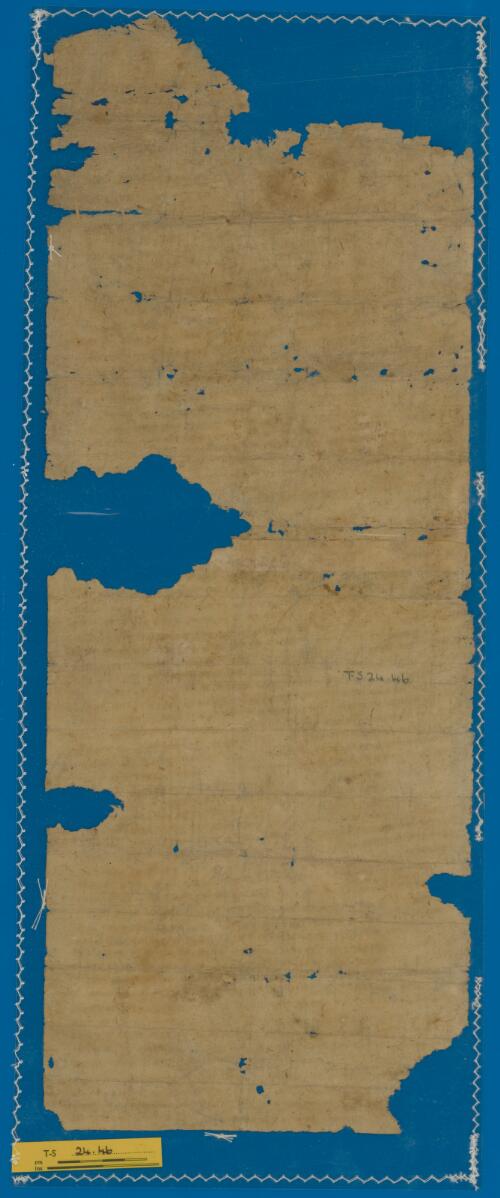
T-S 24.46 1r
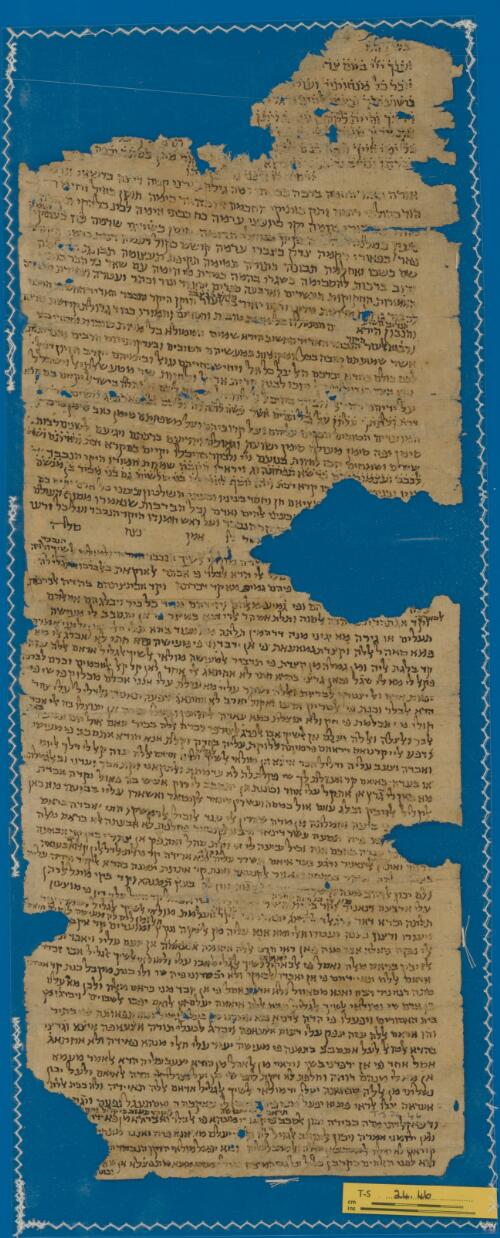
I tried hard for the year and three months that I have been in Fustat to eke out a living through teaching or something else, so that I could get two or three dirhems (a week) to improve my situation [...]. I turned to various people to set me up with a livelihood, so that I wouldn't reach the point I have come to. Among the people I turned to to set me up with a livelihood was my master the illustrious elder, may God perpetuate his honor, but he told me, "I have no work." It was my intention thereby not to have to appeal to anyone, for the sages, may their memory be blessed, said: "One should die before becoming dependent upon other people."As God is my witness, I did not intend to talk to a single being in this city about this. When I was on the way here I prayed, "O Lord, I shall not appeal in need another time." The proof of what I say is that I did not talk about it and did not conduct myself the way cantors and scholars do to get the maximum possible contribution. God knows that in my first year, on the Ninth of Av, the elder Abuʾl-Faraj the banker, may God remember him for good, gave me a bag of dirhems but I threw it back at him immediately, saying: "I can take care of my own livelihood." He took it back and felt bad. Another proof is that my master // the illustrious // elder, your son, may God make his honor permanent, said to me that day or a few days later, “I have put something aside for you," to which I answered, "May you always be there for me. By God, you also promised me something another time." In sum, I did not intend to burden anyone and allI was hoping to do was to eke out a living.
(The next lines, partly damaged, describe an investment he made in a quantity of mercury [zaybaq], which resulted in financial loss and also allude to the writer's debts, rent he owed, and his liability to the poll-tax collector.)
I have told (you), my master the illustrious elder—may the Rock protect you and help you and may you be enveloped by the will of God—about my situation and my straitened circumstances and my loss, // for he who has no livelihood has no life [...]. (The writer goes on to ask the addressee to help him out with the investment, which, had he had luck, would have yielded a profit of six dinars.)
My master the illustrious elder, may God lengthen your days, knows that people redeem captives and they get out of prison and accomplish in this world what they can to do good, and a great deal more. May you, may God perpetuate your honor, expend double that which people pray for from you and also give double to scholars.
My intention by this request is to eke out a living with the proceeds so that I can improve my situation and not have to ask anyone to support me. Dependent upon me are family members upon whom this is very hard, and besides, they give me no peace. I swear I have not provided them the taste (of food) the time I arrived here until today. I hope my rescue will come from God, may He be praised, and from my illustrious master, may God perpetuate your authority. To
you, may God destroy your enemies, belongs the lofty decision about what to do for me.
(The last four lines are partly damaged.)
T-S 24.46 1v