رسالة: T-S 6J3.13
رسالة T-S 6J3.13What's in the PGP
- صورة
- 1 Transcription
الوصف
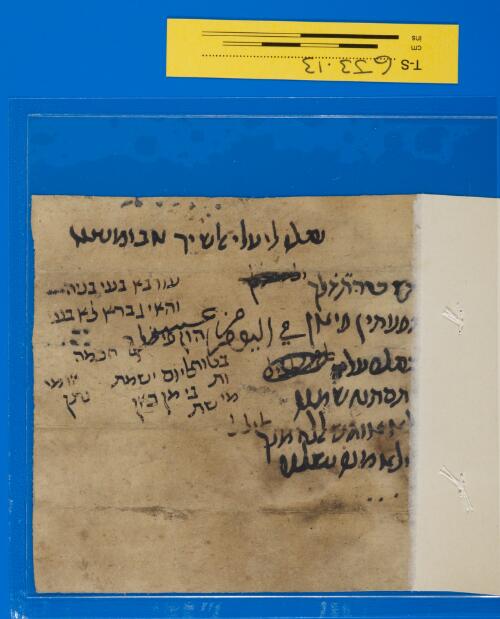
Earlier document: Letter from a certain Abū Saʿd (aka Seʿadya) to three addressees: David, someone else (Avraham?), and someone called only al-Ḥasid. In Judaeo-Arabic. Dating: Probably 13th century, based on handwriting and typical titles and names (it might be possible to narrow this estimate). The letter conveys personal wishes and sadness to have missed the addressees in synagogue on the past Shabbat and also to miss them on the coming Shabbat. The postscript reports that "our master" (sayyidnā, i.e.., the head of the Jews) told the sender that the addressee needs (or: has nothing more belonging to him except) flour and meat. Later document: One of the addressees of the original letter crossed out all of the honorifics and terms of self-abasement, inverted them, and added a brief response to the letter, partially in between the lines and mainly in the margin of recto and spilling over onto verso. The sender of the response says only that he too missed the sender of the original letter and twice urges him to greet Abū Manṣūr the cantor on his behalf. For other cases of the addressee inverting all the abasement/honoring clauses and sending back the same note, see T-S 6J5.18, T-S 8J16.1, and Bodl. MS heb. f 101/43. ASE
Editor: Goitein, S. D.
T-S 6J3.13 1r
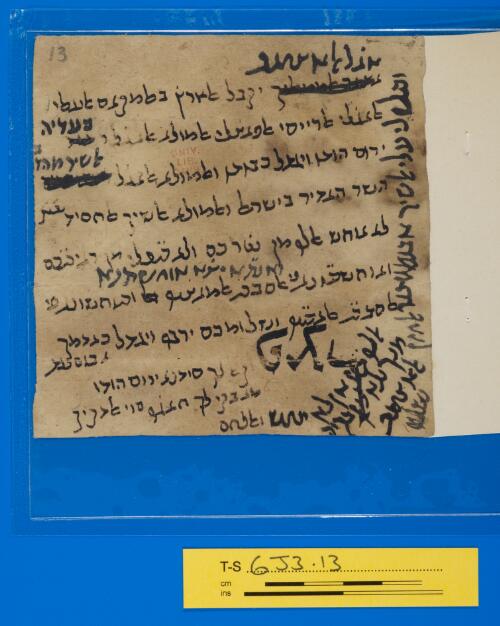
- [[אצגר אלממאליך]] //אגל אלאצחאב// יקבל אלארץ באלמקאם אלעאלי
- אלאגלי אלרייסי אלפאצלי אלמולא אלאגל ר [[דוד]] //סעדיה//
- ירום הודו ויגדל כבודו ואלמולא אלאגל [[ר . . . . .]] //אלשיך מהדב//
- השר האדיר בישראל ואלמולא אלשיך אלחסיד שצ
- לא אוחש אללה מן נטרכם ולא תכלי מן ראיתכם
- ואוחשתונא פי אלסבת אלמאציה //ואנת איצא אוחשתנא//[[. .]] ותוחשונא פי
- אלסבת אלאתיה ושלומכם ירבה ויגדל כאדמך
- אבו סעד
- וקאל לך סידנא ירום הודו
- מא בקי לך חאגה סוי אלדקיק
- ואללחם
T-S 6J3.13 1v
Recto, right margin:
- וסלם לי עלי אלשיך אבו מנצור אלחזן ושלום
- אללה תע אן לא יוחש
- מנך ולא מן בקיה
- אלאצחאב
Verso:
- וסלם לי עלי אלשיך אבו מנצור
- קד כררת דלך
- דפעתין פי אן
- תסלם עליה
- תסתוחש מנה
- לא אוחש אללה מנך
- ולא מנה ושלום
