رسالة: T-S NS 297.6
رسالة T-S NS 297.6What's in the PGP
- صورة
- 1 Transcription
- 1 Translation
الوصف
Letter in Ottoman Turkish. Dating: 1594–1689 CE, based on the legible numerals 10[..] AH, but probably toward the beginning of this date range per Hathaway (p. 83). In the introduction to her edition, Jane Hathaway notes: "This letter, in Ottoman Turkish.... deals with competition over revenue-collection rights for Damietta’s customs in the context of delivery of the tribute known as māl-i mīrī, which Egypt sent to Istanbul each year, usually through Damietta and Alexandria.... It is written in a rather hasty hand on a sheet of paper that is torn at the upper left and right corners and that has deteriorated around the edges; it is also stained on the left edge and smudged on the right, while the ink has faded significantly. Since the writing runs all the way to the edges of the page, except at the top, these qualities make the document all the more challenging to read. The author is presumably Aḥmed ibn Yūsuf, whose partially illegible seal appears on the document’s verso. He appears to be an agent of the newly- appointed tax farmer (Ottoman Turkish, mültezim; Arabic, multazim) to whom the letter is addressed. The tax farmer thus must not yet have arrived in Damietta; he may be in Cairo.... Aḥmed’s letter addresses the above-mentioned customs tax farmer, whom the author calls ‘Çavuş Bey efendim ḥażretleri’. This might seem an implausible string of titles, yet most of them make sense in a late sixteenth- or very early seventeenth-century context.... The villain of the document is one Ḥusām Reʾīs, the former director of Damietta’s customs operations, who, the letter implies, will not allow the agents of his replacement to do their work.... Even though the letter’s author refers to the ҫavuş as mültezim and implies that Ḥusām Reʾīs preceded him as holder of his iltizām, he goes on to recount giving the iltizām to the woman Ḥūrīya, a ‘comber’, presumably of flax, which grew abundantly in the Egyptian countryside.... At the heart of the letter-writer’s complaint against Ḥusām Reʾīs is the timely shipment to Istanbul of the māl-i mīrī, for which the customs directors of the Mediterranean ports bore a disproportionate share of responsibility. The writer accuses Ḥusām Reʾīs of delaying the māl-i mīrī by refusing to turn over his accounts to his replacement’s representatives and interfering in local fiscal assignments critical to the assemblage and dispatch of the provisions." (Hathaway, Ottoman-Era Documents from the Cairo Genizah, 82-87)
Editor: Hathaway, Jane
Translator: Hathaway, Jane (in English)
T-S NS 297.6 1r
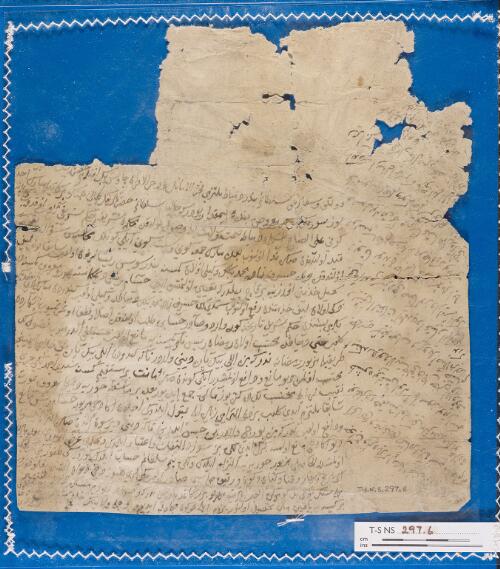
Recto, main text
-
Devletlü ve saʿādetlü sulṭānım bender-i Dimyāṭ mültezimi faḫru’l-emāsil ve züḫrü’l-aḳrān çavuş bey efendim ḥażretleri[nin ḫāk-ı pāy-ı şerīflerine]
-
yüz sürdükden [ṣoñra], maʿrūż-ı bende-i bī-miḳdār budur ki ḥāliyā sulṭānım ḥażretlerinin ʿālī himmetinize berekātiyle mübārek Eḥad
-
güni ʿale’ṣ-ṣabāḥ iskele-i Dimyāṭ’a sıḥḥat ve selāmet ile vuṣūl bulduḳda, bi-ḥikmet-i şerīfe ḥükm-i şerīfi alub, oḳudub, ve sicillātına [?]
-
ḳayd olunduḳdan ṣoñra nidāʾ olunub, baʿdehu mübārek Cumʿa güni ve Sebt güni iki günlük muḥāsebesin suʾāl ü tefaḥḥuṣ
-
olunduḳda bunda Ḥusrevzāde Meḥmed Bey’in vekīli olan kimesne—[ki] Bender-i Süveys rüesāʾlarından olub sābıḳā bunda līfi
-
keyl ḫizmeti üzerine birḳaç yıldır ki taʿyīn olunmuş idi. Ḥusām Reʾīs dimekle meşhūr ve maʿrūf olan kimesnedir;
-
zikr olan līf ḫizmetinden refʿ olunub, şimdilik Ḥusrevzāde Meḥmed Bey’in Dimyāṭ’da vekīli olub—kendüden mübārek Zī’l-ḳaʿde’nin
-
yiğirmi beşinden ḥükm-i şerīf tārīḫine göre vārid ve ṣādır ḥesābın ṭaleb olunduḳda aṣlā ve ḳaṭʿā uġratmıyub, inkārdan
-
gelüb, ḥattā Dimyāṭ’da muḥtesib olan Ramażān Reʾīs nām kimesneye māniʿ olub, muḥtesibliġi aldırmayub, fużūlluk
-
tarīḳiyle mezbūr Ramażān’a ‘Nedir ki bize elli bin pāra deyni vardır tā ki kendüden elli bin pārayı ḫalāṣ etmeyince
-
muḥtesib olmaz’ deyü māniʿ ve dāfiʿ olmuşdur. İki günden ṣoñra emānet[en] bir mustaḳīm kimesne Seydī Aḥmed Yeñiçeri
-
naḳībler ile muḥtesiblikde gezeyor, mālın cemʿ ideyor. Baʿdehu bir māşiṭa Ḥūrīye dimekle maʿrūf ʿavret
-
sābıḳā mültezim idi gelüb, bizden iltizāmı ziyāde ile ḳabūl eyledüği ecilden ana daḫi mezbūr Ḥusām Reʾīs māniʿ
-
ve dāfiʿ olub, ‘Nedir ki bize borcı vardır? Biz ḥabs ideriz, tā ki deyni virsün, andan ṣoñra iltizām eylesün’
-
deyü ana daḫi māniʿ olsa gerek idi, lakin biz sözüne iltifāt ve iʿtibār eylemedik ve maḥkemede ʿarż olduġı maʿlūmları
-
olmuşdur. El-ḥāsılı mezbūr Ḥūrīye’ye iltizām eyledik ve- lakin benim sulṭānım, ḥesāb eyledik, gördük ki ṭoḳuz geminin yüki
-
eğer pirinç ve bahār ve ḳınā ve kettān ve gyūn [?] ve raḳīḳ cümlesi ṣādır olub, gemileri henüz daḫi dīvān altında baġlu ṭuruyor,
-
cümlesinin yükinin gümrüğün alub, ellerine mühürlü birer kāġıd yazub, ‘nedir ki vuṣūldür’ deyü vermişlerdir. El-ḥāṣılı
-
bir kīseye yakın māl taḥṣīl olunur. Bizüm ile her gün mücādele idiyor, ve cümle vilāyetin ḫalḳı ...
Recto, margin, upside-down
-
Cevāb virdiler ki ‘iskele iҫinde olan...
-
eğer pirinç ve ġayrī cümle ṣādır olan nesne mā dām ki
-
boġazdan çıḳmamış ola, yeni mültezimindir, meğer boġazdan
-
ṭaşra bulunmuş ola ana söz yoḳdur, eski
-
emīnindir’ deyü vilāyet ḫalḳı ve ehl-i ḫaber ve ehl-i vuḳūf
-
cümlesi şöylece cevāb virdiler: aṣlā mezbūr Ḥusām
-
Reʾīs iltifāt eylemedi ve iʿtibār itmedi, ‘Nedir ki
-
ben alayım, siz daḫi ṣafānuz var ise, alun’
-
deyü ḳānūndan ḫāric ...şdiler. Eyle
-
olsa, sulṭānım ḥażretlerinden ricādır ki bu mektūb
-
vuṣūli bulduḳda, bir ān ve bir sāʿat ihmāl ve terāḫī
-
itmiyüb, bir muḥkem ve müʾekked ḥükm-i şerīf [ ]
-
idüb, irsāl idesiz ki ġāyet ile lāzım
-
zīrā biz [ ]dikleri māl-i mīrī taḥṣīl olunur [ ]
-
[ ] el-duʿā [ ]
-
Taḥrīren fī yevmi’l-[ ] şehr-i Zi’l-ḳaʿde
-
ul-ḥarām min [sene] [ ] eyn/īn ve elf [ ]
Recto, main text
-
My honoured and esteemed lord, the tax farmer of the port of Damietta, the pride of the exemplary and first among equals, his excellency Çavuş Bey efendim:
-
[After] rubbing [my] face [in the dust under your feet], the report of the worthless slave is as follows: My lord, when I, with blessings for your lofty influence, arrived on blessed Sunday
-
in the morning, safe and sound, at the port of Damietta, by the noble [divine] wisdom, I took out the imperial order and had it read aloud, and after it was recorded in the register,
-
it was proclaimed [publicly]. Afterward, when the two-day account for blessed Friday and Saturday was investigated,
-
we asked the person who serves here as Ḥusrevzāde Meḥmed Bey’s agent—who was one of the ship captains of the port of Suez and had previously been
-
appointed to the date palm fibre weighing service here several years earlier. He is a person known as Ḥusām Reʾīs;
-
he was removed from the aforementioned palm fibre service and has now become Ḥusrevzāde Meḥmed Bey’s agent in Damietta—to give us an account, covering the period from the 25th of Zī’l-ḳaʿde the blessed
-
until the date of the noble order, of all imports and exports, but he absolutely refused to comply, rejecting us
-
and even impeding the [new] market inspector of Damietta, someone named Ramażān Reʾīs. He [Ḥusām] did not allow him to take up the market inspectorship, but unjustly
-
hindered and impeded the aforementioned Ramażān, saying, ‘Why [does he still] have a debt to us of 50,000 pāras? Until he pays the 50,000 pāras,
-
he can’t be market inspector’. Two days later, as a [temporary] administrative measure, an upright person, Seyyid Aḥmed the Janissary,
-
is going around with the naqībs, carrying out the task of market inspection and collecting revenues. Afterward a comber, the woman known as Ḥūrīya,
-
who had previously been the tax farmer, arrived, and because she had accepted the tax farm from us at an increase, the aforementioned Ḥusām Reʾīs hindered and impeded her, too,
-
saying, ‘Why does she still owe us money? We will imprison [her] until she pays the debt; after that she can farm the taxes [again]’.
-
It would have been necessary for us to stop him [from imprisoning her], but we could not respect his authority and, as you know, we filed a petition in the [law] court [lit., ‘that there was a petition in the [law] court’].
-
Ultimately, we awarded Ḥūrīya the tax farm,32 but, my lord, we did the accounts and saw that nine shiploads
-
of rice, spices, henna, flax, and a variety [?] and slaves have all been exported, but the ships are still stuck in customs.
-
All of their [the ships’] cargo has paid customs, and a sealed document has been given to each [ship], noting what the destination is. In total,
-
nearly one purse of money will be collected. He [i.e., Ḥusām Reʾīs] is fighting with us every day, and all the people of the district [were asked how to resolve such an impasse].
Recto, margin, upside-down
-
They replied that ‘so long as in the port ...,
-
all items for export, whether rice or anything else,
-
have not come out of the strait, then they belong to the new tax farmer. But if they are found outside the strait,
-
then he has no right to them; they belong to the former emīn’.
-
The people of the district and those with knowledge and information
-
all responded in this manner: that the aforementioned Ḥusām
-
Reʾīs never listened to or respected them at all but [acted] contrary to the law, saying ‘Why
-
should I take it? If you want it more, you take it’.
-
In light of all this,
-
my request to his excellency my lord is that when this letter
-
arrives, you immediately, without delay,
-
issue a strong and firm noble order [ ]
-
and send it, for it is absolutely necessary
-
because we [ ] so that the [ ] māl-i mīrī is delivered [ ].
-
[ ] prayers [ ]
-
Written on the [ ] day of the month of Zi’l-ḳaʿde
-
the sacred, in the [year] 10??
T-S NS 297.6 1v
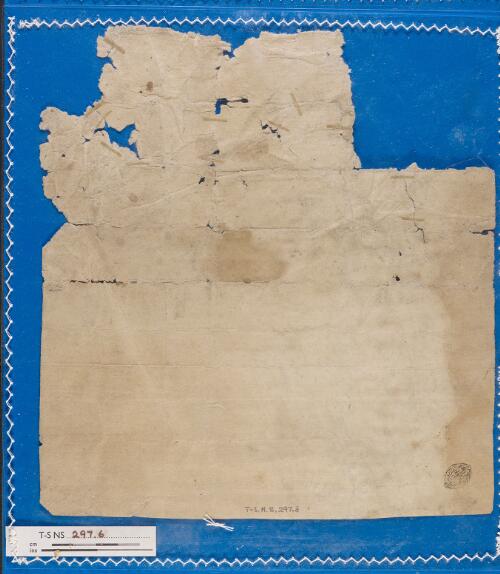
Verso, oval seal, upside-down
- [illegible]
-
El-faḳīr/Aḥmed/ibn Yūsuf
Verso, oval seal, upside-down
- illegible
- El-faḳīr/Aḥmed/ibn Yūsuf