نصّ غير أدبيّ: T-S NS 108.19
نصّ غير أدبيّ T-S NS 108.19What's in the PGP
- صورة
- 1 Transcription
- 1 Translation
الوصف
Verso continuing onto recto: Instructions for treasure in a village called אלכרבה (al-Khirba?) in the Fayyūm, in a known genre: treasure-hunting instructions. The toponym אלכרבה means “the ruin.” Since the name fits the treasure-hunting genre suspiciously well, it may not be a real village. Contains a set of four separate maṭlab-style entries, each opening with the formula ṣifa ayḍan (“another description”). The sites are the kanīsa, the bathhouse and mosque, the fortress (fragmentary), and the well with its mound. The first involves digging in the wall of the kanīsa, where you will find a trove of Byzantine dinars in a copper pot. The word kanīsa can mean church or synagogue, and nothing in the text settles which it means. Treasure manuals (kutub al-maṭālib) often send seekers to churches, monasteries, and ancient ruins. Assorted other notes: v10 קים may be קיס qis, “measure”; v10 ḥufra raṣāṣ, literally “a hole of lead,” presumably means a hole sealed or filled with lead, like a marker or dowel hole in reused masonry; v18 אלחליה perhaps a decorative feature on the qibla wall around the miḥrāb? On recto there is also an unrelated poem by Ibn Gabirol. ASE; MR
العلامات
Editor: Elbaum, Alan
Translator: Rustow, Marina
T-S NS 108.19 1v
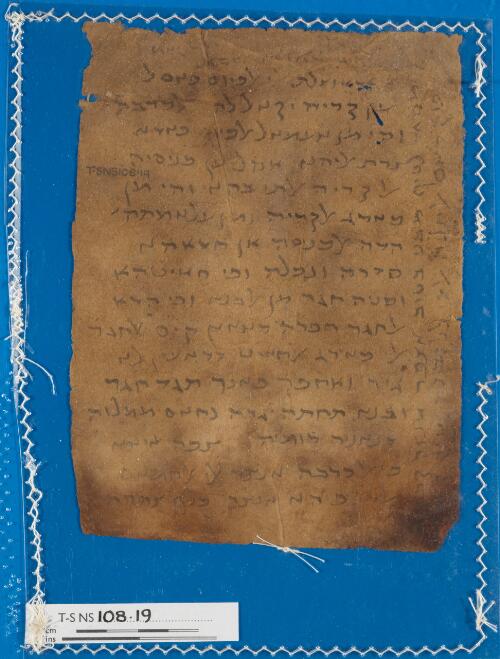
Verso
- אדא וצלת אלפיום פאסל
- ען קריה יקאל לה אלכרבה
- והי מן אעמאל אלפיום פאדא
- צרת אליהא אסל ען כניסיה
- אלקריה אלתי בהא והי מן
- כארג אלקריה ומן עלאמתה
- הדה אלכניסה אן חדאהא
- סדרה ונכלה ופי חאיטהא
- וסטה חגר מן אלבנא ופי הדא
- אלחגר חפרה רצאץ קים אלחגר
- אלי כארג אלחאיט דראעין לא
- גיר ואחפר פאנך תגד חגר
- ובנא תחתה וגרה נחאס ממלוה
- דנאניר רומיה צפה איצא
- פי אלכרבה אנצר אלי אלחמאם
- . מ . . פיהא אנצר כלף צהרה
Verso, right margin
- מסגד לטיף מבני בטוב אצפר אנצר קבל[ה
- פוק ראס אלחליה(?) אלדי ללקבלה . . . . ק . . .
Verso, top margin
- . . . . אלקלעה . . . [
- מאל כתיר(?) [
Verso
- When you reach the Fayyūm, ask
- about a village (qarya) called al-Khirba,
- which is one of the districts (aʿmāl) of the Fayyūm. When
- you get there, ask about the kanīsa (church or synagogue)
- of the village that is located there. It is
- outside the village. Among the signs (by which you will recognize)
- this kanīsa: next to it there is
- a lote tree (sidra) and a date palm. In its wall,
- in the middle, there is a stone that is part of the masonry. In this
- stone is a hole (filled with) lead. Measure from the stone
- toward the outside of the wall two cubits, no
- more, and dig. You will find stone
- and masonry, and under it, a copper jar filled with
- Byzantine dinars (danānīr rūmiyya). Another description:
- In al-Kharba, look at the bathhouse
- . . . in it. Look behind its back (wall).
Verso, right margin
- a fine little mosque built of yellow mud-brick (ṭūb aṣfar). Look at [its] qibla (wall)
- above the top of the beard (ḥilya, an architectural term?) on the qibla side . . .
Verso, top margin
- . . . the fortress (al-qalʿa) . . .
- much wealth (?) . . .
T-S NS 108.19 1r
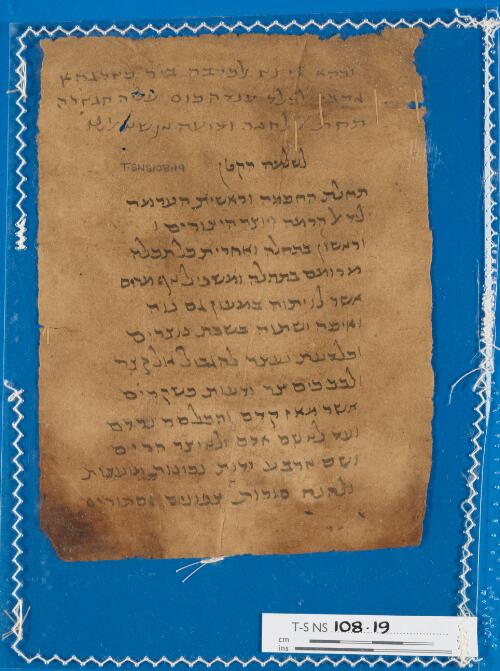
Recto
- ובהא איצא אלכרבה ביר כארגהא
- גרבי אלבלד ענדה כום עליה חגארה
- תחת אלחגר ודיעה אן שא אללה
Recto
- Also at al-Kharba there is a well outside it,
- to the west of the town. Next to it is a mound (kawm) with stones on it.
- Under the stone is a deposit (wadīʿa), God willing.