قائمة/جدول: T-S Ar.39.380
قائمة/جدول T-S Ar.39.380What's in the PGP
- صورة
- 1 Transcription
- 1 Translation
الوصف
Bifolio from a small booklet of mathematical (multiplication and division) tables in Coptic numerals, written in columns with ruled lines between groups of entries. Probably written by and/or for a merchant or fiscal official — someone who needed to multiply large sums and to divide by 12, 24, and 48, presumably for the purposes of converting dīnārs to dirhams (at the canonical rate of 1:12) and qīrāṭs (1:24). Pages 1–2 contain part of a multiplication table in the "decadic" format: each multiplicand n is multiplied by k, 10k, 100k and 1000k (k = 1–9) in ruled groups of four, followed by a single line n × 10,000. Surviving entries run from 50 × 500 to 90 × 5000. Pages 3–4 contain division tables for the divisors 12, 24 and 48 (divisors not written), applied to the dividends 1–9, 10–90, 100–900, 1000–9000 and 10,000, with quotients in unit fractions. Surviving entries run from 5 ÷ 12 to 8000 ÷ 48. There are also Arabic annotations. On p. 1 (fol. 1a), there is a note of several lines in the space where a fourth column of numerals would be expected. It contains an undecipherered pair of words, then what might be a mini colophon containing the word ruqʿa (note, order of payment) and the name Ibn Abū (sic) Sam`ūn ibn Azhar, ending with wa-l-salām. On p. 3 (fol. 2a), there are two Arabic annotations. Following the ÷ 12 tables is the word al-qīrāṭayn (written defectively, without alif), "the two qīrāṭs," indicating that the column is dividing each number by 12 = two qīrāṭs. Following the ÷ 24 tables are the words ṣuwar al-qīrāṭ ("the figures for the qīrāṭ"). The annotations indicate that one purpose of the division tables is to have a handy reference for converting quantities of qīrāṭs into dīnārs and that the table may be intended as a reference or teaching tool for commercial or fiscal accounting. Codicology: Coptic is read left to right and the order of pages is consistent with that, but the text is not continuous, so this was part of a quire but not an inner bifolio. P. 2 ends at 90 × 5000, and p. 3 begins with the division tables, so at least one further bifolio was nested inside. P. 4 is written in a single column and is otherwise blank; p. 1 begins mid-way through the 50 table. This could be an outer bifolio of a final quire of a booklet whose text ended on p. 4. Goldstein and Pingree edited the fragment in summary as an appendix to their Geniza horoscopes, since it parallels a division-by-24 table in Coptic numerals in the margins of a manuscript they analyzed, MS Strasbourg 4110. See also Sesiano, 59 no. 2 and 64 n. 6, who identifies the multiplication table with the dhāqāt, the second of two kinds of Coptic multiplication table described in an anonymous Arabic treatise on Coptic reckoning (Istanbul, Feyzullah Ef. 1365). This is the variant with 37 products per table. Sesiano places this style of table in a tradition of Greek and Coptic tables that includes BL Or. 5707 and Greek papyri from the second to tenth centuries. Sesiano also cites this manuscript as an example of the Coptic myriad sign, a horizontal stroke with two dots beneath to indicate ten thousands (that unicode character does not render properly in PGP, so instead, my transcription uses a diæresis above, the Greek convention for myriads, e.g., 𐋡̈ = 10,000; 𐋮̈ = 500,000). Transcription conventions beyond the standard Geniza ones: ͵ before a numeral = thousands stroke (written to the lower left of the numeral). So, e.g., ͵ⲁ = 1,000 𐋡̈ (diæresis) = myriad sign, e.g., 𐋡̈ = 10,000; 𐋮̈ = 500,000 ⳽ = ½ 𐅷 = ⅔ (ω-shaped in this hand) ʹ to the upper right of a numeral = unit fractions. 𐋣ʹ = ⅓, 𐋤ʹ = ¼, 𐋦ʹ = ⅙, 𐋨ʹ = ⅛, 𐋪𐋢ʹ = 1/12, 𐋫𐋤ʹ = 1/24 Horizontal lines in the manuscript are shown as ——————. Notes on paleography: ⳽ (½) is written as a left-facing angle bracket 𐋢 (2) and 𐋺 (800) are both ω-shaped (distinguished by context) 𐋶 (400) is a rounded u-shape, turned counterclockwise a quarter-turn from the unicode character shown here 𐋮 (50) is U-shaped 𐋷 (500) is a crossed circle with an upright stroke 𐋯 (60) is a J-shaped hook 𐋸 (600) is 8-shaped 𐋹 (700) is cross-shaped 𐋩 (9) is a crossed circle with a horizontal bar 𐋲 (90) is shaped like a fishing hook 𐋣𐋣ʹ (3⅓) is compressed and looks more like ⅓ (𐋣ʹ) Marina Rustow (September 2026)
Editor: Rustow, Marina
Translator: Rustow, Marina
T-S Ar.39.380 1r
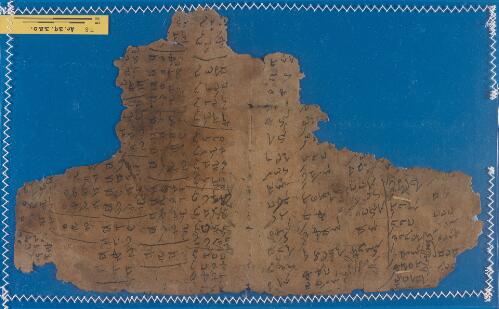
p. 2 (multiplication by 70, 80, and 90)
(Column 1)
(top lost: 70 × 1, 2, and 3, 12 lines)
1 [𐋰 𐋤 𐋴]𐋱
2 [𐋰] 𐋭 ͵𐋢[𐋺]
3 𐋰 𐋶 𐋢̈ ͵𐋨
4 𐋰 ͵𐋤 𐋫̈ 𐋨̈
————————
5 𐋰 𐋥 𐋵[𐋮]
6 [𐋰] 𐋮 ͵𐋣𐋷
7 [𐋰 𐋷] 𐋣̈ ͵𐋥
(bottom lost: 70 × 5000)
(Column 2)
(top lost: 70 × 6, 7, 8)
1 [𐋰 𐋩 𐋸]𐋬
2 [𐋰] 𐋲 ͵𐋦𐋵
3 𐋰 𐋻 𐋦̈ ͵𐋣
4 𐋰 ͵𐋩 𐋯̈ 𐋣̈
————————————
5 𐋰 𐋡̈ 𐋰̈
(Column 3)
(top lost: 80 × 1)
1 [𐋱 𐋢 𐋳]𐋯
2 [𐋱 𐋫] ͵𐋡𐋸
3 [𐋱 𐋴] 𐋡̈ ͵𐋦
4 [𐋱] ͵𐋢 𐋪̈ 𐋦̈
————————
5 [𐋱 𐋣 𐋴]𐋭
6 [𐋱 𐋬] ͵𐋢𐋶
7 [𐋱] 𐋵 𐋢̈ ͵𐋤
8 [𐋱 ͵𐋣] 𐋫̈ 𐋤̈
————————
9 𐋱 𐋤 𐋵𐋫
10 𐋱 𐋭 ͵𐋣𐋴
11 𐋱 𐋶 𐋣̈ ͵𐋢
12 𐋱 ͵𐋤 𐋬̈ 𐋢̈
————————
13 𐋱 𐋥 𐋶
14 𐋱 𐋮 ͵𐋤
15 𐋱 𐋷 𐋤̈
16 𐋱 ͵𐋥 𐋭̈
————————
(Column 4)
(top lost: missing 80 × 6 and 80 × 60)
1 [𐋱 𐋸] 𐋤̈ ͵𐋨
2 [𐋱 ͵𐋦] 𐋭̈ 𐋨̈
————————
3 𐋱 𐋧 𐋷[𐋯]
4 𐋱 𐋰 ͵𐋥𐋸
5 𐋱 𐋹 𐋥̈ [͵𐋦]
6 𐋱 ͵𐋧 𐋮̈ [𐋦̈]
————————
7 𐋱 𐋨 𐋸𐋭
8 𐋱 𐋱 ͵𐋦𐋶
9 𐋱 𐋺 𐋦̈ ͵𐋤
10 𐋱 ͵𐋨 𐋯̈ 𐋤̈
————————
11 𐋱 𐋩 𐋹𐋫
12 𐋱 𐋲 ͵𐋧𐋴
13 𐋱 𐋻 𐋧̈ ͵𐋢
14 𐋱 ͵𐋩 𐋰̈ 𐋢̈
————————
15 𐋱 𐋡̈ 𐋱 (should be 𐋱̈)
————————
(Column 5)
(top lost: missing 90 × 1 and 90 × 10)
1 𐋲 𐋳 [͵𐋩]
2 𐋲 ͵𐋡 𐋩̈
————————
3 𐋲 𐋢 𐋳𐋱
4 𐋲 𐋫 ͵𐋡𐋺
5 𐋲 𐋴 𐋡̈ ͵𐋨
6 𐋲 ͵𐋢 𐋪̈ 𐋨̈
————————
7 𐋲 𐋣 𐋴𐋰
8 𐋲 𐋬 ͵𐋢𐋹
9 𐋲 𐋵 𐋢̈ ͵𐋧
10 𐋲 ͵𐋣 𐋫̈ 𐋧̈
————————
11 𐋲 𐋤 𐋵𐋯
12 𐋲 𐋭 ͵𐋣𐋸
13 𐋲 𐋶 𐋣̈ [͵𐋦]
14 𐋲 ͵𐋤 𐋬̈ 𐋦̈
————————
15 𐋲 𐋥 𐋶𐋮
16 𐋲 𐋮 ͵𐋤𐋷
17 𐋲 𐋷 𐋤̈ ͵𐋥
18 [𐋲] ͵𐋥 𐋭̈ [𐋥̈]
p. 3 (division by 12, 24, 48)
(Column 1: division by 12)
(top lost: 1, 2, 3, and 4 ÷ 12)
1 𐋥 𐋣ʹ 𐋪[𐋢ʹ]
2 𐋦 ⳽
3 𐋧 ⳽ [𐋪𐋢ʹ]
4 [𐋨 𐅷]
5 𐋩 ⳽ 𐋤ʹ
6 𐋪 ⳽ 𐋣ʹ
7 𐋫 𐋡 𐅷
8 𐋬 𐋢 ⳽
9 𐋭 𐋣 𐋣ʹ
10 𐋮 𐋤 𐋦ʹ
11 𐋯 𐋥
12 𐋰 𐋥 ⳽ 𐋣ʹ
13 𐋱 𐋦 𐅷
14 𐋲 𐋧 ⳽
15 𐋳 𐋨 𐋣ʹ
(Column 2: division by 12)
(top lost: 200–800 ÷ 12)
1 𐋻 [𐋰𐋥]
2 ͵𐋡 𐋱[𐋣 𐋣ʹ]
3 ͵𐋢 [𐋳𐋯𐋦 𐅷]
4 ͵𐋣 𐋴𐋮
5 ͵𐋤 𐋵𐋬𐋣 𐋣ʹ
6 ͵𐋥 𐋶𐋪𐋦𐅷
7 ͵𐋦 𐋷
8 ͵𐋧 𐋷𐋱𐋣 𐋣ʹ
9 ͵𐋨 𐋸𐋯𐋦𐅷
10 ͵𐋩 𐋹𐋮
11 𐋡̈ 𐋺𐋬𐋣 𐋣ʹ
————————
(Arabic note after column) بحسب القيرطين
(Column 3: division by 24)
(top lost: 1–20 ÷ 24)
1 𐋬 𐋡 [𐋤ʹ]
2 𐋭 𐋡 𐅷
3 𐋮 𐋢 𐋪𐋢ʹ
4 𐋯 𐋢 ⳽
5 𐋰 𐋢 ⳽ 𐋣ʹ 𐋪𐋢ʹ
6 𐋱 𐋣 𐋣ʹ
7 𐋲 𐋣 ⳽ 𐋤ʹ
8 𐋳 𐋤 𐋦ʹ
(Column 4: division by 24)
(top lost: 200–2000 ÷ 24)
1 ͵𐋣 𐋳[𐋫𐋥]
2 ͵𐋤 𐋳𐋯𐋦 𐅷
3 ͵𐋥 𐋴𐋨 𐋣ʹ
4 ͵𐋦 𐋴𐋮
5 ͵𐋧 𐋴𐋲𐋡 𐅷
6 ͵𐋨 𐋵𐋬𐋣 𐋣ʹ
7 ͵𐋩 𐋵𐋰𐋥
8 𐋡̈ 𐋶𐋪𐋦 𐅷
(Arabic note after column)
بحسب صور القيراط
(Column 5: division by 48)
(top lost: 1–10 ÷ 48)
1 𐋫 [𐋤ʹ 𐋦ʹ]
2 𐋬 ⳽ [𐋨ʹ]
3 𐋭 [⳽] 𐋣ʹ
4 𐋮 𐋡 𐋫𐋤ʹ
5 𐋯 𐋡 𐋤ʹ
6 𐋰 𐋡 𐋣ʹ 𐋨ʹ
7 𐋱 𐋡 𐅷
8 𐋲 𐋡 ⳽ [𐋣ʹ 𐋫𐋤ʹ]
(bottom lost: 100 ÷ 48)
p. 2 (multiplication by 70, 80, and 90)
(Column 1)
(top lost: 70 × 1, 2, and 3, 12 lines)
1 [70 × 4 = 2]80
2 [70] × 40 = 2,[8]00
3 70 × 400 = 28,000
4 70 × 4,000 = 280,000
————————
5 70 × 5 = 3[50]
6 [70] × 50 = 3,500
7 [70 × 500] = 35,000
(bottom lost: 70 × 5000)
(Column 2)
(top lost: 70 × 6, 7, 8)
1 [70 × 9 = 6]30
2 [70] × 90 = 6,300
3 70 × 900 = 63,000
4 70 × 9,000 = 630,000
————————
5 70 × 10,000 = 700,000
(Column 3)
(top lost: 80 × 1)
1 [80 × 2 = 1]60
2 [80 × 20] = 1,600
3 [80 × 200] = 16,000
4 [80] × 2,000 = 160,000
————————
5 [80 × 3 = 2]40
6 [80 × 30] = 2,400
7 [80] × 300 = 24,000
8 [80 × 3,000] = 240,000
————————
9 80 × 4 = 320
10 80 × 40 = 3,200
11 80 × 400 = 32,000
12 80 × 4,000 = 320,000
————————
13 80 × 5 = 400
14 80 × 50 = 4,000
15 80 × 500 = 40,000
16 80] × 5,000 = 400,000
————————
(Column 4)
(top lost: missing 80 × 6 and 80 × 60)
1 [80 × 600] = 48,000
2 [80 × 6,000] = 480,000
————————
3 80 × 7 = 5[60]
4 80 × 70 = 5,600
5 80 × 700 = 5[6,000]
6 80 × 7,000 = 5[6]0,000
————————
7 80 × 8 = 640
8 80 × 80 = 6,400
9 80 × 800 = 64,000
10 80 × 8,000 = 640,000
————————
11 80 × 9 = 720
12 80 × 90 = 7,200
13 80 × 900 = 72,000
14 80 × 9,000 = 720,000
————————
15 80 × 10,000 = 80 (should be 800,000)
————————
(Column 5)
(top lost: missing 90 × 1 and 90 × 10)
1 90 × 100 = [9,000]
2 90 × 1,000 = 90,000
————————
3 90 × 2 = 180
4 90 × 20 = 1,800
5 90 × 200 = 18,000
6 90 × 2,000 = 180,000
————————
7 90 × 3 = 270
8 90 × 30 = 2,700
9 90 × 300 = 27,000
10 90 × 3,000 = 270,000
————————
11 90 × 4 = 360
12 90 × 40 = 3,600
13 90 × 400 = 3[6,000]
14 90 × 4,000 = 360,000
————————
15 90 × 5 = 450
16 90 × 50 = 4,500
17 90 × 500 = 45,000
18 [90] × 5,000 = 4[5]0,000
p. 3 (division by 12, 24, 48)
(Column 1: division by 12)
(top lost: 1, 2, 3, and 4 ÷ 12)
1 5 (÷ 12) = ⅓ [1/]1[2]
2 6 (÷ 12) = ½
3 7 (÷ 12) = ½ [1/12]
4 [8] (÷ 12) = [⅔]
5 9 (÷ 12) = ½ ¼
6 10 (÷ 12) = ½ ⅓
7 20 (÷ 12) = 1⅔
8 30 (÷ 12) = 2½
9 40 (÷ 12) = 3⅓
10 50 (÷ 12) = 4⅙
11 [60] (÷ 12) = 5
12 70 (÷ 12) = 5½ [⅓]
13 80 (÷ 12) = 6⅔
14 90 (÷ 12) = 7½
15 100 (÷ 12) = 8⅓
(Column 2: division by 12)
(top lost: 200–800 ÷ 12)
1 900 (÷ 12) = [75]
2 1,000 (÷ 12) = 8[3⅓]
3 2,000 (÷ 12) = [166⅔]
4 3,000 (÷ 12) = 250
5 4,000 (÷ 12) = 333⅓
6 5,000 (÷ 12) = 416⅔
7 6,000 (÷ 12) = 500
8 7,000 (÷ 12) = 583⅓
9 8,000 (÷ 12) = 666⅔
10 9,000 (÷ 12) = 750
11 10,000 (÷ 12) = 833⅓
(Arabic note after column:) according to the two qīrāṭs
(Column 3: division by 24)
(top lost: 1–20 ÷ 24)
1 30 (÷ 24) = 1[¼]
2 40 (÷ 24) = 1⅔
3 50 (÷ 24) = 2 1/12
4 60 (÷ 24) = 2½
5 70 (÷ 24) = 2½ ⅓ 1/12
6 80 (÷ 24) = 3⅓
7 90 (÷ 24) = 3½ ¼
8 100 (÷ 24) = 4⅙
(Column 4: division by 24)
(top lost: 200–2000 ÷ 24)
1 3,000 (÷ 24) = 1[25]
2 4,000 (÷ 24) = 166⅔
3 5,000 (÷ 24) = 208⅓
4 6,000 (÷ 24) = 250
5 7,000 (÷ 24) = 291⅔
6 8,000 (÷ 24) = 333⅓
7 9,000 (÷ 24) = 375
8 10,000 (÷ 24) = 416⅔
(Arabic note after column:) according to the figures of the qīrāṭ
(Column 5: division by 48)
(top lost: 1–10 ÷ 48)
1 20 (÷ 48) = [¼ ⅙]
2 30 (÷ 48) = ½ [⅛]
3 40 (÷ 48) = [½] ⅓
4 50 (÷ 48) = 1 1/24
5 [60] (÷ 48) = 1¼
6 70 (÷ 48) = 1⅓ ⅛
7 80 (÷ 48) = 1⅔
8 90 (÷ 48) = 1½ [⅓ 1/24]
(bottom lost: 100 ÷ 48)
T-S Ar.39.380 1v
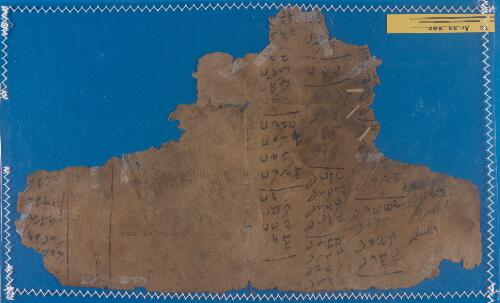
p. 1 (multiplication by 50 and 60)
(Column 1)
(top lost: 50 × 5, 50 × 50)
1 [𐋮 𐋷] 𐋢̈ ͵𐋥
2 [𐋮] ͵𐋥 𐋫̈ 𐋥̈
————————
3 𐋮 𐋦 𐋵
4 𐋮 𐋯 ͵𐋣
5 𐋮 𐋸 𐋣̈
6 𐋮 ͵𐋦 𐋬̈
————————
7 𐋮 𐋧 𐋵𐋮
8 𐋮 𐋰 ͵𐋣𐋷
9 𐋮 𐋹 𐋣̈ ͵[𐋥]
10 𐋮 ͵𐋧 𐋬̈ 𐋥̈
————————
11 𐋮 𐋨 [𐋶]
12 𐋮 𐋱 ͵𐋤
13 𐋮 𐋺 𐋤̈
14 [𐋮] ͵𐋨 𐋭̈
————————
(Column 2)
(top lost: 50 × 9, 50 × 90)
1 𐋮 𐋻 [𐋤̈ ͵𐋥]
2 𐋮 ͵𐋩 𐋭̈ [𐋥̈]
————————
3 𐋮 𐋡̈ 𐋮̈
————————
4 𐋯 𐋡 𐋯
5 𐋯 𐋪 𐋸
6 𐋯 𐋳 ͵𐋦
7 𐋯 ͵𐋡 𐋦̈
————————
8 𐋯 𐋢 𐋳𐋫
9 𐋯 𐋫 ͵𐋡𐋴
10 𐋯 𐋴 𐋡̈ ͵𐋢
11 𐋯 ͵𐋢 𐋪̈ 𐋢̈
————————
12 𐋯 𐋣 𐋳𐋱
13 𐋯 𐋬 ͵𐋡𐋺
14 𐋯 𐋵 𐋡̈ ͵𐋨
15 𐋯 ͵𐋣 𐋪̈ 𐋨̈
————————
(Column 3)
(top lost: 60 × 4, 40, 400, 4000)
1 [𐋯 𐋥 𐋵]
2 𐋯 𐋮 [͵𐋣]
3 𐋯 [𐋷 𐋣̈]
4 𐋯 [͵𐋥 𐋬̈]
————————
5 𐋯 𐋦 [𐋵𐋯]
6 𐋯 𐋯 [͵𐋣𐋸]
7 𐋯 𐋸 𐋣̈ [͵𐋦]
8 𐋯 ͵𐋦 𐋬̈ 𐋦̈
————————
9 𐋯 𐋧 𐋶𐋫
10 𐋯 𐋰 ͵𐋤𐋴
11 𐋯 𐋹 𐋤̈ ͵𐋢
12 𐋯 ͵𐋧 𐋭̈ 𐋢̈
————————
(Column 4 not preserved except for Arabic note; missing are 60 × 8, 80, 800, 8,000 = 4 lines, 60 × 9, 90, 900, 9,000 = 4 lines, and 60 × 10,000 = 1 line, likely with horizontal lines between groups)
نجم الزججية
رقعة ابن ابو شمعون (سمعون؟)
بن ازهر (ابرهيم؟)
والسلم
p. 4 (division by 48 continued)
(Column 1: division by 48)
(top lost: 200, 300, 400, 500, 600, 700, 800, 900, 1000, 2000, 3000, 4000 ÷ 48)
1 ͵𐋥 𐋳𐋤 𐋦ʹ
2 ͵𐋦 𐋳𐋫𐋥
3 ͵𐋧 𐋳𐋭𐋥 ⳽ 𐋣ʹ
4 ͵𐋨 𐋳𐋯𐋦 𐅷
5 [͵𐋩 𐋳]𐋱𐋧 ⳽
6 [𐋡̈ 𐋴𐋨] 𐋣ʹ
––––––––
p. 1 (multiplication by 50 and 60)
(Column 1)
(top lost: 50 × 5, 50 × 50)
1 [50 × 500] = 25,000
2 [50] × 5,000 = 250,000
————————
3 [50] × 6 = 300
4 50 × 60 = 3,000
5 50 × 600 = 30,000
6 50 × 6,000 = 300,000
————————
7 50 × 7 = 350
8 50 × 70 = 3,500
9 50 × 700 = 3[5],000
10 50 × 7,000 = 350,000
————————
11 50 × 8 = [400]
12 50 × 80 = 4,000
13 50 × 800 = 40,000
14 [50] × 8,000 = 400,000
————————
(Column 2)
(top lost: 50 × 9, 50 × 90)
1 50 × 900 = [45,000]
2 50 × 9,000 = 4[5]0,000
————————
3 50 × 10,000 = 500,000
————————
4 60 × 1 = 60
5 60 × 10 = 600
6 60 × 100 = 6,000
7 60 × 1,000 = 60,000
————————
8 60 × 2 = 120
9 60 × 20 = 1,200
10 60 × 200 = 12,000
11 60 × 2,000 = 120,000
————————
12 60 × 3 = 180
13 60 × 30 = 1,800
14 60 × 300 = 18,000
15 60 × 3,000 = 180,000
————————
(Column 3)
(top lost: 60 × 4, 40, 400, 4000)
1 [60 × 5 = 300]
2 60 × 50 = [3,000]
3 60 × [500 = 30,000]
4 60 × [5,000 = 300,000]
————————
5 60 × 6 = [360]
6 60 × 60 = [3,600]
7 60 × 600 = 3[6],000
8 60 × 6,000 = 360,000
————————
9 60 × 7 = 420
10 60 × 70 = 4,200
11 60 × 700 = 42,000
12 60 × 7,000 = 420,000
————————
(Column 4 not preserved except for Arabic note; missing are 60 × 8, 80, 800, 8,000 = 4 lines, 60 × 9, 90, 900, 9,000 = 4 lines, and 60 × 10,000 = 1 line, likely with horizontal lines between groups)
. . . .
Installment of the glassmaking (facility)
Note (or: order of payment) of Ibn Abū Shamʿūn (Samʿūn?)
ibn Azhar (Ibrāhīm?).
Farewell.
p. 4 (division by 48 continued)
(Column 1: division by 48)
(top lost: 200, 300, 400, 500, 600, 700, 800, 900, 1000, 2000, 3000, 4000 ÷ 48)
1 5,000 (÷ 48) = 104[⅙]
2 6,000 (÷ 48) = 125
3 7,000 (÷ 48) = 145[½ ⅓]
4 8,000 (÷ 48) = 166[⅔]
5 [9,000] (÷ 48) = [187½]
6 [10,000] (÷ 48) = [208]⅓