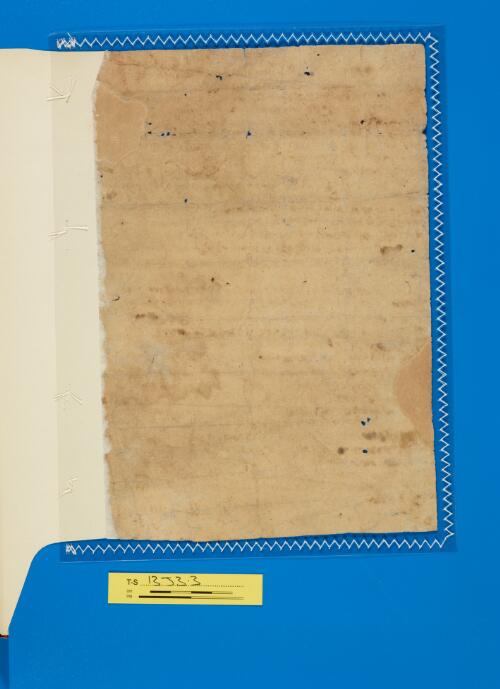
Legal document: T-S 13J3.3
Legal document T-S 13J3.3What's in the PGP
- Image
- 1 Transcription
- 1 Translation
Description
Deathbed will of a rich woman, made during the absence of her husband. Location: Fustat. Dated: Wednesday, 26 Iyyar 1454 Seleucid, which is 13 April 1143 CE, under the reshut of Shemuel b. Ḥananya. Testator: Sitt al-Ahl bt. Abū l-Munā al-ʿAṭṭār al-Iskandarānī, the wife of Abū Naṣr al-Ḥalabī al-Tājir. Witnesses: Yosef b. Thābit ha-Levi; Shelomo b. Natan ha-Haver. "This remarkable deathbed declaration, on the one hand, shows the cosmopolitan character of Fustat: the daughter of a druggist called 'the Alexandrian' was married there to a merchant 'from Aleppo.' On the other hand, it betrays an extraordinary attachment of the testator to her paternal family and to local customs and concepts. The dying woman's husband was a tājir, or great merchant, who traveled far and was expected to be away from home for several years. He probably was on a business trip to India. She had a little boy (Mūsā) from a former marriage, who lived with her parents. As his guardian and her own executor she appointed a brother of her former husband (Abū Mūsā Hārūn/Aharon b. Yeshuʿa ha-Kohen). The main purport of the will was the legal protection of her parents, brother (Abū l-Surūr), and boy against her present husband and providing a sumptuous burial for herself. She wanted to have Muslim wailing women, presumably because the cries and shrieks of Jewish women exercising the same profession were not shrill enough for her taste. The most impressive detail is her wish to be buried together with 'one of her family' meaning her father, mother, or brother. To these she was attached by 'natural ties'; with her husband she was connected solely by a 'contract.'" There is also a clause about Sitt al-Ahl's female slave named Fūq and Fūq's daughter, who belongs to Sitt al-Ahl's mother. Sitt al-Ahl also intends for the daughter of her brother Abū l-Surūr to marry her son Mūsā. (Information in part from CUDL and mainly from Goitein's attached notes, where there is a full translation.)
Tags
Editor: Goitein, S. D.
Translator: Goitein, S. D. (in English)
T-S 13J3.3 1r
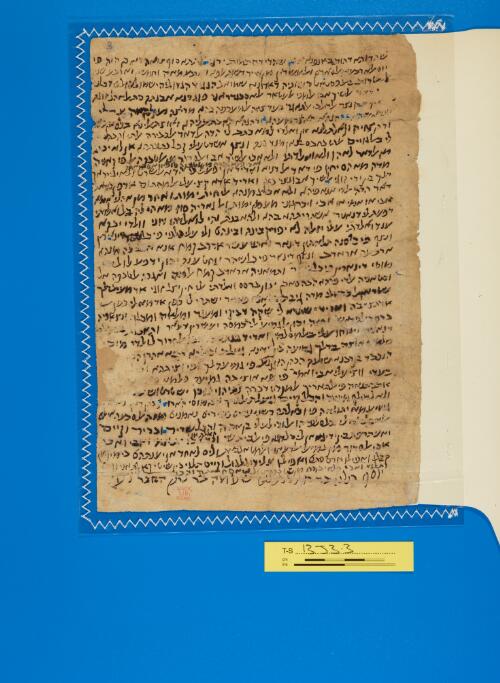
- שהדותא דהות באנפנא אנן שהדי דחתמות ידנא לתתא סוף צואה דא כן היה פי
- יום אלארבעא אלסאדס ואלעשרין מן אייר דשנת אלפא וארבע מאה וחמשין וארבע שנין
- לשטרות באלפסטאט רשותיה דאדונינו שמואל הנגיד הגדול יהי שמו לעולם דכלנא
- אלי דאר אלשיך אבו אלמני אלעטאר אלאסכנדראני פוגדנא אבנתה סת אלאהל זוגה
- אלשיך אבו נצר אלחלבי אלתאגר בעד צחה אלמערפה בהא מריצה מלקאה עלי
- פראשהא ודהנהא חאצר מעהא ודהנהא תאבת עליהא ואוצת עלינא בלסאן פציח
- ודהן צחיח וקאלת לנא אן ואלדי למא כתב לי הדה אלדאר אלכבירה אלתי והבהא
- לי באלגויים אלתי בחבס בנאן מנד סנה ונצף אשרט עלי קבל כתיבתהא אן לא יכרג
- מן אלדאר לא הו ולא ואלדתי ולא אכי אלשיך אבו אלסרור מן אלטבקה אלפוקאניה //ואבי פלא יברח מן אלטבקה טול איאם חיאתה//
- מדה מא הם יחיו פי דאר אלדניא ואריד אן יפעל פי הדא אלשרט ולא יגייר אד
- דלך בין ידי זוגי אלשיך אבו נצר כאן ואריד אדא קצי עלי אלמחתום אדפן פי אל
- דאר הדה אלדי אנא פיהא ולא אכרג מנהא אלי חית ימות ואחד מן אהלי אמא
- אבי או אמי או אכי ויכרגוני מע מן ימות ואלגאריה פוק מא הי לה בל ואלדתי
- דפעת לי דנאניר אשתריתהא בהא ולהא בנת והי לואלדתי דוני וולדי יבקא
- ענד ואלדתי עלי חאלה לא יפרק בינה ובינהם ולי עלי כלפי פי כל שהר דינארין
- ונצף פי כל סנה תלאתין דינאר ואתני עשר ארדב קמח אנא אכלי לה מנהא
- ארבעה אראדב ונצף דינאר פי כל שהר ינחט ענה יכון ידפע לולדי
- מוסי דינארין פי כל שהר ותמאניה אראדב קמח אלסנה ואגרה אלטבקה אל
- וסטאניה אלדי פיהא הבה סאכן יכון ברסם ואלדתי אלי חין יצל זוגי אד מעי בדלך
- שטר אן אלכרא לי מדה גיבתה ואנא פאריד ישתרי לי כפן אד מא לי כפן
- ארתצי בה ואריד ישתרא לי שקה דביקי ומעגר ומלאה ומכלף ונצאפיה
- ברסם אלפראש וחזה יכון אלגמיע אלי כמסה ועשרין דינאר ותאבות תסע אלי י
- דנאניר וינוחו עלי באלמסלמין ואריד בנת אכי אבו אלסרור לולדי מוסי
- פלמא אוצת בדלך גמיעה בין ידינא געלת וכילהא רבנא אהרון הכהן [הזקן
- הנכבד בן רבנא ישועה הכהן הזקן נע פי גמיע דלך פי וציתהא ופי אל[
- בעדי ווצי עלי אבי ואמי פי מא אוציתה גמיעה פלמא [סמענא מא קאלת
- אתבתנאה פי אלתאריך אלמקדם דכרה לתיהוי לזכו יש טרטוש [
- ולא למילף מיניה והכל קיים וגעלת אלשיך אבו מוסי הארון אלכהן דנן נאמן עלי
- גמיע מא יתולאה פי וכאלתה כשני עדים כשירים נאמנים מנה אלסבעה איאם
- אלאבל אלדי לי באלכלפי הו אלוכיל עלי בן אכוה והכל שריר ובריר וקיים
- ואעתרפת בין ידינא אן ליס להא פי אלבית שי וקד //קאלת אני// אברית אמי ואבי ואכי
- אבי אלסרור מן גמיע אלדעאוי ואלמטאלבאת וליס לאחד אן יענתהם בימין מן
- קבלי ואפילו חרם סתם ואפילו על ידי גלגול וקיים תלוי ביני שיטי קאלת אני וקיים
- תלוי ואבי פלא יברח מן אלטבקה טול איאם חיאתה והכל קיים
- יוסף הלוי בר תאבת נע שלמה בן נתן החבר נע
- This testimony was given in our presence, we, the witnesses signing at the end of this will. This happened on
- Wednesday, the 26th lyyar of the year 1454
- of the era of the documents (= April 13, 1143), in Fustat, which is under the authority of our lord Shemuʾel, the great Nagid, may his name endure forever. We entered
- the house of the elder Abū l-Mūna, the druggist, the Alexandrian, and found his daughter Sitt al-Ahl, the wife of
- Abū Naṣr of Aleppo, the merchant, ill and confined to her bed - after having properly taken cognizance of her.
- She was in possession of her faculties and made her declaration in clear language and with
- sound mind. This is what she said to us: When my father me this large house in the Ḥabs Banān
- a year and a half ago, a document about this gift was made out before Muslim authorities. But before this he imposed on me the
- condition that he, my mother, and my brother, the elder Abu l-Surūr, should never be forced to leave the upper floor, as long as they lived in this world. (Above the line: My father should stay in that apartment as long as he lived).
- I wish now that this stipulation should be carried out unchanged, for it was made in the
- presence of my husband, the elder Abū Naṣr. When that which is ordained for me will come to pass, I wish to be buried
- in this house in which I am now and not be carried out (to the cemetery) except when one of my family dies, I mean my
- father, mother, or brother. Then I might be carried out together with the one who will die. The maidservant Fūq does not belong to him (her husband); but my mother
- gave me money with which I bought her. She has a daughter, who belongs to my mother, not to me. My boy shall stay
- with my mother as he does now. No one shall separate him from them. I receive (from my husband) 2 1/2 dinars
- per month for expenses, which makes 30 dinars a year, as well as 12 irdabb wheat. Of this, I relinquish to him (the husband)
- 4 irdabb and half a dinar per month, so that he will have to pay to my son
- Mūsā 2 dinars every month and 8 irdabb wheat a year. The rent for the
- middle floor, where Hiba lives, will be to my mother until my husband returns. I possess a
- document assigning the rent to me during his absence. I wish to have a (new) burial attire, since I have none with
- which I am satisfied. There should be bought for me a robe of fine Dabiqi linen with a hood, a mantle, and a cloak, and nisāfi material
- for the burial couch and braid. All this to cost about 25 dinars. And a coffin costing 9-10
- dinars. Wailing should be done by Muslims. I wish to have the daughter of my brother Abū l-Surur for my boy Mūsā.
- After having made all these declarations in our presence, she appointed as her executor our master Aharon haKohen, the honored [elder],
- son of our master Yeshu ʿa, haKohen, the elder, (may he)(rest in) E(den), concerning all this and concerning her will,
- and [she] said: "He is my representative] after my death and my executor also with regard to my father and mother." When [we heard what she said]
- we wrote it down on the aforementioned date, so that our testimony should serve as a document conveying rights.
- The word... is erased and should not be considered. All the rest is confirmed. She accepted the aforementioned Abū Mūsā Hārūn, the Kohen, as trustworthy
- as two witnesses admitted in court with regard to all his actions in matters of her will. Of this the (expenditure for) the seven days
- of mourning for me to be taken from the expenses due me, since he is the executor for the son of his brother. Everything is correct, valid, and confirmed.
- She further declared in our presence that she kept nothing (belonging to anyone else) in her home. She also said: I release my mother, my father, and my brother
- Abu l-Surūr from all claims and suits which may be brought against them in my name. No one is entitled to molest them by asking them to give an oath
- of any kind. Confirmed. Written between the lines: "She said I" Confirmed.
- Also written between the lines: "My father should stay in that apartment as long as he lived." Everything is confirmed.
- Yosef ha-Levi, son of Thābit, (may he) r(est in) E(den). Shelomo, son of Natan he-ḥaver, (may he) r(est in) E(den).
T-S 13J3.3 1v