منحة في ثيقة شرعيّة: T-S 12.582
ثيقة شرعيّة T-S 12.582- الاقتباس المرجعي
- S. D. Goitein, "A Document from the African Port Aidab in the Age of the Head of the Academy Joshua b. Dosa" (in Hebrew), Tarbiz 21, no. 3 (Mandel Institute for Jewish Studies / המכון למדעי היהדות ע"ש מנדל, 1950), 185-191.
- Location in source
- pp. 186-187
- Relation to document
- Digital Edition
- الطبعة
- الاقتباس المرجعي
- S. D. Goitein's الطبعة (in Hebrew) (1950–85).
- Location in source
- ז23
- Relation to document
- الطبعة
- الاقتباس المرجعي
- S. D. Goitein, Letters of Medieval Jewish Traders (Princeton University Press, 1973).
- Location in source
- #79
- #79
- Relation to document
- Digital Translation
- الترجمة
- الاقتباس المرجعي
- S. D. Goitein's الطبعة (1950–85).
- Location in source
- Relation to document
- الطبعة
صورة
النصوص المفرّغة
الترجمة
Editor: Goitein, S. D.
Translator: Goitein, S. D. (in English)
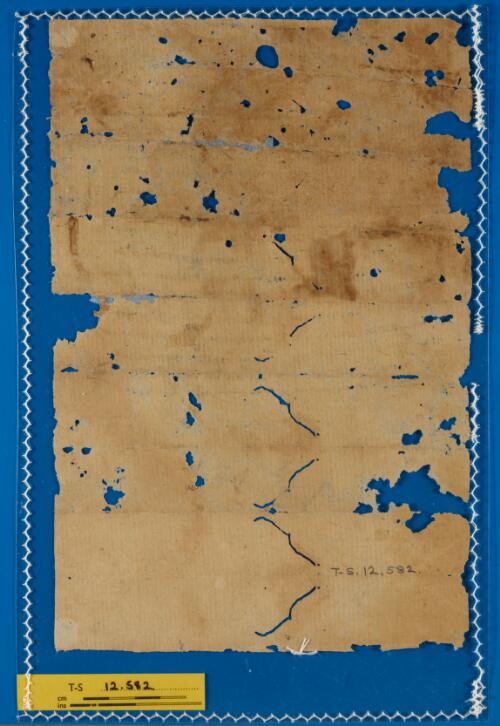
T-S 12.582 1r
°
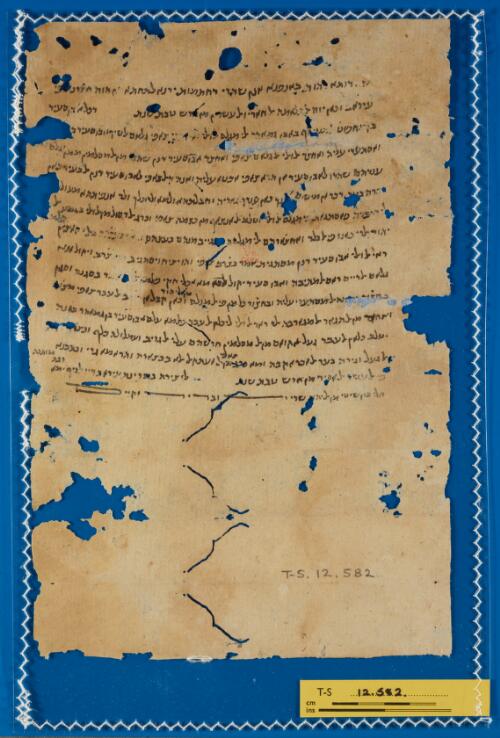
S. D. Goitein, "A Document from the African Port Aidab in the Age of the Head of the Academy Joshua b. Dosa" (in Hebrew), Tarbiz 21, no. 3 (Mandel Institute for Jewish Studies / המכון למדעי היהדות ע"ש מנדל, 1950), 185-191.
- שהדותא דהות באנפנא אנן שהדי דחתמות ידנא לתחתא כן הוה. חצרנא פי
- עידאב וכאן יום אלתלאתה אלחאדי ואלעשרין מן חדש טבת שנת דכל אבו סעיד
- בן מחפוט אלמערוף באבן גמאהר אלי מגלס אלואלי ואשתכי צאפי גלאם אלשיך אבו סעיד ב[ן
- ואסתעדי עליה ואחצר אלואלי אלגלאם צאפי ואחצר אבו סעיד דנן שהוד מן אלמסלמין ממן יגלס
- ענדהם שהדו לאבו סעיד אן הדא צאפי אכטא עליה ואנה קאל צאפי לאבו סעיד דנן אלבעיד כאן
- דכרה בעד דכר אן מישום [א]נך כאן ענדך גאריה וחבלתהא ולמא ולדת לך ולד אנפיתהא מע ול[דהא
- אלי ברברה פאסתגאת פי מגלס אלואלי יטלב אלאנצאף מן כצמה צאפי וכרג אלרסול מן אלואלי בגמע אל
- יהוד אלדי כאנו פי אלבלד ואחצארהם אלי מגלסה [ות]גייב מנהם בעצהם וחצר בעצהם באלרקאצין //פלמא//
- ראי אלואלי אבו סעיד דנן מסתגית אמר בצרב צאפי והו יציח ויסתגית [מן אל]צרב ויקול אנא
- גלאם אלרייס ראס אלמתיבה ואבו סעיד יקול [[לנא]] מא אכלי חקי פלמא [צרב] אמר בסגנה וסגן
- בחצור כצמה אלמסתעדי עליה ובחצור כל מן פי אלמגלס //מן אליהוד// וכאן קבל אן [צר]ב אלעבד צאפי מצא
- ואחד מן אלתגאר אלמגארבה אלי דאר אלואלי ליכלץ אל עבד פלמא עלם אבו סעיד בן גמאהר באנה
- יטלב כלאץ אלעבד געל אקואם מן אלמסלמין חרשהם עלי אלגריב ועמלו לה כלף ונצ[בו לה ?]
- ו]אלגעל וגירה בעד אלאכראק בה ומא פרג //צאפי// מן מן אלאעתקאל אלא בכצארה והדא מא גרי וכתבנא
- פי אלעשר אלאכיר מן חדש טבת שנת ליצירה במדינת עידאב דעל כיף ימא //רבה מותבה//
- תלי בין שיטי מן אליהוד שריר ובריר וקיים
S. D. Goitein, Letters of Medieval Jewish Traders (Princeton University Press, 1973).
- This deposition was made before us, we, the witnesses signing below. This is what happened: We were present in
- ʿAydhāb on Tuesday, the 21st of the month of Tevet of the year [ ], when Abū Saʿīd
- b. Maḥfūz ("Propitious, son of Protected [by God]"), known as Ibn Jamāhir, appeared before the chief of police, launched a complaint against Ṣāfī, the "boy" of the elder Abū Saʿīd b. [...],
- and appealed for help against him. The chief summoned the slave Ṣāfī, and the aforementioned Abū Saʿīd procured as witnesses Muslims, some of those with whom he used to
- associate. They testified in favor of Abū Saʿīd that this Ṣāfī made false accusations against him, and that Ṣāfī had said words which cannot be repeated to the aforementioned Abū Saʿīd,
- that he had called him bad names, saying: "You had a slave girl, made her pregnant, and when she bore you a boy, you abandoned her together with her b[oy]
- in Berbera." Abū Saʿīd appealed to the chief for help and demanded satisfaction from his adversary Ṣāfī. Upon this the chief of police sent a herald to assemble the
- Jews who happened to be in the town and to bring them before him. Some hid themselves, others were brought into his presence by police. //When//
- the chief saw that Abū Saʿīd persisted in his demand for satisfaction, he ordered Ṣāfī to be flogged. But Ṣāfī protested, and shouted: "I am
- the 'boy' (ghulām) of the Rayyis, the head of the yeshiva," while Abū Saʿīd declared: "I shall not renounce my claim." After the flogging, Ṣāfī was put in jail
- in the presence of his adversary, who had appealed to the chief for help, and in the presence of all //the Jews// who had come to the audience hall. Before the flogging of the slave Ṣāfī
- one of the Maghrebi merchants had gone to the chief's house in order to save the slave. But when Abū Saʿīd Ibn Jamāhir learned that
- he wanted to save the slave, he began to incite some Muslims against the stranger; they gave him trouble and [threatened]
- him with fines and other matters, after having made false accusations against him. //Ṣāfī// was set free from jail only after incurring loss of money. This is what happened. We wrote it down
- during the last ten days of the month of Tevet of the year of the Creation in the city of ʿAydhāb, which is //situated// on the shores of the //Great// Sea.
- Written between the lines: the Jews. Correct, valid, and confirmed.
T-S 12.582 1v
°