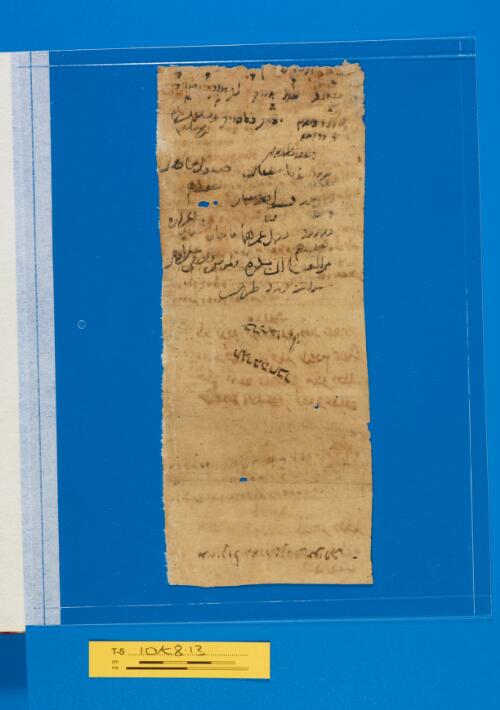
ثيقة شرعيّة: T-S 6J2.15 + T-S 10K8.13
ثيقة شرعيّة T-S 6J2.15 + T-S 10K8.13What's in the PGP
- صورة
- 2 Transcriptions
- 2 Translations
الوصف
Two legal queries addressed to Avraham Maimonides (Nagid) with his autograph responsa (r. 1205-1237 CE as Rayyis al-Yahūd and also with the title Nagid after 1213 CE): (I) concerning a man from Alexandria, married with children, who took an enslaved woman and lives with her as his concubine in the Fayyūm, abandoning his family in Alexandria. Is this permissible, or must he divorce his wife and pay her ketubba? Separately, is it permissible for a bachelor to cohabit with an enslaved woman? The answer: It is forbidden for a man to live alone with an enslaved woman, and if he does so, he should be excommunicated by name until he removes her from his home. (II) concerning whether the laws of loan forgiveness in shemiṭa apply to women as well as men. The answer: Yes.
العلامات
Editor: Friedman, Mordechai Akiva
Translator: Friedman, Mordechai Akiva (in Hebrew)
T-S 6J2.15 1r
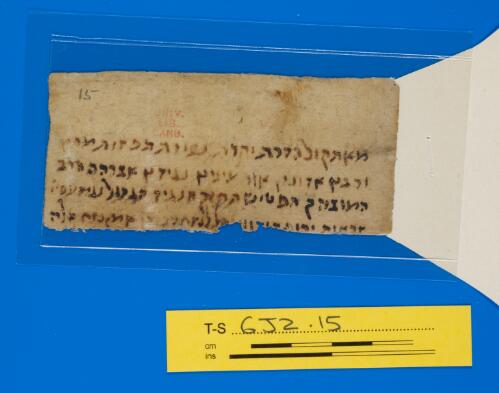
- מא תקול הדרת יקרת צפירת תפארת מרנו
- ורבנו אדונינו אור עינינו נגידנו אברהם הרב
- המובהק הפטיש החזק הנגיד הגדול נגיד עם ייי
- צבאות ירום הודו ויגדל לנצח כבודו אמן נצח סלה
- מא תקול הדרת יקרת צפירת תפארת מרנו
- ורבנו אדונינו אור עינינו נגידנו אברהם הרב
- המובהק הפטיש החזק הנגיד ה גדול נגיד עם יי
- צבאות ירום הודו ויגדל לנצח כבודו אמן נצח סלה
T-S 6J2.15 1r
- What does his honor, the precious one, crowned with splendor, our master
- and teacher, our lord, light of our eyes, our nagid Avraham, the distinguished
- rabbi, the mighty hammer, the great nagid, nagid of the people of the Lord
- of Hosts, may his glory be exalted and his honor be magnified forever, Amen, forever, selah, say
T-S 10K8.13 1r
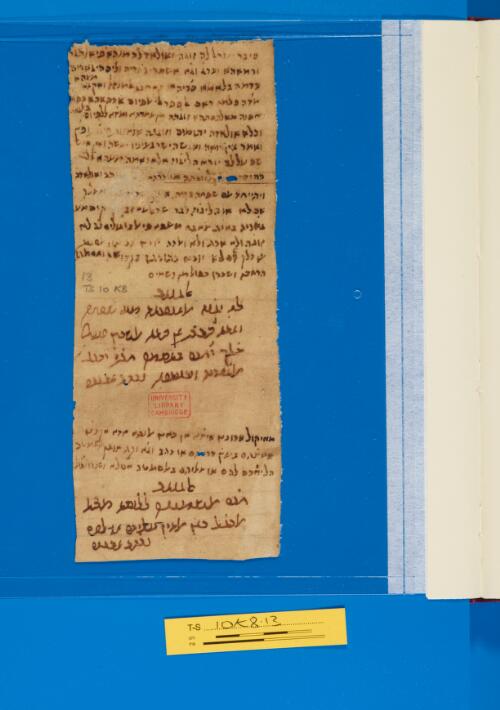
- פי בר ישראל לה זוגה ואולאד לה מנהא פי אלתגר
- ורמאהא וכרג וגא אשתרי גאריה וליס הי גאריה
- כדמה בל אמא סריה או צאחבה אלמנזל ואקאם מעהא
- מדה פלמא ראם אלספר אלי אלפיום אכסאהא כסוה
- חסנה מא לבסתהא זוגתה מן עמרהא ומצא ללפיום באלגארי[ה]
- וכלא אולאדה יתומים וזוגתה אלמנות חיות ופץ
- ואמר אין רואה ואיש הישר בעיניו יעשה ואין איש
- שם על לב יורנו הל יגוז זלאקאמה מעהא בלא
- כתובה [ו]לא זן לזוגתה מווכרהא [ויכלי] זוגתה ואולאדה
- ויתייחד עם שפחה בבית פתק[ים] מ[עה הל יג]וז דלך
- אם לא או הל יגוז לבר ישראל עזאב [א]ן [י]קים מע
- גאריה באית צאחב מעהא פי אלבית וליס לה לא
- זוגה ולא אכת ולא ואלדה יורנו הל יגוז אלסכות
- ען דלך אם לא יורנו כתורתו הקדושה וחכמתו
- הרחבה ושכרו כפול מן השמים
- אלגואב
- לא יגוז אלאנפראד מע שפחה
- ואדא תבת אן הדא אלשכץ פעל
- דלך יחרם באסמה חתי יכרג
- אלגאריה ויבעדהא וכתב אברהם
- מא יקול אדוננו איצא אן כאנו אלנסא אדא אקבצו
- בעצהם בעץ דראהם או דהב וגא וקת אואן אלשמטה
- הל יחכם להם או עליהם באלשמטה אם לא ושכרו כפול
- אלגואב
- חכם אלשמטה ללנסא מתל
- אלרגל כאן אלדין עליהם או להם
- וכתב אברהם
- בדבר בר ישראל שיש לו אשה, ויש לו ילדים ממנה, באלכסנדריה.
- והניח אותה, ויצא ובא וקנה שפחה. והיא איננה שפחה
- לשם שירות, אלא או פילגש או בעלת הבית. ושהה עמה
- זמן מה, וכאשר רצה לנסוע לפיום, הלביש אותה בכסות
- יפה, שלא לבשה אשתו מימיה, והלך לפיום עם השפחה,
- והניח ילדיו יתומים ואשתו אלמנות חיות. ופץ
- ואמר, אין רואה ואיש הישר בעיניו יעשה, ואין איש
- שם על לב. יורנו ,האם מותר לשהות עמה בלי
- כתובה, [ו]בלי לשלם לאשתו את המאוחר שלה, [ושיניח] את אשתו וילדיו
- ויתייחד עם שפחה בבית ותש[הה] ע[מו. האם] זה [מו]תר
- או לא? או האם מותר לבר ישראל פנוי לשהות עם
- שפחה, ויהא לן ומשכים עמה בבית, כשאין לו (שם) לא
- אשה ולא אחות ולא אם. יורנו ,האם מותר להתעלם
- מזה, או לא? יורנו כתורתו הקדושה וחכמתו
- הרחבה, ושכרו כפול מן השמים.
- התשובה
- אסור להתייחד עם שפחה.
- ואם יתברר שאדם זה עשה
- כך, יוחרם בשמו, עד שיוציא
- את השפחה וירחיק אותה. וכתב אברהם.
T-S 10K8.13 1r
- regarding a Jewish man who has a wife and children, some of them in trade.
- He threw her out and went and bought a slave (jāriya), but she is not a slave
- for personal service (jāriya li-l-khidma), but rather a concubine or lady of the house. He stayed with her
- for some time. When he left to travel to the Fayyūm, he dressed her in fine
- clothing the likes of which his wife had never worn in her life, and went to the Fayyūm with the jāriya,
- leaving his children as orphans and his wife as a widow in his lifetime.
- As it is said, "There is no one watching, and each man does what is right in his own eyes, and no man
- takes notice" (cf. Isaiah 57:1). Instruct us: Is it permitted for him to stay with her without
- a marriage contract and without paying his wife from her marriage settlement, [abandoning] his wife and children
- and being alone with a slave at home, secluded with her? Is this permitted
- or not? Is it permitted for an unmarried Jewish man to stay with
- a slave, living with her and treating her as his wife in the house when he has neither
- a wife nor sister nor children (at home)? Instruct us whether it is permitted to be silent
- about this or not. Instruct us according to His holy Torah and broad
- wisdom, and your reward will be doubled from Heaven.
- The answer:
- It is not permitted to be alone with a slave (shifḥa).
- If it is proven that this person did
- this, he should be excommunicated by name until he forces
- the slave to leave and distances (himself from) her. Written by Avraham.
- What does our master say likewise about women who collect
- some dirhams or gold from each other, and then the time of shemiṭa arrives:
- Does the law of shemiṭa apply to them or not? May his reward be doubled.
- The answer:
- The law of shemiṭa for women is the same as
- for men, whether the debt is owed by them or to them.
- Written by Avraham.
T-S 6J2.15 1v
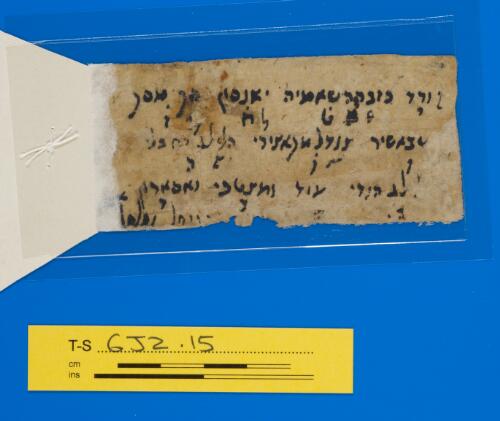
T-S 10K8.13 1v